News   GLOBAL  |  Apr 02, 2020
 11K     0 
News   GLOBAL  |  Apr 01, 2020
 43K     0 
News   GLOBAL  |  Apr 01, 2020
 6.7K     0 
I was just in Seattle, and their light rail system has at grade sections. You can't even tell. It was amazing. They do have crossing arms - the benefit of those is it prevents cars from delaying a train by sneaking in a left turn.

This is rapid transit, not streetcars. It should have absolute priority over cars.

EDIT: A lot of the time with the streetcars on Spadina, I see them slow down even when they have a green light, and sometimes even stop. To be careful. That would be complete nonsense for a rapid transit line.
You reminded me that I watched a timelapse of the light rail system in Seattle once before. I dug it up to show what you mean.

 
The crossing arms are used in Calgary and Edmonton as well. Calgary through downtown is on the surface and is prey to traffic signals though, but it the burbs it's all crossing arms.

I believe Waterloo is going to have a few crossing arms along the portion where it uses the rail corridor, which will result in quite fast travel times on that stretch. Obviously the parts running through downtown won't.
 
Thanks for posting that WislaHD. Not one stop at a red light and also no crossing arms. Interesting how they have flashing LRT icons at intersections with left turns when the train is going through. And they have proper transit signals instead of regular signals with a giant TRANSIT SIGNAL sign next to it. Those are some long dwell times at the stations though.

From what I’ve heard, that setup in Calgary has really screwed up cross traffic.
I haven't done enough driving in Calgary to comment on that. It could be true, or maybe it's just sour grapes from drivers. But that's why I mentioned selective grade separations where they're really needed, which is what Calgary does. There's no perfect system. A fully grade separated line is expensive, while a streetcar style line screws up transit operations. There are going to be some drawbacks no matter which design is chosen, but I think train operations should be prioritized over general traffic.
 
I know I keep bringing this up but an at grade LRT with crossing arms at intersections would give the line the speed of a grade separated line at near the cost of a streetcar-style line. This would drastically reduce the number of grade separations. Are staff looking at this option?

They aren't likely to attempt that; too much interruptions to the N-S traffic given that Eglinton LRT is going to be fairly frequent, up to a car every 3 min in each direction. That means, unscheduled halts to all N-S traffic every 1.5 min on average.

Intelligent transit priority would be more subtle; it would extend the Eglinton green signal by 5-10 sec if an LRV is going to just barely miss it, to help it actually get through the intersection. If the LRV is going to miss it anyway, then the transit control system might shorten both main cycles (Eglinton and the subsequent N-S) to help the LRV pass sooner once the next Eglinton green starts.

Horrible. Just horrible. You might as well do sharrows for right of way instead of physical separation so that it's 'subtle'.

Crossing arms aren’t some panacea - it won’t allow the trains to have a green wherever and whenever.

The limiting factor is that pedestrians need at least 30 seconds for north/south movements across Eglinton Avenue, including around 20 to 25 seconds for the “flashing hand” signal, warning them that they’ll soon no longer be able to cross. If a train comes up to an intersection where pedestrians have the north/south walk signal, the train is going to have to wait until the 30 second walk phase is complete until proceeding. With trains crossing any intersection every 1.5 minutes, this is going to happen quite frequently.

And of course, transit aren’t the only commuters that matter. This will speed up the commute by a minute or two for the 2,500 to 4,500 hourly transit riders on Eglinton, but significantly slow down the car AND transit riders on the cross streets. These crossing arms may very well have a net negative impact on overall commute times.
 
Has anyone managed to explain why;
  • the highest performing option (and the only option with a benefit cost ratio greater than unity ) from the 2016 initial business case study - which is fully grade-separated,
  • was not looked at in the October 2017 LRT study, where not servicing the mid-block stops was considered a fatal flaw.
Even is we do business cases, the results are ignored. The same thing happened on the Eglinton East portion where the connected ECLRT/SRT was found to be best, and then the only options considered thereafter were the subway extension and the transfer LRT.

I did find this study. - which I suppose is why they decided those mid-block stops were so important. (although no benefit cost numbers were run to determine what the effect would be on ridership).

The current ridership at the major road are as follows:
  • Jane = 2,280
  • Scarlet = 1,240
  • Royal York = 940
  • Islington = 1,440
  • Kipling = 1,550
  • Martin Grove = 1,470
  • Renforth = 1,120 * # (112)

For the mid-block stops, the ridership is
  • Mulham = 580 # (73B, 405)
  • Russel = 110 *
  • Wincott = 220 # (405)
  • Widdicombe = 310 # (405)
  • East Mall = 250 * # (111)
  • Rangoon = 90 * # (112)
* - Stops proposed to be dropped
# - Stops with local bus service (i.e. not relying on the retention of the Eglinton West bus.

Here is a summary.
  • (almost) all main streets have ridership over 1000.
  • (almost) all mid-block stop have ridership less than 300.
  • they were happy to drop a stop (Renforth) with ridership over 1000.
  • They wouldn't drop stops with ridership less than 311 (Wincott and Widdicombe).
  • Presumably, the local buses will still be retained, so the mid-block stops will be double served.
 
the highest performing option (and the only option with a benefit cost ratio greater than unity ) from the 2016 initial business case study - which is fully grade-separated,

The 2009 BCA also found grade separation to be the best performing. However, in that report, they severely underestimated by speed of the at-grade option by 25%. Without that error, the results of the BCA would likely be different.

I suspect they made a similar error in the 2016 BCA. Unfortunately they do not provide a list of what assumptions they used, regarding the operation of the transit line, so its impossible to say for certain.

was not looked at in the October 2017 LRT study, where not servicing the mid-block stops was considered a fatal flaw.

City Planning has recommended that the midblock stops not be built. The October 2017 report you linked to considered not servicing mid-block stops as a fatal flaw, presumably because they wanted it to be possible to serve those mid block stops, if the need arises in the future.

Why are you so concerned about them not looking at 100% grade separation? It would certainly be more expensive than targeted grade separations at each individual intersection, and would not be any better performing for transit users.
 
The 2009 BCA also found grade separation to be the best performing. However, in that report, they severely underestimated by speed of the at-grade option by 25%. Without that error, the results of the BCA would likely be different.

I suspect they made a similar error in the 2016 BCA. Unfortunately they do not provide a list of what assumptions they used, regarding the operation of the transit line, so its impossible to say for certain.
Then they should either correct their error - or don't bother doing any studies since we can't rely on anything that they produce.
Why are you so concerned about them not looking at 100% grade separation? It would certainly be more expensive than targeted grade separations at each individual intersection, and would not be any better performing for transit users.
If they do a study that say grade-separated is best, then is it not reasonable to consider that as the best option, and any subsequent reports would have to find new evidence to disprove or alter the analysis.

If we aren't going to follow the results of the studies, then we are asking all decisions to be made on political whim, or by vocal NIMBY's.

Where I lived in remote North York, it took 10 to 15 minutes to get to school and over an hour to get to university. I could always walk if things were slow to school, but that was not an option to university. I think the average person does not really care if their local travel is improved by a few minutes, but they do care about long distance travel where grade-separated rapid transit can make a real difference in travel times - and subsequently in people shifting modes of travel. It seems the benefit-cost analyses also confirm this.
 
Last edited:
If they do a study that say grade-separated is best, then is it not reasonable to consider that as the best option, and any subsequent reports would have to find new evidence to disprove or alter the analysis.

100% grade separation was the best performing in the BCA, only at the low end of its $2.0 to 3.0 Billion price range.

Screen Shot 2017-12-10 at 12.02.06 PM.png
 

Attachments

  • Screen Shot 2017-12-10 at 12.02.06 PM.png
    Screen Shot 2017-12-10 at 12.02.06 PM.png
    395.1 KB · Views: 605

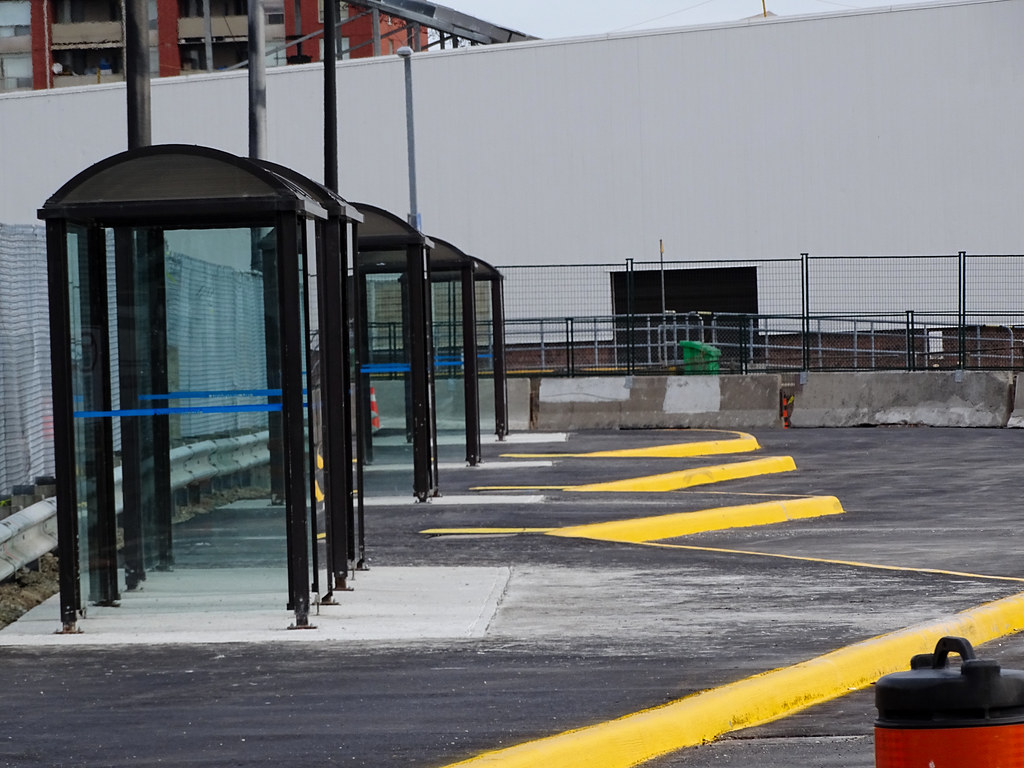
It really goes without saying that the sizes of these shelters are inadequate. We're going to be having dozens (if not hundreds) if people standing in the cold and rain waiting for their busses. People deserve better than this.

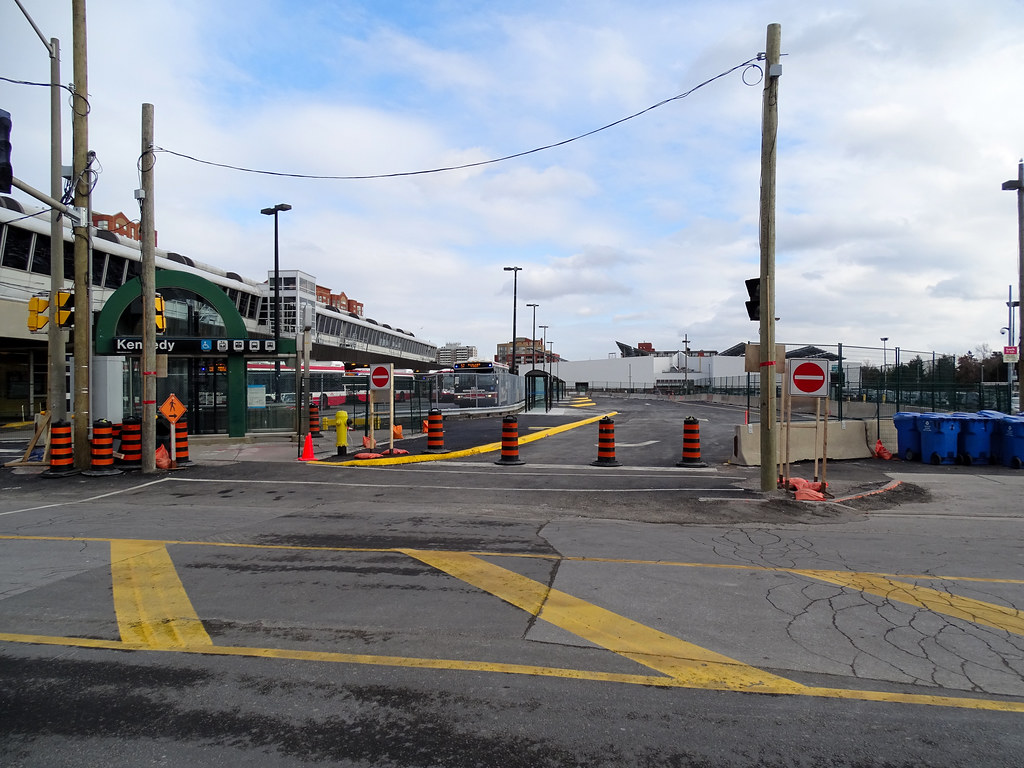
I hope it will be possible for customers to wait within the station (indoors), and to see how far away their bus is via those NextBus displays. At least that way they wont have to wait outside for so long.
 
You reminded me that I watched a timelapse of the light rail system in Seattle once before. I dug it up to show what you mean.


Oh the horrors!!! Horizontal (stop) transit signals in addition to the vertical (go) transit signals and missing English signs that say "Transit Signals". We can't have that in Toronto!!!
 
My gut feeling is that full grade separation isn't the best for Eglinton West, as it would effectively overwrite the decision to build LRT in the Eglinton corridor. If we wanted full grade separation, we should have built a subway or mini-subway.

However, I'm not sold on going fully at-grade either. If the cost of 6 grade-separated main intersections is too steep, we should at least select 2 or 3 of them for grade-separation. The time saving may be trivial, but the perception of this line being a real rapid transit / faster than cars at least in some sections will help boost the ridership. Furthermore, it should help fund future Light Rail lines in the city, as they will be perceived as higher-order transit and not just as glorified buses on rails.

So, we can select Islington (reasonably priced according to all estimates) and Martin Grove (the highest traffic impact) for grade separation. If we can afford one more, that could be either Jane or Kipling or Royal York.
 
So, we can select Islington (reasonably priced according to all estimates) and Martin Grove (the highest traffic impact) for grade separation. If we can afford one more, that could be either Jane or Kipling or Royal York.
I believe Kipling has the best benefits to cost ratio. My top two would be Martin Grove and Kipling.
 

Back
Top