News   GLOBAL  |  Apr 02, 2020
 11K     0 
News   GLOBAL  |  Apr 01, 2020
 43K     0 
News   GLOBAL  |  Apr 01, 2020
 6.7K     0 
I though the majority of Edmontonians support LRT expansion? Why do the candidates think that if they decide to cancel LRT, it would give them a boost in support? Just mind boggling.

Maybe she really believes the huge cost of lrt expansion is not worth it at this particular time - it would be great to hear more from her on this though. Obviously the analytics she is looking at coupled with the future uncertainty brought on by covid and the change in workplace practices and other habits.has caused a change in her position on LRT right now while still advocating for improved bus service overall. Those advocating for a pause still talk about the need for better bus service and bus rapid transit as alternatives.

While on the transit issue, here are Edmonton's transit ridership numbers, costs and revenues for 2017, 2018, 2019, before the 45% drop in ridership in 2020.

Surprisingly to me, despite our population going up every year, 2019 was our worst year of the three year cycle with the lowest ridership, lowest revenues and highest Operating Expenses by $10 million more from previous year.

2019 (bus and lrt)
Annual Ridership 86,715,540
Total Operating Expenses $334,847,345
Total Revenues $130,000,145

2018
Annual Ridership 87,121,534
Total Operating Expenses $325,043,440
Total Revenues $130,920,048

2017
Annual Ridership 86,997,466
Total Operating Expenses $326,194,825
Total Revenues $131,154,338
 
^ Honestly I am not going to give her a favour and try guess on what's is going in her mind. She is in the middle of the campaign and made a very clear statement that she would cancel the project that has already been approved and under-construction. She is not fit to be a mayor of 1.5 million city.

In order to increase ridership, you need to build transit first.

HAHA I just found out she drives her Dodge RAM truck to work in downtown. Cute.
 
Last edited:
If I am not mistaken, she's a registered member of this forum. Wonder if she (or someone from her team) ever reads it.

But for all I care, she's just dropped down my list of supportable candidates, right there with Mike Nickel. I am INDESCRIBABLY disappointed that someone with her background seems to have absolutely no knowledge of the concept of induced demand, and how it works for transit.

Sohi is now the only realistically viable candidate and, for anything that counts, I'll be full steam volunteering for his campaign and firmly against every single other candidate, except maybe for Krushell.

And to think I actually considered wasting my time and tarnishing my good name with Watson's campaign.
 
To me it seems ridiculous cancelling a project that has already been underway for at least 2 years now (if you include utility reconstruction over the past 2 years). Especially since funding has been attained from 2 other levels of government, and it's not like cancelling the project will allow these funds to be allocated to different areas.

I do think there is a fair point and question to be asked as to whether LRT is the most efficient use of tax dollars, as it is a massively expensive project, and ridership does not seem to be that high. Are these niche projects catering to small but vocal minority of Edmonton citizens, or do these projects need to be viewed in more of a 25 year strategy of what the city is to become in the future, and being proactive about future transit needs. Edmonton seems to have committed $800M to Valley Line South, and an estimated $700M to Valley Line West. If these funds were allocated elsewhere, what could we build or fund in Edmonton?

As a side note, I do fully support LRT expansion, but I think it's important we scrutinize projects more looking at opportunity cost in order to make the best decisions with limited funds.
 
In order to increase ridership, you need to build transit first.

Transit is not just LRT - good bus routes and bus rapid transit that are well planned can also boost ridership. But that's certainly not as sexy as lrt and certainly nowhere near the cost.

But it seems there is less concern here for the city's new bus route system that was designed before the pandemic and implemented during it - it was made to favor routes in and out of downtown to the sacrifice of routes outside the core and as result has reduced service for many people. But hey, we've got $1 billion to extend metro line less than 1km into Blatchford. I can understand why many Edmonton residents and seniors are frustrated.

I'm not even against LRT. I love the idea of trains all over a dense Edmonton city. But I do have some doubts and uncertainties - especially with Canadian government reports like the following:


Two projections from this report:
1. The bad news for transit of all kinds - transition to work from home means less commuting to work. Yes, people use transit for other reasons but not having as many people commuting to work daily will have a negative impact on ridership (buses and lrt)

2. The good news outlined in report - the current and projected future decline in commuting will have positive impact on the environment with reduction in green house gases as less commuting means less vehicular traffic, too!.
 
Why do you think that is @occidentalcapital ?
Because by definition, buses are less reliable than rail. They're also less comfortable and are subject to traffic, unless you go out of your way to create dedicated, at least semi grade separated, bus lanes.
Even if you increase the frequency to insane levels (2 or 3 minute headway) it's not realiable enough, in terms of getting on time every time.

They're also A LOT more expensive to run (albeit a smaller capital investment) and ridiculously more pollutant.

We need BOTH to work well together, have the busses feed the LRT, from the places where it's not feasible to have rail transit, make the bus trips short (10, 15 minutes tops) to and from a rail connection, so they become a viable option for people in the suburbs, for example.

If we have rail lines replacing and/or competing with the major car routes, and busses feeding into them, we can make these trips just marginally slower than by car, a lot more comfortable than the busses and extremely reliable.

But for a metro as big (geographically) and as populated as Edmonton's, we CANNOT rely on busses if we want to change the transit culture and increase ridership.

That's not to mention that busses, even big transit centers, DO NOT SUPPORT ToDs well, and it's not anecdotal, it's a proven fact. The city is growing and if we want to curb the sprawl, for quality of life and environmental reasons, rail transit and ToD will be the backbone of this.

I 100% agree that we need to be more efficient with capital investments, etc... But I am 100% against ANYONE talking about scrapping the LRT expansion from Edmonton's future.
 
To me it seems ridiculous cancelling a project that has already been underway for at least 2 years now (if you include utility reconstruction over the past 2 years). Especially since funding has been attained from 2 other levels of government, and it's not like cancelling the project will allow these funds to be allocated to different areas.

I do think there is a fair point and question to be asked as to whether LRT is the most efficient use of tax dollars, as it is a massively expensive project, and ridership does not seem to be that high. Are these niche projects catering to small but vocal minority of Edmonton citizens, or do these projects need to be viewed in more of a 25 year strategy of what the city is to become in the future, and being proactive about future transit needs. Edmonton seems to have committed $800M to Valley Line South, and an estimated $700M to Valley Line West. If these funds were allocated elsewhere, what could we build or fund in Edmonton?

As a side note, I do fully support LRT expansion, but I think it's important we scrutinize projects more looking at opportunity cost in order to make the best decisions with limited funds.
The LRT is expensive, 100%, but we have to compare to roads and other modes of moving people. And the hidden costs of new fire stations, residential roads, infrastructure, schools, etc.

Not to mention the private cost of vehicles. (which are essentially a hidden tax often 2-4x more than people's property taxes even). You hear nickel talk about the city raising taxes, but then you realize paying 12k a year for a car is a lot worse than the 3-6k a year most people pay for their houses. So those advocating for sprawl and car dependency are actually bigger "socialists/communists" to use their language because they are enslaving people and reducing personal freedoms/choices.
 
It doesn't really matter why I think so. The point is that the correlation/causation between rail-based transit and increased ridership exists.

I don't think anybody is denying that. Yes, building track will add riders. It damn well better. It's just ensuring the investment is worth the amount of ridership it will add is the issue. There must be targets we have set out for increased ridership that have been identified for the investment in valley line - anybody know?

Several candidates this election including some currently on council like Tim Cartmell have advocated the city consider bus rapid transit as well. If key areas or corridors of the city aren't currently being served while the west lrt is being built, why not look at this option?

BRT is in Ottawa, Winnipeg, Calgary and Vancouver I believe. Why aren't we looking at that I wonder?
 
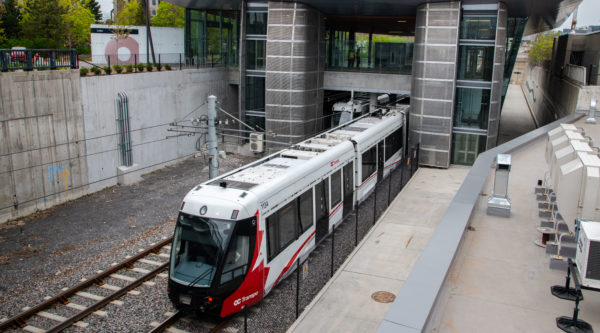
It's actually not good to know that Ottawa has had major problems with its LRT since opening - there's a call for a public inquiry.


Just some additional info about the mess that is Edmonton Transit.

I think we are one of the few places where ridership actually declined after adding an LRT line.
In 2014, we reached our highest ridership of 89 million trips per year. In fall 2015 the metro line - 3 stops at $655 million - opened to NAIT. Projections were 13,200 additional riders per weekday. Fast forward to 2019, our ridership is down by more than 2 million trips per year. Adding insult to injury, our overall population increased by 100,000 people during that time, making the ridership drop even more concerning.

Now we are more than doubling that $655 million that we spent on metro line to add two new stops, less than 1 km of track, in Blatchford.

Back to 2018 - city concern was growing about this trending drop in ridership over the previous 4 years, especially since the cost to subsidize the service had jumped 250 per cent, from $54 million in 2000 to $191 million in 2018. Total cost of operating public transit went up by more than 200 per cent between 2000 and 2018, from $105 million to $327 million.

So the city conducted a transit audit and released the report in 2019 to determine why ridership was dropping.

Fixing the city's faltering transit system will be a challenge despite ongoing efforts to improve it, city auditor David Wiun said when presenting to council committee.

One of the biggest challenges is getting more people to take public transit, he said.

Safe, convenient, reliable and faster service will prompt more people to take the bus or LRT, Wiun said.

"Hopefully that will lead to increased ridership," Wiun said. "It won't be easy."

Hopefully?

He also said this - keep in mind this is 2019 before covid and the significant transition to working from home which is here to stay.

A number of factors may discourage people from taking transit, he said. Wiun cited Statistics Canada reports showing more and more people are working from home. "And if you lose some of those, it's going to be more challenging."

Bottom line - we added expensive lrt and population increased by 100,000 and ridership dropped. Ouch.
But with more lrt opening soon ($1.8 billion not including annual operating and subsidization costs) and with continued annual population growth, we should be back to 2014 ridership numbers at some point - hopefully.
 
Last edited:

Back
Top