News   GLOBAL  |  Apr 02, 2020
 11K     0 
News   GLOBAL  |  Apr 01, 2020
 43K     0 
News   GLOBAL  |  Apr 01, 2020
 6.7K     0 
Most of the lines it beats are surface or elevated in part at least, that’s much lest expensive to build, if there was an available surface corridor to build a metro line along Sheppard then go for it.
1. Sheppard extensions (at least eastward) can be elevated if we have the will
2. All of those also run through the downtowns of major urban centres where the conditions are much more complex to build in than anywhere along Sheppard.
3. Cost is not what we were debating, its if sheppards ridership justifies a subway.
 
Yeah essentially travel speed was slower than RapidTO (the business as usual scenario), which means that less riders are modeled to use the line/system since it is slower than before and less competitive with other modes. I don't believe bus network changes were coded in.

This is why you make sure your future population forecast considers induced growth from the new MTSAs. This is why you consider travel time reliability and variability differences of LRT vs. curbside bus lanes in your travel demand model. This is why you re-design your project if it isn't achieving its original strategic goals (although not convinced speed was a goal). This is why you do the work to determine what the post-LRT transit network looks like to improve transfers and mitigate slower travel speeds if they do exist.

And btw, for those with keen eyes, there has been some very recent progress on the EELRT file.
 
OK if that is the case than you'll agree EELRT is a bad project because ridership is projected to drop if it were built today.

End of conversation.
Why on earth would ridership drop?

I would love to see the methodology for this claim.
 
Unfortunatly ML already has their hands on it, the line 2 tunnel issue east of Kennedy will make a lien 5 extension quite expensive. I think it could be feasible to build the tunnel portal on the northside of the line 2 tunnel, but there would be significant property requirement involved. I think it's safe to say at this point that metrolinx will not redesign the line 2 tunnel to support an extension by the time it's built.
I don't see how it is so expensive. When you look at the width of the ROW plus the width of the properties expropriated to facilitate construction of the subway line, and compare that to the width of tunnels holding 4 tracks, I don't see what the problem is. We are paying construction companies and engineers too much of they can't figure this out. What is the expensive part? Are they trying to go straight through or under the subway tunnel? I don't get it.
 
i imagine because of less one seat rides or people convinced by the 1 minute increase in travel times
The one seat rides I can buy, though that could be dealt with to some degree by tweaking the route. (I cannot fathom why, for example, one wishing to go west in Scarborough from McCowan Road would get on to first go much further east.)

The extra minute, not at all.
 
I look at this diagram and it says to me "we drew the lines in a near optimal alignment and found problems". It doesn't look at all like an exercise to find various options where the goal is to build the extension underground but rather the goal was to get to the surface quickly. If the EEB is where it is on the map, who draws lines going straight to it without the goal being to say "it can't be constructed"?
 
I look at this diagram and it says to me "we drew the lines in a near optimal alignment and found problems". It doesn't look at all like an exercise to find various options where the goal is to build the extension underground but rather the goal was to get to the surface quickly. If the EEB is where it is on the map, who draws lines going straight to it without the goal being to say "it can't be constructed"?
The alignment is limited by the curve and elevation limits of the existing Line 5 fleet.

While we're here, could the mods change the name of this thread to Scarborough East Rapid Transit (SERT) and change the proponent to the City of Toronto instead of Metrolinx?
 
The alignment is limited by the curve and elevation limits of the existing Line 5 fleet.

While we're here, could the mods change the name of this thread to Scarborough East Rapid Transit (SERT) and change the proponent to the City of Toronto instead of Metrolinx?
I guess the logical thing to do is to open a new thread called Scarborough East Rapid Transit (SERT)
Where is the Scarborough - Malvern LRT Thread - I have trouble with the search feature? I want to look at the origins of this project.
 
This is not true - at least not in the modelling assumptions. The report VERY CLEARLY makes it clear that the directly replaced buses were slower.

Increased transfers are problematic. Perhaps they need to model more LRT stops in an attempt to increase ridership.

Shame the model isn't open source. Or the report wasn't more granular, identifying the segment(s) where ridership is problematic.

The earlier iteration of this project that went from Kennedy and terminated at Sheppard and Morningside had pushing double the PPHPD ridership than the three bus routes it replaced (from according to the 2009 EPR. From 2,700 on the buses to 4,600-5,000 on the LRT.

Interestingly that study originally included a Malvern extension, which was dropped during the study. Is very poor ridership north of Sheppard an issue?

Is Sheppard East the issue? The 2008 Sheppard CEA only forecast a PPHPD demand for the LRT of 3,000 (presumably westbound approaching Don Mills) - presumably MUCH smaller east of McCowan. (the comparable bus ridership was 1,100 between Scarborough Centre and Don Mills). The 2008 CEA does note that east of Meadowvale (presumably westbound approaching Meadowvale) was 1,000 for the LRT.

Ridership on Sheppard East has always been surprisingly low - it certainly doesn't support subway east of Don MIlls, or perhaps Victoria Park. The only reason to go as far as McCowan is for network connectivity. How poor is the demand east of McCowan?

The projected ridership increase being so low compared to the shorter line does make one wonder about the branch on and north of Sheppard.

I'd argue Sheppard's problems start before McCowan. The Sheppard East Corridor like most areas of Scarborough has a lot of low-density sprawl but unlike the areas further south near a street like Eglinton which were built in the 40's and 50's, the areas further north are more recent coming around in the 60's, 70's and 80's and as a result it features some the worst suburbia design (e.g winding streets and cul-de-sacs). There are few pockets of density along the corridor like Bay Mills and Malvern; however beyond that you are banking on pre-existing ridership on the 85 Sheppard East and intercepting riders along the various north-south routes to make up the ridership. It gets even worse once you get past Markham Road.

I think another thing to consider is how development along the corridor could look now the Toronto's condo market has collapsed and Ontario continues to have some of the worst housing starts in the country. A lot of the ridership numbers are no doubt based on pre-covid assumptions (or pre-Condo crash) assumptions and that world simply doesn't exist anymore. That's not to say development won't happen but it may be worth re-evaluating what the development may now look like. I did see a couple of days ago something about how the Golden Mile redevelopment plan along Eglinton may not be built now or be heavily scaled down, and this is something that is happening across the city. They were planning on building 2 condo's next to the building I live in but now that development has been scrapped and the land will be used for a new grocery store (which I won't complain about, more choice is always better).

A final thought exercise is to wonder if building the subway on Sheppard as it is was truly the best decision. A couple of months ago I posted in the Sheppard Extension thread some early plans for the Sheppard Line and in them the TTC considered using Light-Metro for the corridor and I have to wonder if that would have been the better play in the long-term. Obviously we can't change that now but one of the biggest hurdles in the way of the Sheppard Line has always been the fact that its so expensive to expand when compared to the ridership it will generate; the return on investment has always been an issue with the line and a large part of that no doubt is because it was built as a heavy-rail metro and not a light-metro. The line as it is is arguably overbuilt for the corridor and I can't see any future where it will pull ridership similar to Lines 1 and 2. Like I said though this paragraph was just a thought experiment and what's done is done and now we are stuck with the mistake.
 
Last edited:
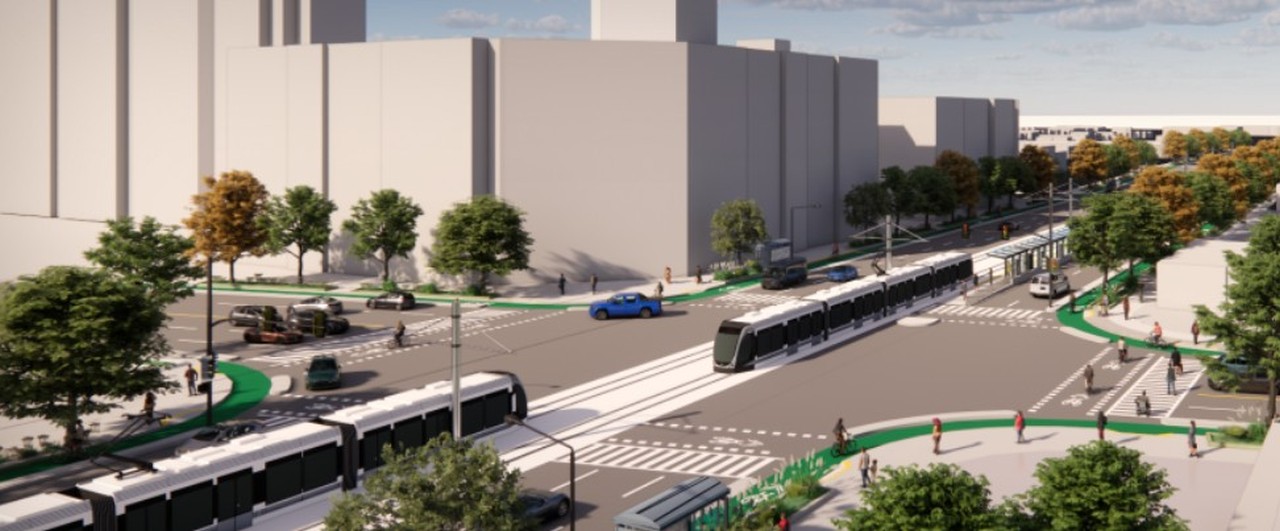
New article up on the Scarborough East definitely, totally, for sure, Rapid Transit line:


If this project's business case is estimating slower operations that the current buses, and Line 6 undershot it's business case's projected speeds by 50%, we can assume our stunning Mayor's new pet project will add a good 20 minutes to riders trips, with half the frequency to sweeten the deal. All for the low, low cost of $10 Billion!
 
New article up on the Scarborough East definitely, totally, for sure, Rapid Transit line:


If this project's business case is estimating slower operations that the current buses, and Line 6 undershot it's business case's projected speeds by 50%, we can assume our stunning Mayor's new pet project will add a good 20 minutes to riders trips, with half the frequency to sweeten the deal. All for the low, low cost of $10 Billion!
Yea no I highly doubt a street running LRT would cost $10 Billion unless you include the 30 years of maintenance into the cost like we did with the Crosstown, Finch West, and Ontario Lines which has caused far to much confusion among people over the exact cost of these lines. I actually hate that we have started to do this because now it just creates an inflated number that can be used by bad actors to point at and hoot and howler about how expensive something is while intentionally leaving out the distinction between the actual cost of construction and the 30 years of maintenance. It doesn't help that the media intentionally leaves out this distinction too so they can push whatever agenda Bell or Rogers wants and make the public think these projects are more expensive then they actually are. The Crosstown is a great example of this since the final cost was around $12 Billion but that includes the $4 Billion contract given to Crosslinx to maintain the line for 30 years. Which means we can assume the actualy price tag to build Line 5 was around $8 Billion after cost over runs and delays which isn't ideal but the unfortunate way things just work these days because we have forgotten how to build things (and/or there are a couple too many greasy palms that need to be taken out behind the shed....)
 
Last edited:
It might be 18km but at least no one will have to ride the entire length of it since it’s not a straight line route.
A comparison to Hurontario: the loop won't be finished until much later, after their initial 18 km is finished.

If you wanted to go from Brampton to Port Credit to catch the GO train, is hopping off just to hop back on better than a straight line route? The one seat travel times along Hurontario will be highly questionable if you have to cross Mississauga City Centre, even before the loop is built. Similar thing applies to Line 7.

Would anyone be happy to hop on and off at Sheppard/Neilson?

Yea no I highly doubt a street running LRT would cost $10 Billion unless you include the 30 years of maintenance into the cost like we did with the Crosstown, Finch West, and Ontario Lines which has caused far to much confusion among people over the exact cost of these lines.
I think you're being misled by the government narrative that excuses capital cost inflation by lumping the relatively low cost of 30 year maintenance in with the headline price tag. LRT maintenance doesn't cost $5 billion for 18 km over 30 years, even if Metrolinx habitually overpays on maintenance.

For reference, Line 6 Finch West opened on December 7, 2025. According to the contract, the consortium is owed a lump sum upon opening (capital cost). Since Line 6 incurred $29 million in the previous quarter (maintenance and other misc. items), we can infer that the lump sum was about $330 million.

From October 1 to December 31, 2025, $361 million were incurred on Line 6.
1777389131833.png

1777389492788.png
 
Last edited:

Back
Top