News   GLOBAL  |  Apr 02, 2020
 11K     0 
News   GLOBAL  |  Apr 01, 2020
 43K     0 
News   GLOBAL  |  Apr 01, 2020
 6.6K     0 
I don't know if this has been mentioned and I can't be bothered to go back through every post to see...but am I missing something here? Is this a new style of designing elevators?

So in this picture Street level is 1 and we descend to level 2...this is also prevalent at multiple stations. At Eglinton Station we start at level 2 and then descend to level 4 (skipping 3 entirely) every other elevator I've been on the lowest level is 1 or 0 and it raises with each level you ascend. Why is it different on Line 5?

IMG_1997.JPG
 
I don't know if this has been mentioned and I can't be bothered to go back through every post to see...but am I missing something here? Is this a new style of designing elevators?

So in this picture Street level is 1 and we descend to level 2...this is also prevalent at multiple stations. At Eglinton Station we start at level 2 and then descend to level 4 (skipping 3 entirely) every other elevator I've been on the lowest level is 1 or 0 and it raises with each level you ascend. Why is it different on Line 5?
Union Station uses similar weird numbering in some of its station elevators.

I wish we would either adopt European numbering (-2, -1, 0, 1, 2, etc) or at least standardize on 1+ on street level or higher and prefixing sub levels with a B.

I imagine it's extremely frustrating for anyone from out of country to have to just navigate everyday elevators here. Even ground level can be G, L, M, *, and I'm sure other options I can't think of at the moment.
 
PCC streetcars had a "SANDER" switch for braking and ice. Do the new light rail vehicles have the same somewhere?
View attachment 716140
There is the ability to manually activate the sander through a push button, but the control software also automatically activates it when it detects a spin-slide.
 
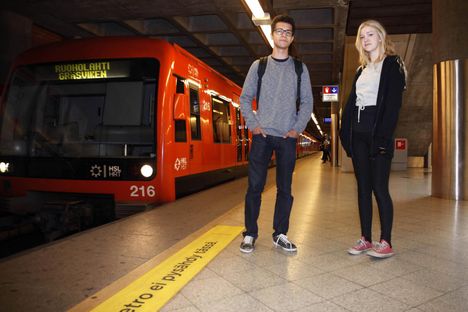
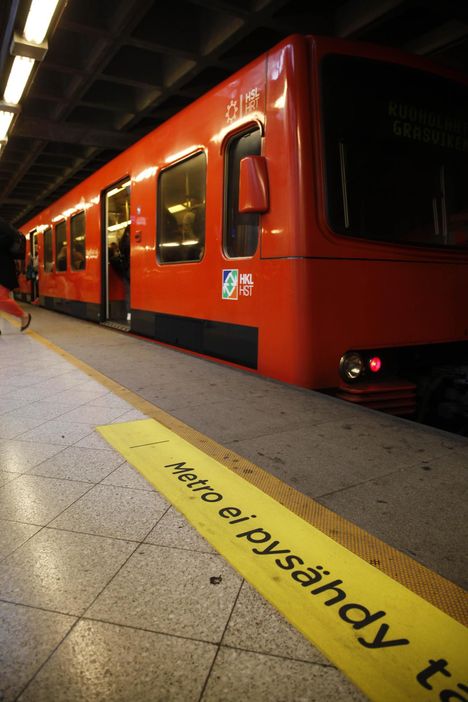
When Helsinki artificially shortened their Metro from 6 cars (135m) to 4 cars (90m) to save 50 million Euros on the Western Espoo extension, at least they put in proper stickers on the platform edge to demarcate the boarding zone:

468.jpg

Source

468.jpg

Source

A roll of duct tape along the platform edge would've been better than what we did.

Ottawa got that right with the wall-mounted "Boarding zone/Zone d'embarquement" signage at the underground stations.

Seems like circular stickers similar to the Covid social-distancing ones would've been better.

---


Why are the top displays showing generic (5) Eglinton Line, when they're perfectly capable of showing upcoming departures.

Is this intentional because the TTC can't/is unwilling to show departure times at the legacy station entrance screens?


---


Why can't we do this here?? (Bus times)
When I noticed this I assumed they have some aversion to posting actual incoming train times that far from the platforms, for the risk of encouraging people to rush down stairs or escalators to try to make a train. I know this seems absurd, but I can imagine it in our overly cautious approach in Toronto transit.
 
What's the new tenant going to be? Looks like a Dollarama based on that colour scheme. If so, will that be the first in-station dollar store in Toronto transit history?
I think it's just a generic colour. On this note, station staff told me that MX didn't install any water or gas hookups in the retail spaces as a value engineering thing so none of the "anchor tenants" (i.e. Tim's, McDonalds) want to rent there... Not promising for any restaurant/cafes generally...
 
I think it's just a generic colour. On this note, station staff told me that MX didn't install any water or gas hookups in the retail spaces as a value engineering thing so none of the "anchor tenants" (i.e. Tim's, McDonalds) want to rent there... Not promising for any restaurant/cafes generally...
Thats so ridiculous
 
I don't know if this has been mentioned and I can't be bothered to go back through every post to see...but am I missing something here? Is this a new style of designing elevators?

So in this picture Street level is 1 and we descend to level 2...this is also prevalent at multiple stations. At Eglinton Station we start at level 2 and then descend to level 4 (skipping 3 entirely) every other elevator I've been on the lowest level is 1 or 0 and it raises with each level you ascend. Why is it different on Line 5?

View attachment 716137
The star is always ground level, even if it is not "1". That is weird though with 2 being below.
Googled Vancouver Canada Line and came up with:
G for Ground, C for Concourse, P for Platform, which works if the station is elevated or underground!
Not sure if any station elevators would have any other stops than those (even if you have separate elevators inside and outside the fare paid zones)
 
Thanks for sharing that. Interesting fact!

One question I have for the team making these maps is the continued use of the old LRT logo. Metrolinx replaced that on their wayfinding standard with a unified symbol with the subway.
It's for consistency with the directional signage. A couple reasons why this was felt to be important (aside from the graphics): the overhead signage avoids words so it never actually describes what each icon represents, so this was an opportunity to help clarify for those that might not be used to seeing those icons or might not be visual learners, and the OG Crosstown sign package treats LRT and Subway as distinct modes (whereas as you point out, current Metrolinx standard is to treat both as part of the same ‘category’ of mode in order to reconcile the use of subway style single digits and the very real differences in how people would perceive LRT services when compared to subway). The Crosstown West extension will trigger a number of signage changes just by virtue of the fact that the terminus is changing (at surface stops I think it's roughly half the signs), so that will probably be the juncture at which all of line 5 gets updated to match (easier to get these things funded as a line item in a much larger project capex budget versus trying to cover it with opex… the way the Crosslinx agreement is written doesn't allow for a lot of flexibility to change things so having the new infrastructure as a trigger for the update bolsters the ability to do it effectively). The maps will need to be updated several times before then so it's far from a permanent thing :)
 
When Helsinki artificially shortened their Metro from 6 cars (135m) to 4 cars (90m) to save 50 million Euros on the Western Espoo extension, at least they put in proper stickers on the platform edge to demarcate the boarding zone:

468.jpg

Source

468.jpg

Source

A roll of duct tape along the platform edge would've been better than what we did.

Ottawa got that right with the wall-mounted "Boarding zone/Zone d'embarquement" signage at the underground stations.

Seems like circular stickers similar to the Covid social-distancing ones would've been better.

---


Why are the top displays showing generic (5) Eglinton Line, when they're perfectly capable of showing upcoming departures.

Is this intentional because the TTC can't/is unwilling to show departure times at the legacy station entrance screens?


---


Why can't we do this here?? (Bus times)
TTC was concerned that if the next vehicle was arriving soon that customers seeing that timing at the entrance might rush to try to catch the train, creating a safety liability. Forgetting this being a minor indictment of the frequency of their operation, the possibility of stopping the countdown before it got too low (UP Express IIRC when it reaches three minutes before the train arriving will switch to an ‘arriving’ message, as an example), but I believe because the next vehicle data comes from TTC and that's not their typical practice that that approach wasn't feasible. So the line name and number are there literally in lieu of leaving the screens blank, as the location and low resolution doesn't really lend itself to longer messages.
 
I think it's just a generic colour. On this note, station staff told me that MX didn't install any water or gas hookups in the retail spaces as a value engineering thing so none of the "anchor tenants" (i.e. Tim's, McDonalds) want to rent there... Not promising for any restaurant/cafes generally...
That sounds extremely counterproductive. By having no access to utilities, MX will have to charge less rent to whomever takes over these retail spaces. Who are they expecting to attract to these spaces? Newspaper vendors?

One would think that part of the business approach to building a transit line is to make every station as profitable as possible. Isn't this part of how the Japanese make their transit profitable?
 
I don't know if this has been mentioned and I can't be bothered to go back through every post to see...but am I missing something here? Is this a new style of designing elevators?

So in this picture Street level is 1 and we descend to level 2...this is also prevalent at multiple stations. At Eglinton Station we start at level 2 and then descend to level 4 (skipping 3 entirely) every other elevator I've been on the lowest level is 1 or 0 and it raises with each level you ascend. Why is it different on Line 5?
View attachment 716137
This is a relic of the TTC’s legacy approach to
floor numbering, which is used widely throughout the subway, where the floor numbers go higher the lower you go. They felt consistency with other stations was important, but it actually doesn't align with building code. There were also several fun misinterpretations as to what certain icons were meant to mean made by Project Co. :)
 

Back
Top