News   GLOBAL  |  Apr 02, 2020
 11K     0 
News   GLOBAL  |  Apr 01, 2020
 43K     0 
News   GLOBAL  |  Apr 01, 2020
 6.7K     0 
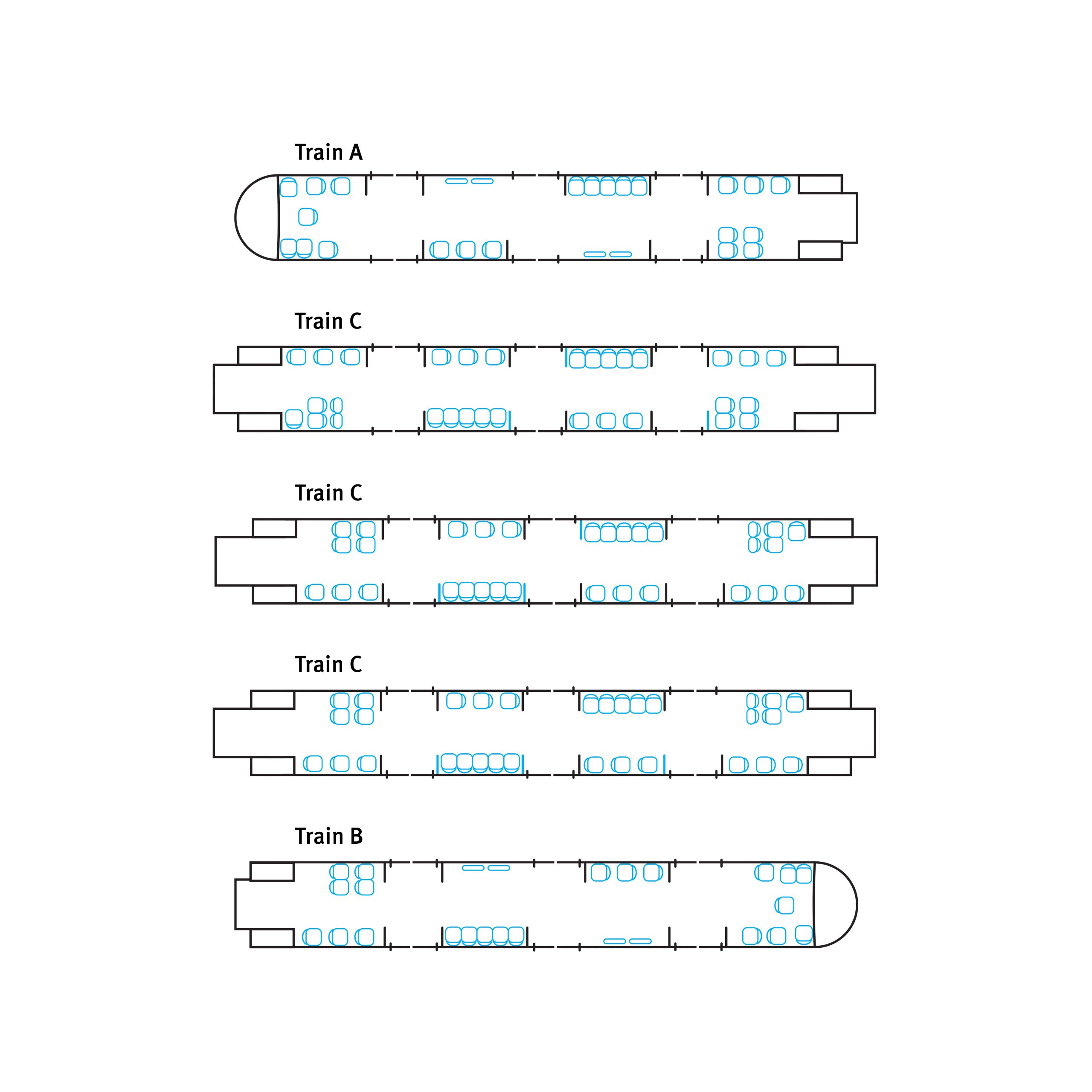
Ever since I've been older than a child, I've noticed the TTC has child sized seats. Before they turned some seats sideways, I couldn't fit in them, and had to sit in the aisle seat, half turned, because there was nowhere for my knees. They think they're squeezing more people in, but people are using every other seat instead. No you're not weird, you're completely correct, but it's going to take some serious shift in thinking for them to change what they've been doing for at least half a century.
Here me out, what if more or all the seats were longitudinal:

Eglinton would get more capacity layout changes alone, no change to platform/vehicle size.

Unfortunately the province and/or City of Ottawa has beef with Siemens due to something from the early O-Train days. Also 100% low floor requirements might preclude this Siemens model.
 
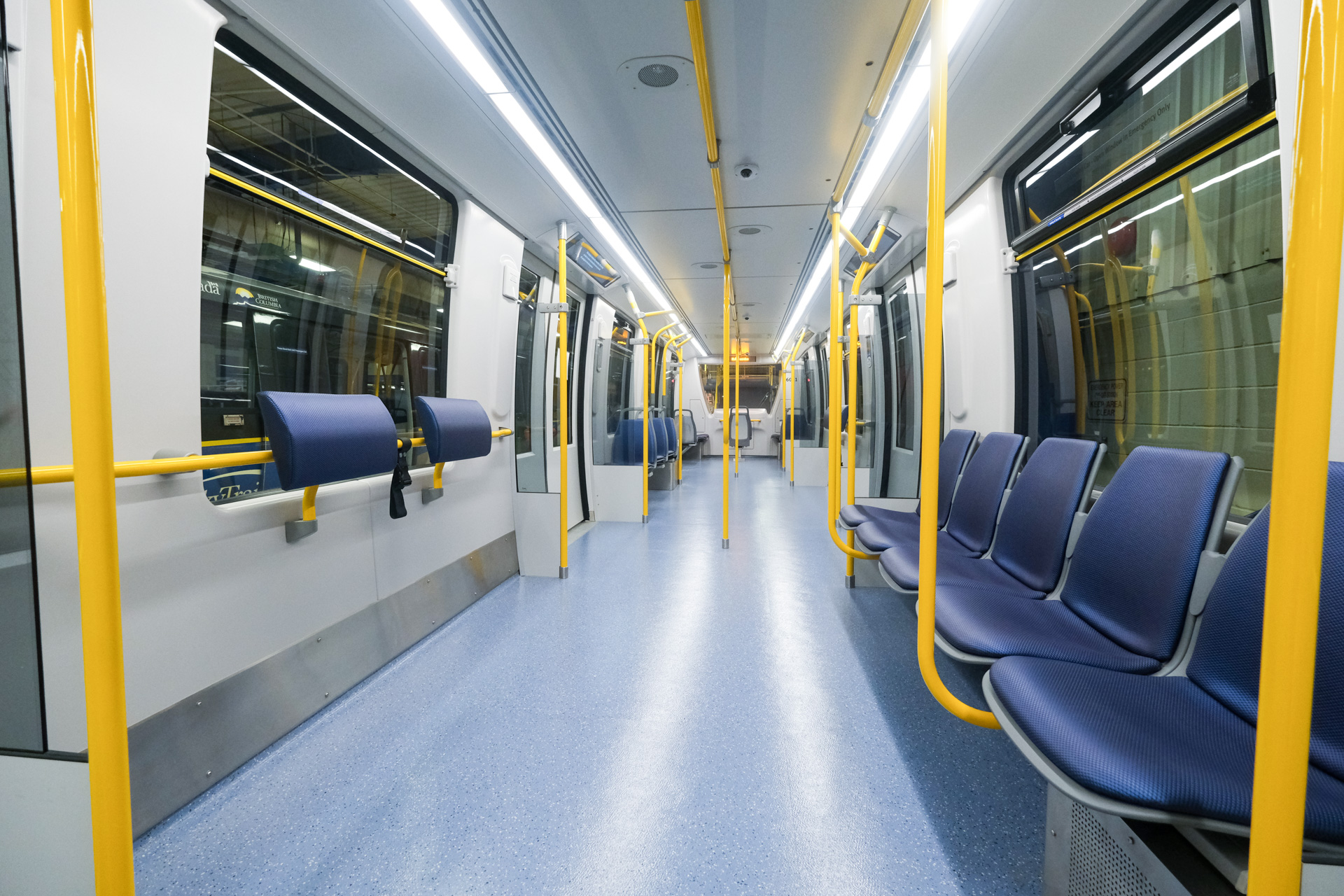
Would this solution suffice? Or would you find it dehumanizing to use a recently cleaned textured stainless longitudinal bench?

Transverse vs. longitudinal is a perennial ideological debate on Urban Toronto. Apparently having longitudinal benches is tantamount to using cattle cars, according to certain transverse bucket seat lovers... (Not directed at @A 6264 )

1773182454728.png
 
Would this solution suffice? Or would you find it dehumanizing to use a recently cleaned textured stainless longitudinal bench?

Transverse vs. longitudinal is a perennial ideological debate on Urban Toronto. Apparently having longitudinal benches is tantamount to using cattle cars, according to certain transverse bucket seat lovers... (Not directed at @A 6264 )

View attachment 720906
I don't mind benches, TTC vehicles used to have thickly padded upholstered benches at one time, which I presume did not last long and were easily vandalized. Then came bucket seats made of metal or plastic with a thin red cloth coating, and I used to think, they're not fooling me with that. Newer seats have a nice appearance and a bit more padding than the old red velvet.. These metal benches look uncomfortable because they're bare metal, not because they're benches. But these also look slippery, and I wonder if a sudden stop would cause riders to slide and crash into other riders.
 
But these also look slippery
They're not bare smooth stainless. It's hard to describe the texture, but the friction is similar to socks on a faux-wood vinyl floor. Low friction, but far from a mirror finish.

Subjectively the benches in that picture were more comfortable than TTC seats, although my fear of TTC bedbugs factors into this. I hate the fabric used on Line 1 . And sudden stops did not send me sliding away. They also warm up very quickly.

@CLT I felt those benches were ergonomic enough at ~6 ft to sit for 90 minutes. @A 6264 your posts imply you're much taller, I'm not sure how you'd fare.
 
Here me out, what if more or all the seats were longitudinal:

Eglinton would get more capacity layout changes alone, no change to platform/vehicle size.

Unfortunately the province and/or City of Ottawa has beef with Siemens due to something from the early O-Train days. Also 100% low floor requirements might preclude this Siemens model.
Siemens got screwed when BBD underbidded them by a significant amount to win the original TTC streetcar contract. That mothballed to ML getting Flexitys as it was TTC's contract option reassigned to ML. ML then allowed ION to add their share onto that option resulting in Flexity's on TTC's streetcars, Line 5 and ION.
 
Here me out, what if more or all the seats were longitudinal:

Eglinton would get more capacity layout changes alone, no change to platform/vehicle size.

Unfortunately the province and/or City of Ottawa has beef with Siemens due to something from the early O-Train days. Also 100% low floor requirements might preclude this Siemens model.
Inwards-facing seats does not work well on the Bombardier-platform cars, unfortunately.

On the Siemens S70/S700, the middle truck is fixed within the short module. As there is not a need to allow for rotation, the clearances around it can be less, and so there is more room though the middle of the body - and thus room to put inwards-facing seats through that section. As you note, there are steps up at the ends so this isn't a problem with the end trucks, which do rotate.

On the Bombardier cars, the trucks rotate and so there needs to be clearance to allow for this. This is why the aisle is quite a bit narrower over the trucks - inwards facing seats here would have to be located more towards the imiddle of the car and away from the walls.

The same situation arises with the Alstom cars.

Dan
 
Here me out, what if more or all the seats were longitudinal:

Eglinton would get more capacity layout changes alone, no change to platform/vehicle size.

Unfortunately the province and/or City of Ottawa has beef with Siemens due to something from the early O-Train days. Also 100% low floor requirements might preclude this Siemens model.
I've become a fan of this style of seating after riding the REM in Montreal. Doesn't allow for riders to put their feet up on the seat in front of them.

My only gripe though is it's difficult to look out the window while seated. While riding the REM I constantly had to crank my neck sideways, or try not appear as if I was staring at the person sitting across from me.
 
First stage of transit signal priority improvements in place on Line 5 Eglinton and Line 6 Finch West

March 11, 2026

Customers riding Line 5 Eglinton between Don Valley and Kennedy stations and across Line 6 Finch West will start to see improved trip times with the rollout of enhanced transit signal priority at intersections on the street-level portions of each line.

The City of Toronto has made changes to traffic signals that allow LRT trains to move through these intersections before left-turning vehicles.

Additional enhancements to the signals to make them more dynamic and responsive in real time are in the works on both lines and will be rolled out in the coming months.

Enhanced transit signal priority is implemented at all intersections on Line 6, and at the following Line 5 intersections:
• Victoria Park Avenue
• Eglinton Square/O’Connor Drive
• Pharmacy Avenue
• Hakimi Avenue/Lebovic Avenue
• Warden Avenue
• Sinnott Road/Thermos Road
• Rosemount Drive
• Ionview Avenue

Improvements at Sloane Avenue/Bermondsey Road and Leslie Street will be implemented after further testing and coordination with other planned traffic operations changes.

“We are taking action to save customers on Line 5 and Line 6 more time on their trips,” said Mayor Olivia Chow. “Rapid deployment of new enhanced transit signal priority measures is part of our plan to speed up transit across our city and give people more time with their families and less time commuting.”

“I have been clear that rapid transit must be rapid,” said TTC Chair Jamaal Myers. “I want to thank the City, TTC and Metrolinx teams for moving quickly on these signal priority improvements. This is a practical step that will help keep LRT vehicles moving and improve travel times for riders, especially along the Line 5 corridor in Scarborough.”

“As the operator of Lines 5 and 6, we are listening to our customers when they tell us they want to see their trip times sped up as part of broader improvements,” said TTC CEO Mandeep S. Lali. “This first, new phase of Transit Signal Priority is going to bring real, measurable, incremental improvements upon which we can continue to build, bringing with it an enhanced experience for the City, the region and our customers.\"

The TTC serves as the operator for Line 5 Eglinton and Line 6 Finch West, bringing more than a century of expertise as North America’s third busiest public transit agency. Under agreements with Metrolinx and the City of Toronto, the TTC is responsible for operating trains, providing security and revenue control, and staffing stations to ensure a high level of customer satisfaction. Line 5’s infrastructure and vehicles are maintained by Crosslinx Transit Solutions (CTS) under contract to Metrolinx. Line 6’s infrastructure and vehicles are maintained by Mosaic Transit Group (MTG) under contract to Metrolinx. As operator, the TTC works in close partnership with Metrolinx, the City, and project partners to deliver safe, reliable, and efficient service, integrating Line 5 Eglinton and Line 6 Finch West into Toronto’s broader transit network.

 
First stage of transit signal priority improvements in place on Line 5 Eglinton and Line 6 Finch West

March 11, 2026

Customers riding Line 5 Eglinton between Don Valley and Kennedy stations and across Line 6 Finch West will start to see improved trip times with the rollout of enhanced transit signal priority at intersections on the street-level portions of each line.

The City of Toronto has made changes to traffic signals that allow LRT trains to move through these intersections before left-turning vehicles.

Additional enhancements to the signals to make them more dynamic and responsive in real time are in the works on both lines and will be rolled out in the coming months.

Enhanced transit signal priority is implemented at all intersections on Line 6, and at the following Line 5 intersections:
• Victoria Park Avenue
• Eglinton Square/O’Connor Drive
• Pharmacy Avenue
• Hakimi Avenue/Lebovic Avenue
• Warden Avenue
• Sinnott Road/Thermos Road
• Rosemount Drive
• Ionview Avenue

Improvements at Sloane Avenue/Bermondsey Road and Leslie Street will be implemented after further testing and coordination with other planned traffic operations changes.

“We are taking action to save customers on Line 5 and Line 6 more time on their trips,” said Mayor Olivia Chow. “Rapid deployment of new enhanced transit signal priority measures is part of our plan to speed up transit across our city and give people more time with their families and less time commuting.”

“I have been clear that rapid transit must be rapid,” said TTC Chair Jamaal Myers. “I want to thank the City, TTC and Metrolinx teams for moving quickly on these signal priority improvements. This is a practical step that will help keep LRT vehicles moving and improve travel times for riders, especially along the Line 5 corridor in Scarborough.”

“As the operator of Lines 5 and 6, we are listening to our customers when they tell us they want to see their trip times sped up as part of broader improvements,” said TTC CEO Mandeep S. Lali. “This first, new phase of Transit Signal Priority is going to bring real, measurable, incremental improvements upon which we can continue to build, bringing with it an enhanced experience for the City, the region and our customers.\"

The TTC serves as the operator for Line 5 Eglinton and Line 6 Finch West, bringing more than a century of expertise as North America’s third busiest public transit agency. Under agreements with Metrolinx and the City of Toronto, the TTC is responsible for operating trains, providing security and revenue control, and staffing stations to ensure a high level of customer satisfaction. Line 5’s infrastructure and vehicles are maintained by Crosslinx Transit Solutions (CTS) under contract to Metrolinx. Line 6’s infrastructure and vehicles are maintained by Mosaic Transit Group (MTG) under contract to Metrolinx. As operator, the TTC works in close partnership with Metrolinx, the City, and project partners to deliver safe, reliable, and efficient service, integrating Line 5 Eglinton and Line 6 Finch West into Toronto’s broader transit network.
While this is welcoming, will there be any changes to their absurd operating speed limits?
 
First stage of transit signal priority improvements in place on Line 5 Eglinton and Line 6 Finch West

March 11, 2026

Customers riding Line 5 Eglinton between Don Valley and Kennedy stations and across Line 6 Finch West will start to see improved trip times with the rollout of enhanced transit signal priority at intersections on the street-level portions of each line.

The City of Toronto has made changes to traffic signals that allow LRT trains to move through these intersections before left-turning vehicles.

Additional enhancements to the signals to make them more dynamic and responsive in real time are in the works on both lines and will be rolled out in the coming months.

Enhanced transit signal priority is implemented at all intersections on Line 6, and at the following Line 5 intersections:
• Victoria Park Avenue
• Eglinton Square/O’Connor Drive
• Pharmacy Avenue
• Hakimi Avenue/Lebovic Avenue
• Warden Avenue
• Sinnott Road/Thermos Road
• Rosemount Drive
• Ionview Avenue

Improvements at Sloane Avenue/Bermondsey Road and Leslie Street will be implemented after further testing and coordination with other planned traffic operations changes.

“We are taking action to save customers on Line 5 and Line 6 more time on their trips,” said Mayor Olivia Chow. “Rapid deployment of new enhanced transit signal priority measures is part of our plan to speed up transit across our city and give people more time with their families and less time commuting.”

“I have been clear that rapid transit must be rapid,” said TTC Chair Jamaal Myers. “I want to thank the City, TTC and Metrolinx teams for moving quickly on these signal priority improvements. This is a practical step that will help keep LRT vehicles moving and improve travel times for riders, especially along the Line 5 corridor in Scarborough.”

“As the operator of Lines 5 and 6, we are listening to our customers when they tell us they want to see their trip times sped up as part of broader improvements,” said TTC CEO Mandeep S. Lali. “This first, new phase of Transit Signal Priority is going to bring real, measurable, incremental improvements upon which we can continue to build, bringing with it an enhanced experience for the City, the region and our customers.\"

The TTC serves as the operator for Line 5 Eglinton and Line 6 Finch West, bringing more than a century of expertise as North America’s third busiest public transit agency. Under agreements with Metrolinx and the City of Toronto, the TTC is responsible for operating trains, providing security and revenue control, and staffing stations to ensure a high level of customer satisfaction. Line 5’s infrastructure and vehicles are maintained by Crosslinx Transit Solutions (CTS) under contract to Metrolinx. Line 6’s infrastructure and vehicles are maintained by Mosaic Transit Group (MTG) under contract to Metrolinx. As operator, the TTC works in close partnership with Metrolinx, the City, and project partners to deliver safe, reliable, and efficient service, integrating Line 5 Eglinton and Line 6 Finch West into Toronto’s broader transit network.
Hopefully they fix that awful signal at Credit Union / Swift. As a cyclist, transit user and driver. I ALWAYS get stopped at that signal. If you get past Sloane, you’re always going to get a red light at Credit Union and its infuriating. The signal needs to be deprioritized in the system. It’s not even a major road crossing.
 

Back
Top