News   GLOBAL  |  Apr 02, 2020
 11K     0 
News   GLOBAL  |  Apr 01, 2020
 43K     0 
News   GLOBAL  |  Apr 01, 2020
 6.7K     0 
Peterborough might justify a stub from HSR onto the existing CPKC line to achieve a downtown terminal for a commuter line.... or even extend further east to a terminus east of Peterborough, collecting from the highways to the north/east without bringing cars/buses into central Peterborough, (I wonder what the pro/con split among Peterborough residents will be when they discover that an HSR station will inevitably be on the edge of town)

My only reservation about even talking about a Peterboro commuter line is - There are parts of the Toronto- Peterborough line that should be excluded from any commuter service, as they are greenbelt and should remain as such. I don't trust the Province to have this level of self discipline when the developers start phoning Doug on his private number. But having said that, some development is happening along that route and certainly as one gets to Brooklin for example the density is there. And this does not argue against your core point, which is eminently sensible. Some model of trains other than HSR and other than traditional GO bilevels would fit the bill here.

- Paul

By the time any HSR is built, Doug's term as premier will have long ended, and his term as Prime Minister will also have ended. He'll be the mayor of Toronto, his dream job, with no power to affect the greenbelt.
 
This post is a prime example of the Canadian Exceptionalism attitude that causes Canada to lag behind other developed countries in rail transportation, I'm sorry to say. Rather than acknowledging that there are things we could learn from other countries, it just goes on a diatribe about how different the Netherlands is from Canada with the implication that we couldn't possibly learn anything from their rail operations.

acknowledging the legitimate differences between the netherlands and ON/QB corridor is exceptionlism ? Ok.

As I already stated, I'm not even in disagreement with your overall thesis. I fully believe Alto And regional rail should share track and one suspects with the recent mention of pearson connection and midtown line, that doing so might be part of long some term planning.


However, I do believe that becomes less realistic once you leave the gta and greater montreal area for a whole host of reasons, within a timeline worth discussing in this thread. That is my key contention and frankly where the dutch comparisons fall apart for me.

And are we really suprised that a HSR corridor, 125km in length, filled with densly populated cities, already interconnected with existing regional rail, will differ from from HSR corridor planned to be 1000km in length filled with 4 nodes of density, and middling regional rail?

Of course i will tell you that the end state should be "like" dutch NS railway, but in the intermediary resources should focused and scope very defined.


PS. I happen to be a rather vocal supporter of all things NS rail, both because I used to live in the netherlands, and because I have been visting the county for the past two weeks. In fact I literally commented a few weeks ago how amazing electrification could be for the gtha based on my experience on NS rail that very same day.
 
Last edited:
For those with an interest in breadcrumbs about potential routes, the opposition AltoNo folks have a user-generated map showing places where landowners have recently received requests to access their land to collect environmental data:

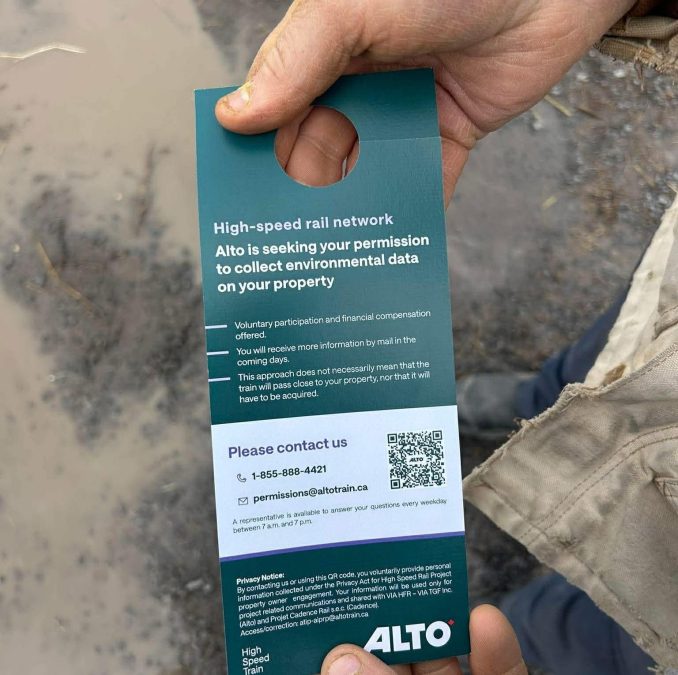
Here's an article about it, with a pic of the Alto brochure:


Given the conversation we've been having about regional rail, HSR stops, etc. I thought the above is an interesting read..
 
For those with an interest in breadcrumbs about potential routes, the opposition AltoNo folks have a user-generated map showing places where landowners have recently received requests to access their land to collect environmental data:

Here's an article about it, with a pic of the Alto brochure:

Let me bring the access request pins forward:

1775599018194.png


1) There's a lot of information there. Just sayin.

2) I was asked to keep this bit quiet a few weeks ago..........I believe the number of notices was slowed down after some initial.....pushback.............but I see this part is now (pardon the pun) back on track.

Hint: Overlay the above w/this: from UT's own @ShonTron https://walkitect.maps.arcgis.com/apps/webappviewer/index.html?id=d8ef14401a234fb2a29b8932046051f1

You won't miss the one alignment at all, the other has a significant greenfield component but is also quite clear.
 
Last edited:
Let me bring the access request pins forward:

View attachment 727348

1) There's a lot of information there. Just sayin.

2) I was asked to keep this bit quiet a few weeks ago..........I believe the number of notices was slowed down after some initial.....pushback.............but I see this part is now (pardon the pun) back on track.
Notice how none are west of Ottawa?
 
One of the most surprising things to me about the opposition to Alto is people who want it slower. It comes up in article after article from various different locations.

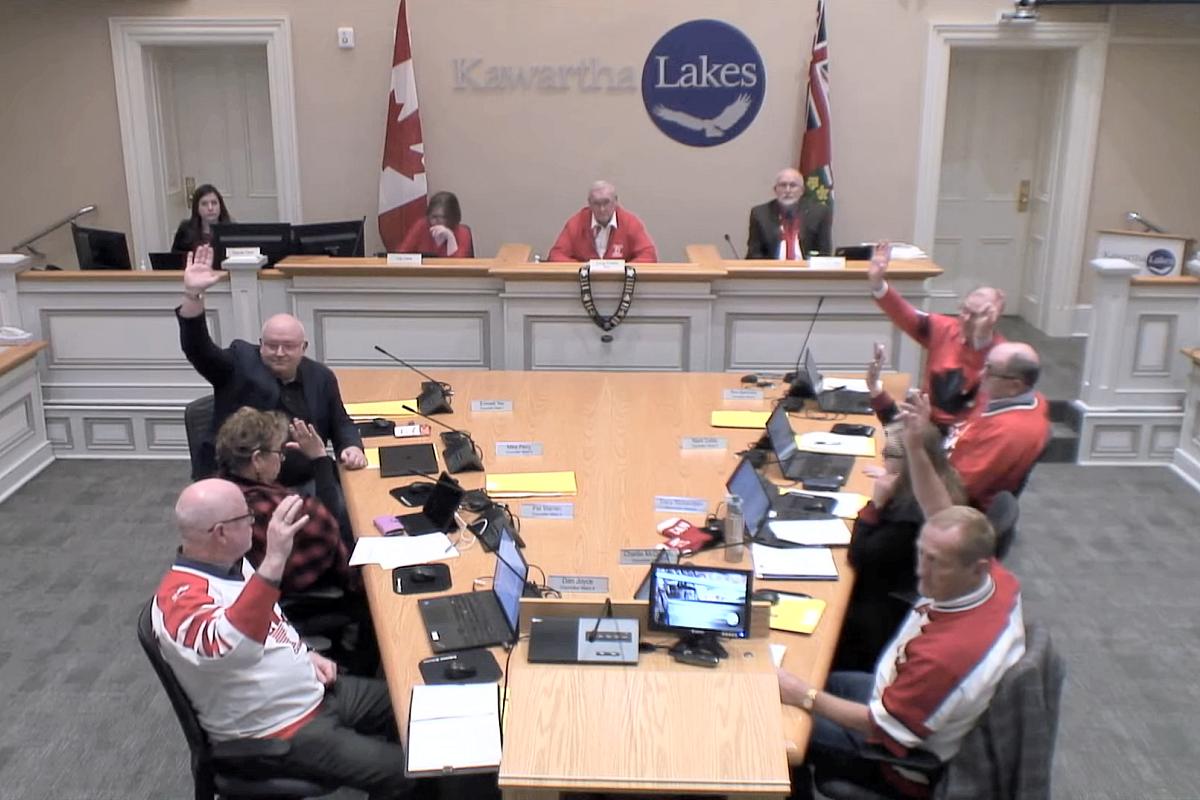
For a recent example: “Personally, I would like to see high-frequency rail that allows land crossings and doesn’t have huge fences on either side of it … so that roads aren’t cut off to communities, farms aren’t cut in half, you’re still able to cross those tracks,” [the resident of Bethany-Pontypool] replied [to the council of the City of Kawartha Lakes]. “I mean, to have a high speed rail that does 300 kilometres an hour — could 200 kilometres an hour for a high-frequency rail not satisfy the same requirements?”

 
One of the most surprising things to me about the opposition to Alto is people who want it slower. It comes up in article after article from various different locations.

For a recent example: “Personally, I would like to see high-frequency rail that allows land crossings and doesn’t have huge fences on either side of it … so that roads aren’t cut off to communities, farms aren’t cut in half, you’re still able to cross those tracks,” [the resident of Bethany-Pontypool] replied [to the council of the City of Kawartha Lakes]. “I mean, to have a high speed rail that does 300 kilometres an hour — could 200 kilometres an hour for a high-frequency rail not satisfy the same requirements?”


Actually, asking this question makes a lot of sense.

Recall that the proponents to the original RFP were directed to submit two proposals - one dealing with full high end HSR, the other a more modest and presumably lower cost system which did not aspire to top end speed.

We have never seen the comparison in business cases for the two alternatives. Ottawa chose Cadence's high end proposal, and branded it Alto... but without showing their math,

I'm not arguing one way or the other, and it has been debated to death here already so let's not recycle..... my point is simply, no one has explained why one option was chosen over the other, and what the tradeoffs might have been in cost and in benefit as those with the best access to data established these to be..

- Paul
 
One of the most surprising things to me about the opposition to Alto is people who want it slower. It comes up in article after article from various different locations.

For a recent example: “Personally, I would like to see high-frequency rail that allows land crossings and doesn’t have huge fences on either side of it … so that roads aren’t cut off to communities, farms aren’t cut in half, you’re still able to cross those tracks,” [the resident of Bethany-Pontypool] replied [to the council of the City of Kawartha Lakes]. “I mean, to have a high speed rail that does 300 kilometres an hour — could 200 kilometres an hour for a high-frequency rail not satisfy the same requirements?”


The reason they want it slower is because they do not understand why it should be as fast as we can. By doing that, it eases congestion on the 401. It will also open slots in YYZ.
 

Back
Top