News   GLOBAL  |  Apr 02, 2020
 10K     0 
News   GLOBAL  |  Apr 01, 2020
 42K     0 
News   GLOBAL  |  Apr 01, 2020
 6.2K     0 

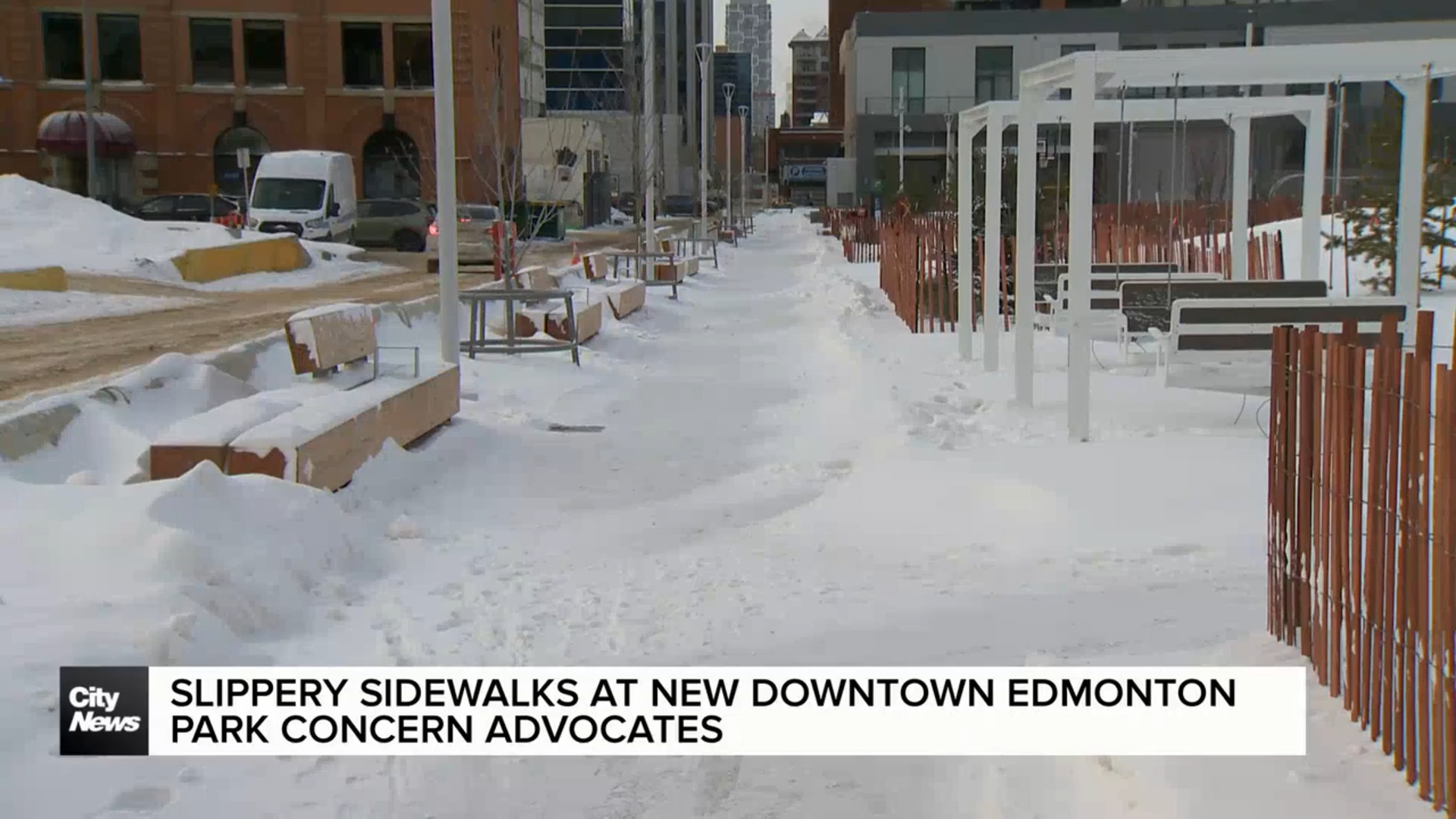
heated parkade ramps don't melt the snow to water which then runs down the ramp and into the drains. the snow melts and quickly turns to vapour. There's no build up of liquid water.
Ya no, our condo parkade ramp has heated concrete and there is definitely a channel and drain at the bottom. It does indeed require regular maintenance and cleaning and when it gets clogged it's a major issue. When there is a large snowfall it can be quite a large amount of water.
 
The ratio of snowfall to melt/sublimate-water/mist is between 10:1 and 20:1 based on the type of snow that is falling -- most large snowfalls occur in milder weather and the snow is "lighter" so the ratio is closer to 20:1 (20 cm of snow converts to 1 cm of melt/sublimate); conversely dense snowfall is typical of colder temperatures with much smaller amounts of accumulation (5 cm of snow converts to 0.5 cm of water. With proper path drainage (2% slope from path crown) that portion of the snow that is not sublimated will quickly drain to the edge of the walk and will not be required to drain away because the total accumulation is very small. Check out the visuals I provided earlier. This isn't so much as a "straw man" as it is a "red herring". Parking ramps are far broader in terms of surface area requiring drainage than are foot paths. Herring are a favorite Norse food.
 
The ratio of snowfall to melt/sublimate-water/mist is between 10:1 and 20:1 based on the type of snow that is falling -- most large snowfalls occur in milder weather and the snow is "lighter" so the ratio is closer to 20:1 (20 cm of snow converts to 1 cm of melt/sublimate); conversely dense snowfall is typical of colder temperatures with much smaller amounts of accumulation (5 cm of snow converts to 0.5 cm of water. With proper path drainage (2% slope from path crown) that portion of the snow that is not sublimated will quickly drain to the edge of the walk and will not be required to drain away because the total accumulation is very small. Check out the visuals I provided earlier. This isn't so much as a "straw man" as it is a "red herring". Parking ramps are far broader in terms of surface area requiring drainage than are foot paths. Herring are a favorite Norse food.
Except… the water will not drain away from that “edge of the walk”. The initial water flow will be “soaked up” by the snow at the edge of the walk which will in turn freeze into an insulated impermeable curb/ice dam which will hold water and allow it to back up over the walk and then freeze. You see that a lot on sidewalks set back from the street curb where there are snow banks on both sides. It’s the same phenomenon that creates ice dams on roofs.
 
Last edited:
^ Last comment on this subject. This depends entirely on where the last heating element terminates in relation to the width of the path. Feel free to go on but this is not worth the time to keep countering arguments -- it is becoming an ever more common element in the Scandinavian countries where it has met with success when installed and detailed properly.
 
^
It’s not dependent on where the last heating element is located, it’s dependent on how the meltwater is handled. Most Scandinavian applications utilize the local storm drainage system which means the system must be extended to the areas being drained. Holland Michigan’s system utilizes permeable pavements and sub structures allowing the melt to enter the areas ground water system. As with the Scandinavian systems, a central plant is integral (water or electrical or geothermal as in Iceland). To be effective, these are simple in principal but complex in their execution and their maintenance (most North American applications other than Holland’s shut down within 10-30 years of their being completed. As I said earlier, when it comes to O-Day’min Park, that potential ship sailed long ago.
 
The park has plenty of shortcomings but people will simply need to live with it. It's a community park so people shouldn't expect more than any other community park is entitled to receive.
 
 
The park has plenty of shortcomings but people will simply need to live with it. It's a community park so people shouldn't expect more than any other community park is entitled to receive.
I believe that it is a 'neighbourhood park' (or whatever that higher rank is) versus a 'community park' (localized) and so from what I was told these receive additional resources?! Maybe it was just a dream, but pretty sure that's the case.

It doesn't need Churchill levels of attention, but certainly more than 'any other community park'.
 

1766503622178.png
 
I believe that it is a 'neighbourhood park' (or whatever that higher rank is) versus a 'community park' (localized) and so from what I was told these receive additional resources?! Maybe it was just a dream, but pretty sure that's the case.

It doesn't need Churchill levels of attention, but certainly more than 'any other community park'.
I'm not saying that the COE pulled the wool over your eyes but the COE pulled the wool over your eyes. O-day'min Park was originally represented to the public as a park that would hold some broad status. Conceptually similar to parks that help define a city. Believe me, this park doesn't do that and nobody is going out of their their way to go to O-day'min. If somebody does, they're going to be disappointed because O-day'min is a glorified playground with some walking corridors to get from point "A" to point "B." The park is helpful for attracting some development and for nearby residents to have somewhere to go but that's it. It doesn't have a broader relevance. If it was meant to be broadly representative of the city then it wouldn't have been watered down and it probably wouldn't have a community named attached to it. Chances are that if was meant to be more than a community park it would have been named Edmonton Central Park or City Centre Park or something similar.
 

Back
Top