


News   GLOBAL  |  Apr 02, 2020
 11K     0 
News   GLOBAL  |  Apr 01, 2020
 43K     0 
News   GLOBAL  |  Apr 01, 2020
 6.7K     0 

M II A II R II K

Senior Member
Member Bio
Joined
Apr 24, 2007
Messages
3,948
Reaction score
1,069
Virginia plans to pull politics out of transportation spending

Read More: http://www.roanoke.com/news/politic...cle_5d7518b5-5c77-5457-806d-37ed5f294594.html
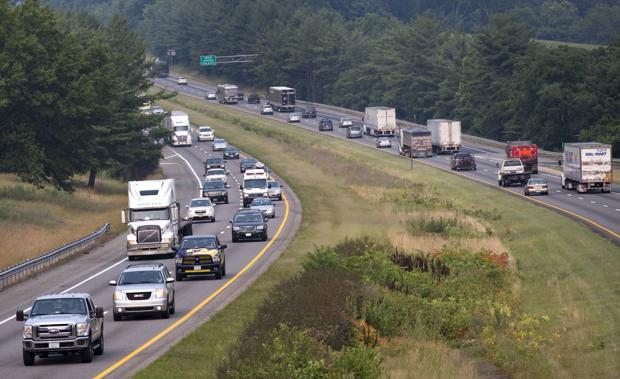
This year and in coming years, Virginia plans to put more money into high-impact, cost-effective transportation projects and less into the pet projects of powerful politicians. Virginia Secretary of Transportation Aubrey Layne last week detailed a plan to fix the state’s system of transportation spending, which has been plagued by too few dollars and too much politics, he said.

- Under the old paradigm, Virginia’s governor heavily influenced transportation spending, and that meant new priorities as often as every four years. In addition, decision-makers readily invested huge sums in high-traffic areas to the detriment of rural areas. Officials sometimes added to the Six-Year Improvement Program as political favors, even if there wasn’t any money to build.

- A new package of reforms under Gov. Terry McAuliffe will score proposed transportation projects on merit. The closer a proposal comes to delivering five public benefits — such as economic development, accessibility to jobs or congestion relief — the higher its score and likelihood to receive money. That’s the new and only rationale behind how Virginia will invest in systems to move people and goods in the future, Layne said.

- If it works, rural and semi-rural places such as the Roanoke and New River valleys will compete on a more level playing field for construction dollars against the urban cores of Northern Virginia, Richmond and Hampton Roads. In addition, the state is giving itself an annual budget with which to both maintain the transportation network, with routine work like repaving, and to reconstruct roads and bridges when they get old.

- For further coordination, planners must refer constantly to the state’s long-term transportation plan, VTrans2040, to achieve targets decades out. It could be years before it’s clear whether the new program has succeeded. The state won’t complete the first annual cycle until summer 2016 and the transition will take several years. But officials in both local and state government sound hopeful.

- Under the new strategy, local governments, regional groups such as the Roanoke Valley Transportation Planning Organization, and public transit agencies will propose projects during an annual fall intake period, which state workers will score during the winter. As before, the Commonwealth Transportation Board will decide by early summer what gets funded. But the CTB will now rely on the scores to allocate the billions of available dollars each year — or explain publicly why it didn’t.

- Transparency is built in. The public will get to see project proposals, scores and the winners list — as well as the explanations if the CTB, which is made up of 14 citizens and three of the state’s top transportation officials, favors a lower-scoring project over a higher-scoring one. VTrans2040 is also a public document. CTB members from that district will pick one or more winners.
Separately, project proponents can enter a statewide competition for a helping of a statewide pot of construction dollars. The whole CTB will pick the winners from among those initiatives.

- Here’s another example: If the Roanoke Valley proposed to widen its stretch of I-81 to three lanes in each direction — something discussed for years — it could request a share of Salem VDOT’s pot of money or dollars from the statewide pot of money, or both. In that vein, it would compete with other projects of statewide importance. But decision-makers couldn’t discount the proposal on account of its location in Southwest Virginia. Only the proposal’s cost-benefit score would matter, in theory.

.....


5599decd22a6f.image.jpg
 
Very interesting idea! I like the idea of having a ranked list that is based on merit, instead of political calculus. It would be interesting to see how GTHA projects would be ranked if such a system were to be applied here. I would imagine that GO RER projects would be near the top.
 
In addition, decision-makers readily invested huge sums in high-traffic areas to the detriment of rural areas.

So, the problem is that money was being invested in areas with transport needs instead of being spread around like jam on a Virginia-shaped piece of toast.

- If it works, rural and semi-rural places such as the Roanoke and New River valleys will compete on a more level playing field for construction dollars against the urban cores of Northern Virginia, Richmond and Hampton Roads.

So, this proposal is meant to address the problem of urban municipalities getting too much money for project funding? I assume there is a parallel proposal to address the problem of these urban areas generating a disproportionate amount of the revenue for this project funding.

- A new package of reforms under Gov. Terry McAuliffe will score proposed transportation projects on merit. The closer a proposal comes to delivering five public benefits — such as economic development, accessibility to jobs or congestion relief — the higher its score and likelihood to receive money. That’s the new and only rationale behind how Virginia will invest in systems to move people and goods in the future, Layne said.

economic development a.k.a. building roads to unlock greenfield sites for sprawling subdivisions

accessibility to jobs a.k.a. building roads to unlock greenfield sites for office parks

congestion relief a.k.a. widening existing roads to allow cars to more quickly access existing office parks and subdivisions
 
Anyone who's read "Death and Life of Great American Cities" should be aware of the dangers of leaving things to the experts.

Political representatives need to be involved in order to keep things accountable and to counteract the potential echo chamber that can form within professional circles.

I agree 100% that we need to reduce the influence of politics in transport planning here in Ontario, but removing it altogether should not be our goal.
 
We are way ahead of many States in these matters already. The amount of pork barrel politics in the US dwarfs what happens in Ontario, or the rest of Canada. Not even in the same league. And like the article said, they are only now giving themselves an annual budget for state of good repair. Before, state congress would literally vote on allocating money to filling potholes on an as-needed basis. Pretty sad, really. All you gotta do is drive on the Interstate basically anywhere to see how this affects the condition of the road, and the amount of trash on it.
 
We are way ahead of many States in these matters already. The amount of pork barrel politics in the US dwarfs what happens in Ontario, or the rest of Canada. Not even in the same league.
Except, maybe Ford's Toronto.

Thankfully, he only delayed many projects, since our Metrolinx slammed some of those very well-designed LRT routes back onto the table.
 
Except, maybe Ford's Toronto.

Thankfully, he only delayed many projects, since our Metrolinx slammed some of those very well-designed LRT routes back onto the table.

That's more than a little revisionist. Metrolinx happily went along with Ford's grade-separated Eglinton plan, producing the MoU which replaced the Sheppard LRT with a subway and replaced the Finch West LRT with a BRT. It took a city council reversal to return the LRT routes to the table.

If anything, Metrolinx only reluctantly put Miller's TC routes onto their project list, as part of their grab-bag of municipal pet projects that comprise the Big Move.
 
Truthfully, Metrolinx has not really been concerned with City of Toronto transportation needs until the John Tory administration.

Perhaps that will be one very positive legacy of Tory's mayoralty.
 
I can't think of a better example of political interference in tranportation planning than Transit City, a transit plan devised entirely by politicians David Miller and Adam Giambrone, that focuses completely on LRT, and that completely excluded the downtown of Toronto.
 
Not sure how running one of the lines into Union Station completely excludes downtown.

Other than that, LRT wasn't really appropriate for downtown. Downtown is certainly covered in the Transit City Bus Plan - http://www.ttc.ca/About_the_TTC/Com...gust_26_2009/Reports/Transit_City_Bus_Pla.pdf

Downtown was also covered in other plans from the same administration, such as the 2009 vote asking Metrolinx to prioritize the Downtown Relief Line in the 15-year Big Move plan.
 
Last edited:
I can't think of a better example of political interference in tranportation planning than Transit City, a transit plan devised entirely by politicians David Miller and Adam Giambrone, that focuses completely on LRT, and that completely excluded the downtown of Toronto.
But it was not intended as that though. It was supposed to be cheap because Toronto had no money.
 
I can't think of a better example of political interference in tranportation planning than Transit City, a transit plan devised entirely by politicians David Miller and Adam Giambrone, that focuses completely on LRT, and that completely excluded the downtown of Toronto.
I think Transit City was problematic not because it "excluded downtown" but because it tried to politic a transit option that didn't really pay attention to the needs of suburban Toronto areas.
 
But it was not intended as that though. It was supposed to be cheap because Toronto had no money.
Cheap? Transit City originally got an unprecedented $12 billion in funding.

Downtowns also covered in other plans from the same administration, such as the 2009 vote asking Metrolinx to prioritize the Downtown Relief Line in the 15-year Big Move plan.
Yes, I remember well the glitzy press conference where Miller and Giambrone announced their intention to make the DRL a high priority for their administration.
 
Cheap? Transit City originally got an unprecedented $12 billion in funding.

Yes, I remember well the glitzy press conference where Miller and Giambrone announced their intention to make the DRL a high priority for their administration.
That's cheaper then then then 20 plus billion people were talking about for sheppard east, the full DRL, the bloor extension on both ends, the york region extensions, etc.
 
That's cheaper then then then 20 plus billion people were talking about for sheppard east, the full DRL, the bloor extension on both ends, the york region extensions, etc.
Yeah, so? Miller and Giambrone never expected to see all of Transit City funded in one shot. And I don't remember anyone demanding $25 billion in immediate funding for all the things on your list, not even Ford.

Transit City without the DRL had nothing to do with being "cheap"; it had everything to do with Miller and Giambrone having no interest in the DRL.
 

Back
Top