
Tim MacDonald
Senior Member
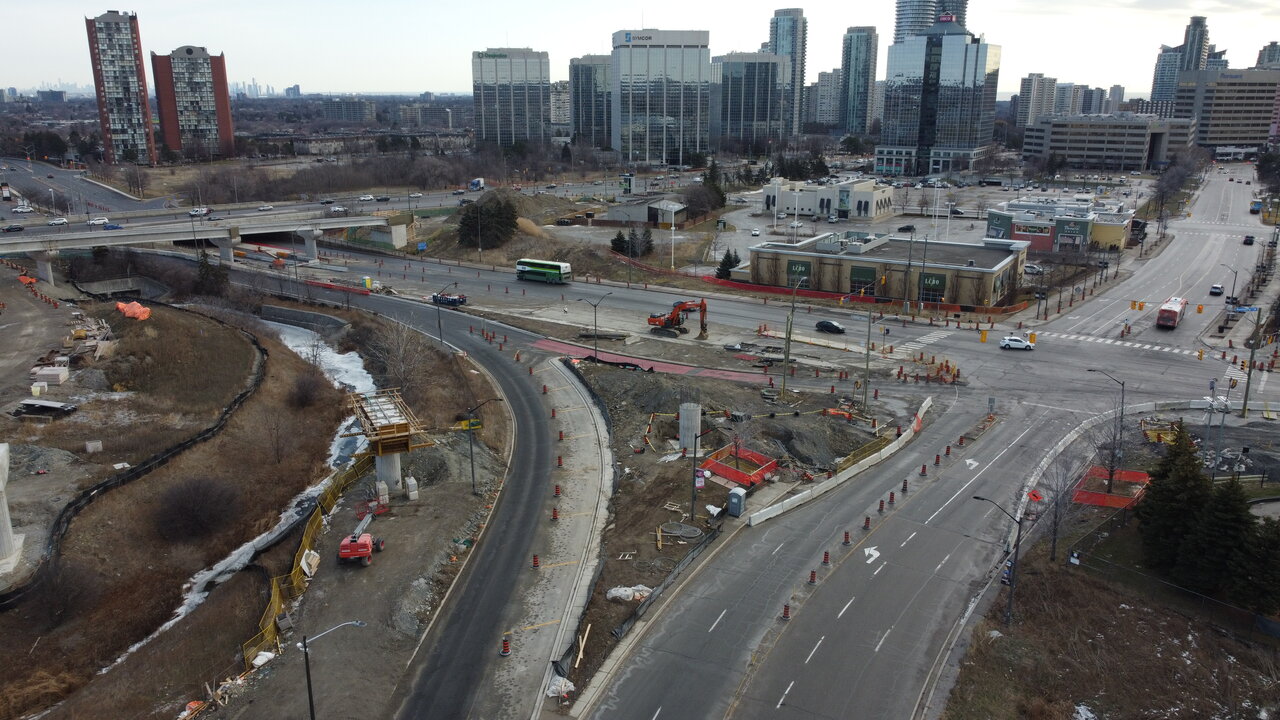
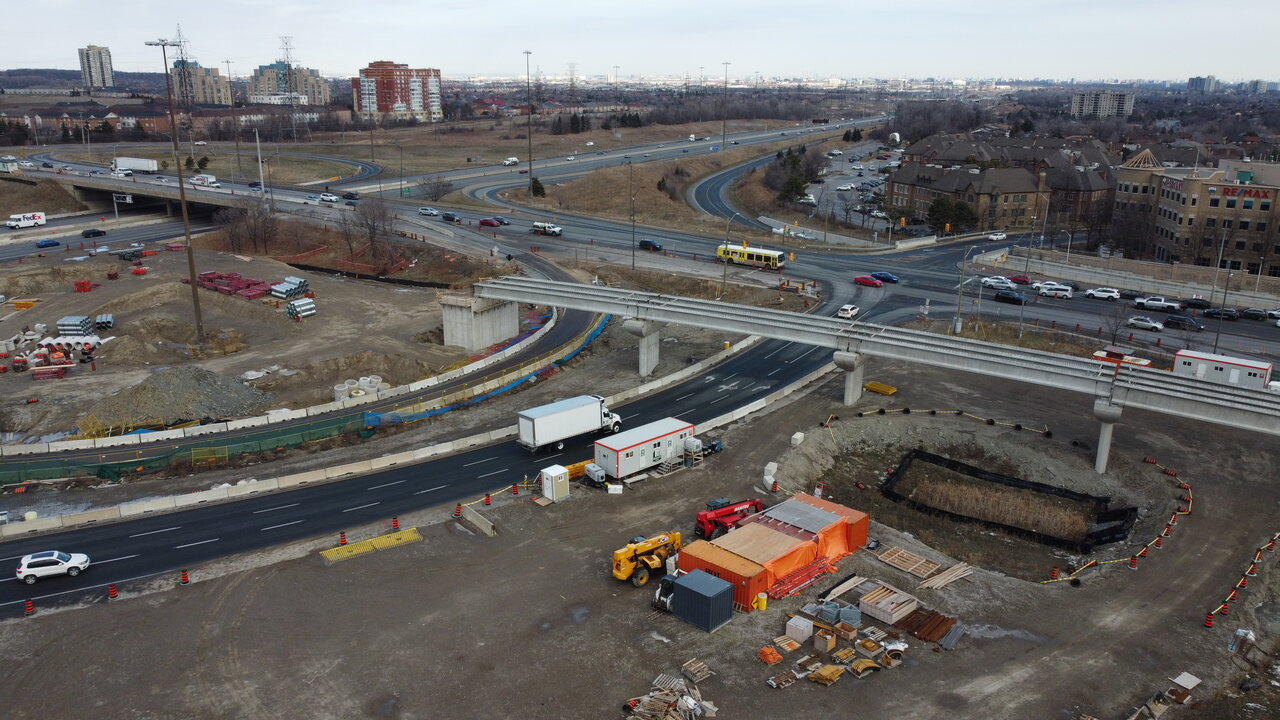
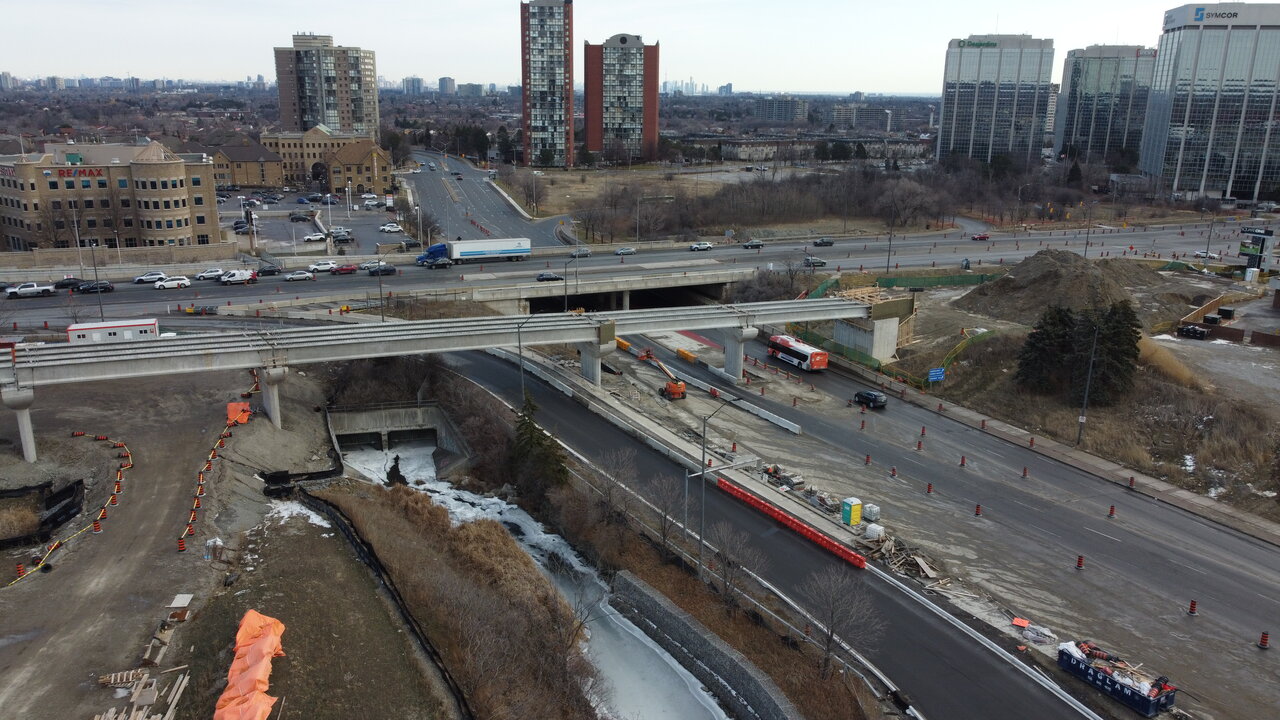
December 29th - some Rathburn/Hurontario bridge stuff
I think you may have misinterpreted that statement. ARG1 said that imagine if Hurontario had rapid transit like Yonge Line.I've never seen a take before that any of Toronto's 3 subway lines aren't rapid transit.
Hmm, the express GO bus from Toronto to Hamilton Centre is faster than the GO Train at some off-peak times.
I guess GO Trains aren't rapid transit either!

I think you need to reread what I said a bit more carefully.I've never seen a take before that any of Toronto's 3 subway lines aren't rapid transit.
Hmm, the express GO bus from Toronto to Hamilton Centre is faster than the GO Train at some off-peak times.
I guess GO Trains aren't rapid transit either!

You are saying that if Hurontario LRT isn't that much faster than a bus off-peak, then it isn't rapid transit.I think you need to reread what I said a bit more carefully.

You are saying that if Hurontario LRT isn't that much faster than a bus off-peak, then it isn't rapid transit.
But have you taken the 300 or 320? Not to mention the 900. Faster than the subway. So ergo the TTC subway lines aren't rapid transit.
And the Lakeshore West definitely aren't rapid transit.
So I'm not seeing what I didn't read carefully - or should I be sorry that you meant that Hurontario is (of course) rapid transit?
Are you comparing bus routes that have limited stops with a subway line that has stops every km? If you want to draw parallels then compare Yonge bus route 97 with Yonge subway line. In that case, the subway is much faster than the bus.You are saying that if Hurontario LRT isn't that much faster than a bus off-peak, then it isn't rapid transit.
But have you taken the 300 or 320? Not to mention the 900. Faster than the subway. So ergo the TTC subway lines aren't rapid transit.
And the Lakeshore West definitely aren't rapid transit.
So I'm not seeing what I didn't read carefully - or should I be sorry that you meant that Hurontario is (of course) rapid transit?

And if this is actually what's happening, we should be asking ourselves what went wrong and why we are wasting money on this.If the LRT runs at the same speed as buses in mixed traffic it is replacing, then it's not rapid.
I don't really understand the TLDR discussion here. The key issue is that ARG1's false claim that if an off-peak bus is faster than a rapid transit route, it's not rapid transit. Despite being that many off-peak bus routes are faster than subways and GO Trains - so there's no reason that we'd think that LRT was any different.You said "I've never seen a take before that any of Toronto's 3 subway lines aren't rapid transit." but ARG1 never said that.
It's clear that you misread Arg1's "Now imagine if like Yonge Street it had actual rapid transit, and not something that is barely faster than the bus outside of rush hour." as instead saying "Now imagine if Yonge Street had actual rapid transit, and not something that is barely faster than the bus outside of rush hour.
This is the only way your reply makes sense.
It's okay, I read it similarly when skimming it.
Just admit you made a mistake and move on.
In particular, I was thinking of my own experience with the 300 compared to the Bloor-Danforth subway (between Yonge and Woodbine) - which has similar spacing as the Yonge line. It moves like greased lightning east of Sherbourne, not even stopping where most subway stations are. Looking at Yonge Street, looks like King to Eglinton on the 320 is 19 minutes, compared to 15 minutes on the subway. From Eglinton to Finch the subway takes 14 minutes while the 320 takes 15 minutes. Which surprises me, I'd have though that the huge spacing between Eglinton and Finch would have given the subway a bigger advantage, not a smaller one.Are you comparing bus routes that have limited stops with a subway line that has stops every km? If you want to draw parallels then compare Yonge bus route 97 with Yonge subway line. In that case, the subway is much faster than the bus.
If you go back to the justification on the Finch West and Sheppard East Transit City lines, it wasn't about current off-peak travel times - it was about what happens 20 to 30 years later at peak, with ever-increasing congestion on the suburban arteries, as densification took place.If the LRT runs at the same speed as buses in mixed traffic it is replacing, then it's not rapid.
LRVs typically have slower acceleration and longer idle times compared to busses. Busses only need to stop at select stops, LRTs typically have to stop at every station. Furthermore we in Toronto insist that we build LRTs to replace local busses, so not only do they have to stop at every stop, but those stops are frequent and significantly add up in terms of travel times, especially compared to express busses. We could put Stop Requested buttons on our LRVs, but that does add the risk of bunching to the network which becomes a problem when we ideally want to implement proper TSP. The only advantage LRTs have in terms of travel times is dedicated lanes and maybe TSP but lanes become irrelevant as a time saver outside of rush hour, and TSP doesn't guarantee you constantly hit green lights, only that you don't stop on red lights as often. The only real real change I can think of that could give an edge to the LRTs is if we allow the LRVs to run faster than the speed limit of the street its on, but for safety reasons I doubt most councilors/planners would be on board with that.And if this is actually what's happening, we should be asking ourselves what went wrong and why we are wasting money on this.
One hopes that one day the GTA(Toronto) will see LRV's bypass stops where no one wants off or on as well using the door button to get on/off the LRV's like the rest of the world. It was common to see riders in Europe and the US use the door button for getting on/off at stops. Even saw riders pushing the buttons on the Metro even though the driver open/closes the doors in the first place unless it was an driverless system. Only have to go to Buffalo to see riders using the buttons.LRVs typically have slower acceleration and longer idle times compared to busses. Busses only need to stop at select stops, LRTs typically have to stop at every station. Furthermore we in Toronto insist that we build LRTs to replace local busses, so not only do they have to stop at every stop, but those stops are frequent and significantly add up in terms of travel times, especially compared to express busses. We could put Stop Requested buttons on our LRVs, but that does add the risk of bunching to the network which becomes a problem when we ideally want to implement proper TSP. The only advantage LRTs have in terms of travel times is dedicated lanes and maybe TSP but lanes become irrelevant as a time saver outside of rush hour, and TSP doesn't guarantee you constantly hit green lights, only that you don't stop on red lights as often. The only real real change I can think of that could give an edge to the LRTs is if we allow the LRVs to run faster than the speed limit of the street its on, but for safety reasons I doubt most councilors/planners would be on board with that.

LRVs typically have slower acceleration and longer idle times compared to busses. Busses only need to stop at select stops, LRTs typically have to stop at every station. Furthermore we in Toronto insist that we build LRTs to replace local busses, so not only do they have to stop at every stop, but those stops are frequent and significantly add up in terms of travel times, especially compared to express busses. We could put Stop Requested buttons on our LRVs, but that does add the risk of bunching to the network which becomes a problem when we ideally want to implement proper TSP. The only advantage LRTs have in terms of travel times is dedicated lanes and maybe TSP but lanes become irrelevant as a time saver outside of rush hour, and TSP doesn't guarantee you constantly hit green lights, only that you don't stop on red lights as often. The only real real change I can think of that could give an edge to the LRTs is if we allow the LRVs to run faster than the speed limit of the street its on, but for safety reasons I doubt most councilors/planners would be on board with that.
To be fair, a lot of what you mention doesn't have to be inherent to an LRT system, it's just the way the incompetence around these parts has thought of. I am in favour of having less stops rather than more, anything that is closer than 0.4 km outside of dense core areas like downtown Toronto is ridiculous.LRVs typically have slower acceleration and longer idle times compared to busses. Busses only need to stop at select stops, LRTs typically have to stop at every station. Furthermore we in Toronto insist that we build LRTs to replace local busses, so not only do they have to stop at every stop, but those stops are frequent and significantly add up in terms of travel times, especially compared to express busses. We could put Stop Requested buttons on our LRVs, but that does add the risk of bunching to the network which becomes a problem when we ideally want to implement proper TSP. The only advantage LRTs have in terms of travel times is dedicated lanes and maybe TSP but lanes become irrelevant as a time saver outside of rush hour, and TSP doesn't guarantee you constantly hit green lights, only that you don't stop on red lights as often. The only real real change I can think of that could give an edge to the LRTs is if we allow the LRVs to run faster than the speed limit of the street its on, but for safety reasons I doubt most councilors/planners would be on board with that.
You only have to look at the bus plans that the TTC has been posting for the longest time to notice this. With the launch of the Finch West and Eglinton Lines, all bus services were to be removed from the surface section of those routes, replaced entirely by the streetcars. Had the stops been every ~1km apart like you see on Viva, they absolutely would've kept at least some local bus running, similar to what YRT does. The only reason they seemed to have backtracked on this idea is due to the backlash they got with the Eglinton RapidTO project, where cutting a handful of small stops was enough to get people angry, and they want to avoid that with Eglinton.Source?
You're comparing modern LFLRVs with PCCs? PCCs are extremely small vehicles that are built extremely similarly to busses, and guess what, nobody is manufacturing anything remotely like them anymore. Modern LFLRVs are a completely different beast. As for When I refer to LRVs having longer idle times, I should specify that it is circumstantial, but those circumstances are far more valid during off peak times. If you have a lineup of people trying to get onto a bus, then yes the bus will have the longer idle time, but when you have 2-5 people getting on, the typically opens door significantly faster than LRVs. Just compare the TTC busses opening and closing doors with the Flexity Outlooks where the doors are typically slower and occasionally you even have to sit through a jingle. And no, this isn't a Toronto thing. The same thing happens in Amsterdam in other European cities.I'm not sure what your source is on LRVs having a slower acceleration, that seems like something that is circumstantial based on the vehicle model. If you were running PCCs on these lines, I highly doubt that's a problem you'd be encountering. As for longer idle times, I don't believe that at all. If you switch from having a bus that you can only board through the front door, to an LRV you can board through all doors, there is no way such a vehicle is going to take longer at a stop then the bus it replaced. You can even see this phenomenon in the bus networks around us, VIVA buses along Yonge Street exchange passengers much faster than any TTC bus.
LRTs have a time and place, and that time and place is dense urban cores where you need to move a lot of people short distances. Despite all of the problems with the Spadina Streetcar, that line is the perfect example of LRT being implemented in the right place and environment. Hurontario is not it, Eglinton is not it.If the people in charge were paying attention, the LRT should be much faster than the local bus. If it's not, it's not an indicator that the method of transit chosen is poor, it's (another) indicator that the urban and transit planners around us have no idea what they are doing and need to broaden their scope. The other posters above mention other fair points too, such as how an LRV lasts almost twice as long as a bus and the ride quality is much more comfortable.