News   GLOBAL  |  Apr 02, 2020
 11K     0 
News   GLOBAL  |  Apr 01, 2020
 43K     0 
News   GLOBAL  |  Apr 01, 2020
 6.7K     0 

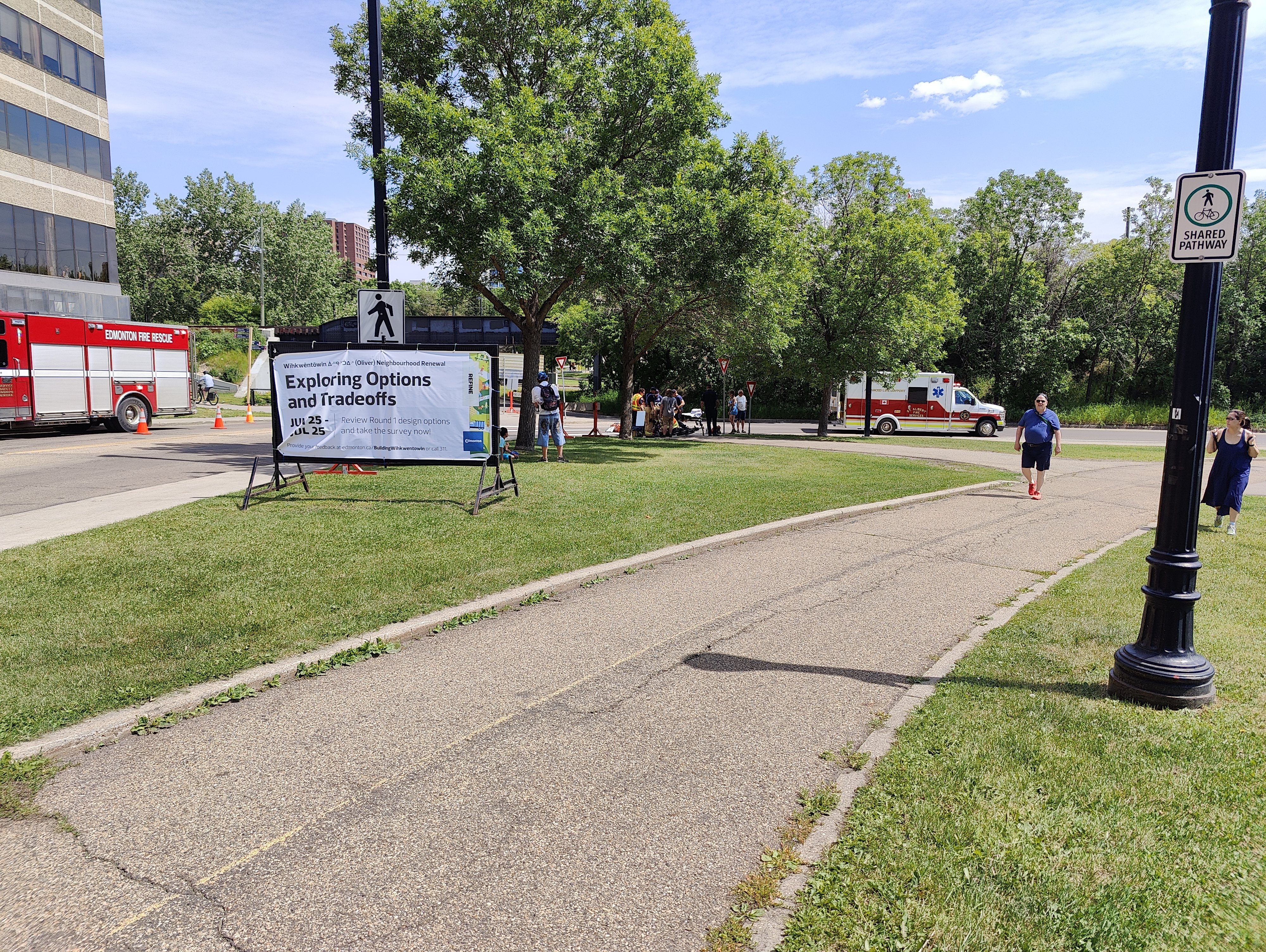
City administration has also proposed to close 97 Avenue east of 110 Street to drivers. This closure would cut off one vehicular access point to the High Level Bridge from the neighbourhood, and connect Constable Ezio Faraone Park to the Ribbon of Steel shared-use path. The current design involves two right-turn slip lanes intersecting with the shared-use path.

Coincidentally, Budnick said the Edmonton Bike Coalition was leading a tour through Wîhkwêntôwin earlier this month to discuss the proposal when participants watched a driver hit a cyclist who was crossing the street at that exact spot.

“This is a very busy city park, so (the proposed closure is) a good opportunity to really massively increase safety at common conflict points,” Budnick said.
 

City administration has also proposed to close 97 Avenue east of 110 Street to drivers. This closure would cut off one vehicular access point to the High Level Bridge from the neighbourhood, and connect Constable Ezio Faraone Park to the Ribbon of Steel shared-use path. The current design involves two right-turn slip lanes intersecting with the shared-use path.

Coincidentally, Budnick said the Edmonton Bike Coalition was leading a tour through Wîhkwêntôwin earlier this month to discuss the proposal when participants watched a driver hit a cyclist who was crossing the street at that exact spot.

“This is a very busy city park, so (the proposed closure is) a good opportunity to really massively increase safety at common conflict points,” Budnick said.

Regarding the elimination of that vehicle access point from 97 Avenue to the high level bridge, both options the city is proposing for this particular section of roadway involve closure to cars so that only people using active transportation can pass through. I was a bit surprised that one of the options wasn't to continue to allow vehicle access here. I love it. When asking one of the city consultants about why the closure is the only option being presented, he said the proposal fits with what the city has envisioned for the high level bridge, but couldn't elaborate at this time.

One of the biggest concerns I saw from people regarding this neighbourhood renewal plan, which is quite good, is reduction of parking. For instance, the David Thompson building doesn't haven't any visitor parking and so relies fully on street parking and using public land.
 
All I know for sure is that bombing down the ribbon of steel after work will be much more enjoyable with the removal of this intersection!
Screen Shot 2024-07-12 at 9.33.46 AM.png


Both options have slightly janky options heading west but overall the plan for the neighbourhood is exciting. It'll be interesting to see how much goes through because I feel like Wihkwentowin/Oliver will set the bench mark of what's possible in the city.
Screen Shot 2024-07-12 at 9.37.08 AM.png

Screen Shot 2024-07-12 at 9.36.49 AM.png
 
^ Like that idea a lot. Do wonder about traffic volumes though, 97 ave to get to 110th is a pretty busy route for those getting into SE Wihkwentowin albeit a left turn signal on 109 and 99 ave probably solves that problem.
 
^ Like that idea a lot. Do wonder about traffic volumes though, 97 ave to get to 110th is a pretty busy route for those getting into SE Wihkwentowin albeit a left turn signal on 109 and 99 ave probably solves that problem.
It would be a viable and reasonable option.
 
There is so much parking along 111th in the form of surface lots and parkades. I wonder if any of them would be made more public/useable for visitors? Must be capacity for 1000+ vehicles across these lots. Does that church rent theirs out during weekdays?

FD949935-9F52-4B2D-B3FB-A5E1E087C154.jpeg
 
102ave from 136st westward to west block has started. Part of the 2024 routes in the bike plan implementation.

Fascinated to see how 142st and 102ave are connected in the future. Messy intersection with the train/lots of road. But bikes currently have to zig zag through glenora from 142 bridge to 136st instead of a straight shot from the bridge to 102ave. Adding protected infrastructure through the current glenora bike route would be messy though.

67AD93B7-AD18-4C08-8927-FA564E9A2844.jpeg
CE8D55D8-52B5-429F-AF86-667A7C33F1D3.jpeg
 
Anyone know if the now closed second lane of Rossdale road heading to Bellamy Hill will be made into a bike or pedestrian route? As is the cement barriers make this wide space detached from any use.
 
Still another week to complete the survey for Wîhkwêntôwin renewal if anyone is interested! Surprisingly, there's still some anti bike laners, even in this area haha. So the supporting voices do matter! Lost parking is likely the biggest pushback being received.

 
Still another week to complete the survey for Wîhkwêntôwin renewal if anyone is interested! Surprisingly, there's still some anti bike laners, even in this area haha. So the supporting voices do matter! Lost parking is likely the biggest pushback being received.


I understand apartment building residents in complexes like the David Thompson that were built with zero guest parking wanting to retain as much street parking in the neighbourhood as possible. Building safe, viable alternatives to driving though requires some new infrastructure so in many cases the option is removing some parking because roads can't get wider in many areas.

In terms of parking, given that Edmonton has grown by 100,000 people in 2022-23 and during that same time added more than 60,000 cars, something has to give. If we add more parking to accommodate the 10s of thousands of cars added to our roadway every year, that's a lot of space/land in our cities for parked vehicles. Again, many of our roads can't get any wider - so where are these cars going to park? Do we leave undeveloped sites as is for parking and perhaps even take down more buildings for more parking? I sure hope not. Look what that has done to our downtown.

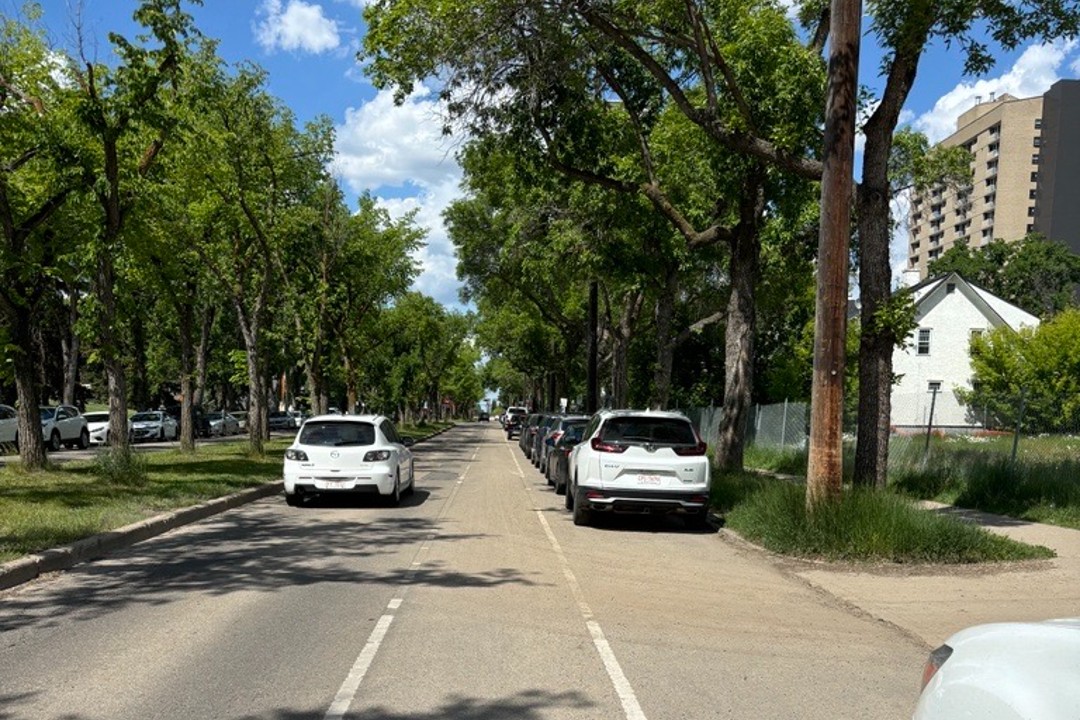
Older neighbouroods, despite having lower populations than previous decades, are experiencing more parking congestion now than ever before because even though fewer residents live in these neighbourhoods, more of the people have more vehicles. And so the thought of any more density terrifies them, because even though populations in their neighbouroods are down, they are deeply concerned about parking in front of their house for themselves and visitors.

Reducing street space used for parking with active transportation infastructure seems counterintuitive and a major threat to most because it's taking away that space, but what other way is there to provide viable, safe alternatives to driving? If we keep putting all our eggs into driving and parking infrastructure, many areas of this city are going to run out of space as our population and vehicle ownership grows. Then what?
 
Last edited:
I understand apartment building residents in complexes like the David Thompson that were built with zero guest parking wanting to retain as much street parking in the neighbourhood as possible. Building safe, viable alternatives to driving though requires some new infrastructure so in many cases the option is removing some parking because roads can't get wider in many areas.

In terms of parking, given that Edmonton has grown by 100,000 people in 2022-23 and during that same time added more than 60,000 cars, something has to give. If we add more parking to accommodate the 10s of thousands of cars added to our roadway every year, that's a lot of space/land in our cities for parked vehicles. Again, many of our roads can't get any wider - so where are these cars going to park? Do we leave undeveloped sites as is for parking and perhaps even take down more buildings for more parking? I sure hope not. Look what that has done to our downtown.

Older neighbouroods, despite having lower populations than previous decades, are experiencing more parking congestion now than ever before because even though fewer residents live in these neighbourhoods, more of the people have more vehicles. And so the thought of any more density terrifies them, because even though populations in their neighbouroods are down, they are deeply concerned about parking in front of their house for themselves and visitors.

Reducing street space used for parking with active transportation infastructure seems counterintuitive and a major threat to most because it's taking away that space, but what other way is there to provide viable, safe alternatives to driving? If we keep putting all our eggs into driving and parking infrastructure, many areas of this city are going to run out of space as our population and vehicle ownership grows. Then what?
This is a good post on the complexity that cities find themselves now that we've decided it's probably best practice to retro-fit our cities away from ubiquitous car ownership. It's the fact that if somewhere want to be a real city, one where there's interesting places and connected communities, it's likely not a city full of parking lots (don't we have 275 lots in our downtown core?).

In my experience, it is quite easy to find a (usually free) parking spot downtown if I'm willing to walk a couple blocks. I think we've come to expect parking that is free and available directly in front of the place we want to go but that is not possible within a dense city because those parking spots should be incredibly valuable and therefore have a cost.

But yes, I agree there's going to be growing pains and things need to be done incrementally. It'll be a cultural norms shift for people not to view the car as the only way to get around our city and to not expect ample free parking everywhere they go.
 
Last edited:

City administration has also proposed to close 97 Avenue east of 110 Street to drivers. This closure would cut off one vehicular access point to the High Level Bridge from the neighbourhood, and connect Constable Ezio Faraone Park to the Ribbon of Steel shared-use path. The current design involves two right-turn slip lanes intersecting with the shared-use path.

Coincidentally, Budnick said the Edmonton Bike Coalition was leading a tour through Wîhkwêntôwin earlier this month to discuss the proposal when participants watched a driver hit a cyclist who was crossing the street at that exact spot.

“This is a very busy city park, so (the proposed closure is) a good opportunity to really massively increase safety at common conflict points,” Budnick said.
This is also the approach to the High Level that seems to lead to the most stuck overly tall vehicles (especially in the peak U-Haul times at the start of fall semester and end of winter semester). 109 street has ample space for warning and a good escape route. I've had to play ground guide on multiple occasions along there to help folks back out of it after their vehicles hit the warning bar above the slip lane before realizing they could go no further. Even from a car brain perspective, that approach just shouldn't exist.
 

Back
Top