




JSF-1
Active Member
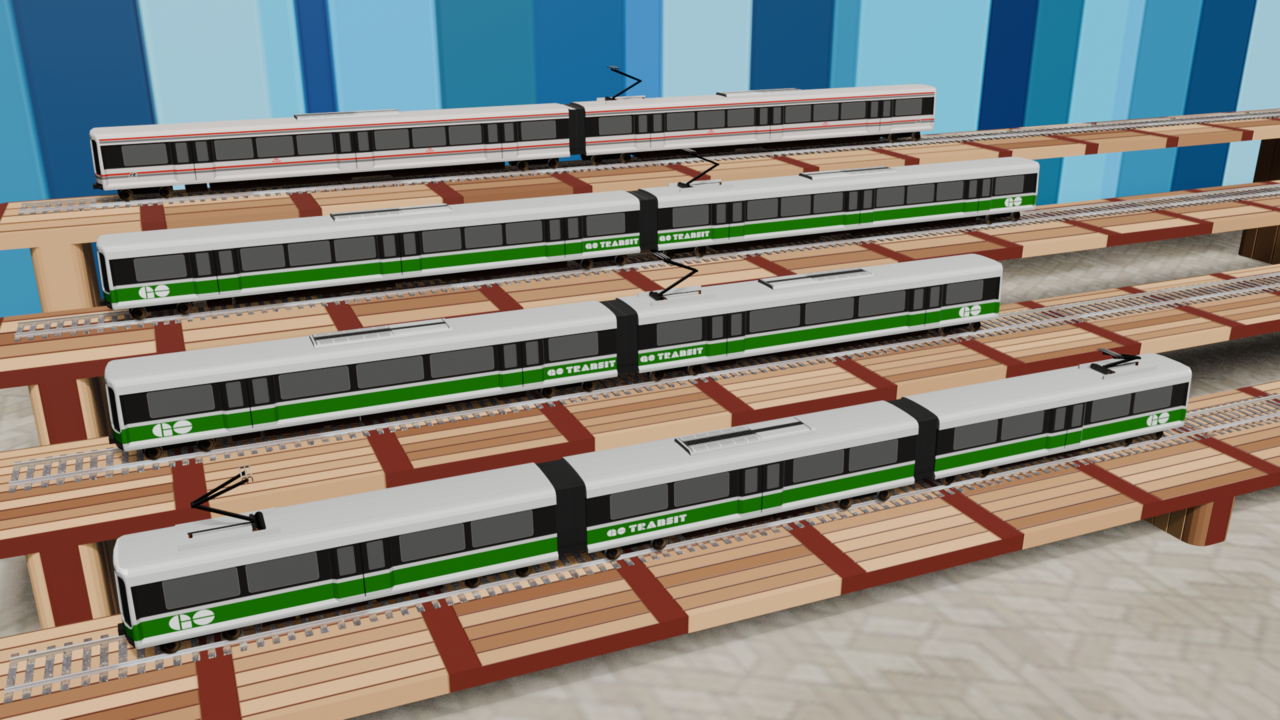
I know this may not be this threads useaul thing but I thought you may appreciate this. I am currently working on my video for GO ALRT and made 3D models of the ALRT vehicles for use in the video (yes I am trying to upgrade my production values by using Blender models/Animations). Also for perspective ALRT platforms were to be 180m (590') in length
The bottom row is the OG model and the one we are most familiar with. These cars are 41' in length like the SRT cars but are configured into 3 car married sets with an open gangway in between and featured 2 doors per car. They could be chained together in 6, 9, and 12 car multiple units.
The middle row is the first revision which extended the train length to 59' and dropped the middle car in favour of a more traditional 2 car married pair with an open gangway and featured 4 doors per car. These trains could be chained together into 4, 6, 8, and 10 car trains (these would barely fit on the platform)
The second from last is the final revision which extended car lengths to 75' and featured 6 doors per car. By the time the project was cancelled this was the preferred version of the car. These trains could be chained together into 4 and 6 car multiple units.
Lastly at the back I included one with the TTC RT livery as at the time Metro was examining both the Etobicoke RT and DRL and both had overlap with the Provinces ALRT plans. The provinces hope was that the ERT and DRL would use ALRT spec trains so they could share the ALRT ROWs and interline service where it overlapped. (Also I must admit the TTC RT livery looks really good on the 75' variant compared to the smaller 41' variant the SRT got)
EDIT" Also all of the GO variants were to use commuter style forward/backward facing seats. The TTC variant would have almost certainly used the same transverse seating the SRT did since the TTC would be offering a subway style service (ample standing room required) while ALRT was to essentially be an S-Bahn (Commuter Comfort with Subway like frequency, standee's were to be kept to a minimum so less standing room than the TTC variant).
The bottom row is the OG model and the one we are most familiar with. These cars are 41' in length like the SRT cars but are configured into 3 car married sets with an open gangway in between and featured 2 doors per car. They could be chained together in 6, 9, and 12 car multiple units.
The middle row is the first revision which extended the train length to 59' and dropped the middle car in favour of a more traditional 2 car married pair with an open gangway and featured 4 doors per car. These trains could be chained together into 4, 6, 8, and 10 car trains (these would barely fit on the platform)
The second from last is the final revision which extended car lengths to 75' and featured 6 doors per car. By the time the project was cancelled this was the preferred version of the car. These trains could be chained together into 4 and 6 car multiple units.
Lastly at the back I included one with the TTC RT livery as at the time Metro was examining both the Etobicoke RT and DRL and both had overlap with the Provinces ALRT plans. The provinces hope was that the ERT and DRL would use ALRT spec trains so they could share the ALRT ROWs and interline service where it overlapped. (Also I must admit the TTC RT livery looks really good on the 75' variant compared to the smaller 41' variant the SRT got)
EDIT" Also all of the GO variants were to use commuter style forward/backward facing seats. The TTC variant would have almost certainly used the same transverse seating the SRT did since the TTC would be offering a subway style service (ample standing room required) while ALRT was to essentially be an S-Bahn (Commuter Comfort with Subway like frequency, standee's were to be kept to a minimum so less standing room than the TTC variant).
Last edited:


