The point is these LRTs are slow without slow zones.
If the TTC did a better job of maintaining the tracks the subways would be faster on a regular basis.
But the LRTs will always remain slow.
LRTs will remain a little slower than subways, but trivially so. And the biggest drawback to their speed is stop spacing, which is what you want, unless you want to blow even more money running parallel shuttle buses for those who can't walk far distances.
Finch - Vaughan: 38.39 km distance, travel time: 79 minutes, for an average speed of 29.16 km/h
Kennedy - Kipling: 26.23 km distance, travel time: 52.5 minutes, for an average speed of 29.98 km/h
Cedarvale - Bloor-Yonge: 11.47 km distance, travel time: 27 minutes, for an average speed of 25.49 km/h
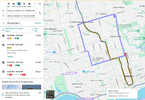
Waterloo ion: 19 km end to end, travel time: 43 minutes, for an average speed of 26.51 km/h
Prague suburban lines:
Dědina - Dejvická: 7 km, 16 minute travel time = 26.25 km/h average speed
Výtoň - Libuš: 12 km, 28 minute travel time = 25.71 km/h average speed
Sídliště Barrandov - Slivenec: 2 km, 4 minute travel time = 30 km/h average speed
Sídliště Řepy - Anděl: 8 km, 18 minute travel time = 26.67 km/h average speed
Bílá Hora - Malostranská: 8 km, 20 minute travel time = 24 km/h average speed
LRT is a great way to unlock rapid transit and capacity for a far lower price than the subway. The fact that we don't do that falls squarely at the feet of the TTC, that's all. And "The point is these LRTs are slow without slow zones" isn't really an accurate statement, if the speed is kneecapped by the agency, it doesn't really matter what the maximum allowed track speed is, it's still a de facto slow zone. The LRT cars are capable of much superior performance compared to the atrocities the TTC is doing with them.







