News   GLOBAL  |  Apr 02, 2020
 11K     0 
News   GLOBAL  |  Apr 01, 2020
 43K     0 
News   GLOBAL  |  Apr 01, 2020
 6.7K     0 
Let's go back to talking about Carney and federal policy. I doubt you two @picard102 and @81-717 (or others) will see eye to eye on some things.

This was the last on-topic post:
The last time the main fed conservative party(s) won more than 50% of the popular vote was 1984, 42 years ago. Since then, not only have the conservatives not broken 50%, they have always held a lower share of the vote than the Liberal + NDP.

The fed conservatives have averaged 36.5% of the popular vote compared to 50.18% for the Liberal and NDP combined in every election since 1988.

If the Liberals actually cared to prevent the conservatives from every holding power again, they would've changed the electoral system. The conservatives would never win a majority again, much of that due to demographic changes, with younger generations being less conservative.

I would be pressing Carney to follow through on Trudeau's promise.
 
Kegsbreath's tattoos-in the name of Christ-calling it a holy war-realist Israeli interests
1776952400412.png

I'm lost, where's the connection to Carney's Canada?

If I may suggest a lifehack, one way to keep a discussion on topic is not to feed the digressers. Leave 'em hanging. They'll get the message.
 
Last edited:


Enbridge gets federal approval for $4B natural gas pipeline expansion in B.C.​


The federal government has approved a $4-billion plan by Enbridge Inc. to expand an existing natural gas pipeline in British Columbia, a move one executive says demonstrates a greater “sense of purpose” from Ottawa toward bolstering Canada’s status as a global energy exporter.

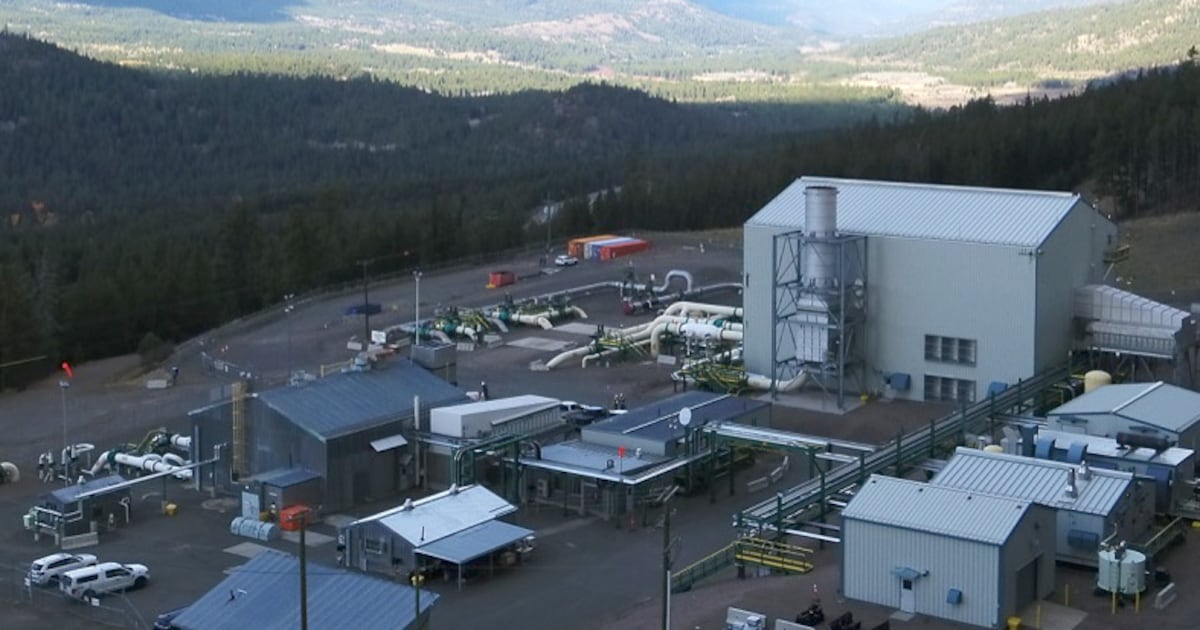
The Sunrise project would add 300 million cubic feet per day of transportation capacity on Enbridge’s 3.6-billion-cubic-feet-per-day Westcoast system, which connects gas fields in northeastern B.C. and northwestern Alberta to the Canada-U.S. border. The project involves adding almost 140 kilometres of new pipe by constructing 11 looping segments parallel to the existing line.

The gas that would flow through the expanded line is not bound for any particular destination, but “some of the capacity will no doubt go offshore,” Matthew Akman, who leads Enbridge’s gas transmission and midstream business, told reporters Friday.

Sunrise was not reviewed under federal legislation passed last year meant to speed along new infrastructure deemed in Canada’s national interest. Nonetheless, Akman said he appreciates the improved tone under Prime Minister Mark Carney’s Liberal government.

“There’s more of a sense of purpose and an intent and a prioritization, which is what we need to see in Canada,” Akman said.

“Going forward, though, I think we all need to work more closely together to make this even faster. And there are ways to have just as rigorous a consultation process, just as rigorous an environmental review process and community engagement process, but do it faster.

“We’ve been at this project almost four years already and still don’t have a shovel in the ground.”

All of the soon-to-be built space on the Sunrise project has been spoken for, Akman said, noting the company is also expanding gas infrastructure in the northern part of B.C.

The federal government said in a news release that the project will ensure B.C. has enough gas supply as liquefied natural gas export facilities, where gas is chilled into a liquid and shipped abroad on specialized tankers, come online. Enbridge has a 30 per cent interest in the Woodfibre LNG project under construction in Squamish, B.C., with Pacific Energy Corp. holding the rest.

“This project will enable us to heat more homes, businesses, hospitals and schools while bolstering British Columbian industry, including for LNG, and creating thousands of jobs. It is proof that, in partnership with industry and Indigenous partners, we can strengthen energy security and price stability and create new international trade opportunities while meeting rigorous environmental and safety standards,” Natural Resources Minister Tim Hodgson said in a news release.

“This is what being an energy superpower looks like.”

B.C. Premier David Eby said the expansion is good news for jobs in his province.

“At a time of uncertainty and global instability, this is how we create the prosperity needed to pay for the public services that make us all better off,” he said in a news release.

But Alex Walker, energy analytics program director with Environmental Defence Canada, called Ottawa’s approval “a disastrous climate decision that prioritizes fossil fuel industry growth over Canada’s climate commitments.”

Construction on the pipeline is expected to begin this summer, with startup targeted for late 2028.

Last year, Enbridge inked a partnership with an alliance of three dozen First Nations in B.C. for a 12.5 ownership stake in the existing Westcoast pipeline. Akman said those groups are not obligated to take on equity of the pipeline expansion, but have the option to do so.


Akman said there is opportunity to build even more gas pipeline capacity -- from scratch or by expanding existing infrastructure -- under the right conditions.

One is to ensure a speedy review process “because we can’t tie capital up forever doing these things.”

Another is to ensure Canadian investments can compete with projects being pursued in the United States, where Enbridge has a substantial presence and has been seeing better returns.

“We’re a large company with investors all over the world,” Akman said. “So if we see competitive returns on capital in British Columbia, then we could do any of those types of investments.”

 
But Alex Walker, energy analytics program director with Environmental Defence Canada, called Ottawa’s approval “a disastrous climate decision that prioritizes fossil fuel industry growth over Canada’s climate commitments.”
I’m beginning to feel that anything these types don’t like is likely good for Canada’s prosperity, jobs and economy. We’re burning natural gas, not coal, so take the win and move on.
 
I’m beginning to feel that anything these types don’t like is likely good for Canada’s prosperity, jobs and economy. We’re burning natural gas, not coal, so take the win and move on.

Somebody tell Norway to shut down 25% of their economy a.s.a.p. Canada missed out on the last wave of LNG a decade ago, that didn't stop other countries from buying natural gas, they just bought it from elsewhere.
1777067594163.png
 
Somebody tell Norway to shut down 25% of their economy a.s.a.p. Canada missed out on the last wave of LNG a decade ago, that didn't stop other countries from buying natural gas, they just bought it from elsewhere.
View attachment 731871
I was in Norway back in 2022. Our young tour guide said they’re proud of the nation’s move to electric cars and renewable energy sources. Of course all this was and is financed by Norway’s petrodollars. I suggested that Norway was sort of like a drug dealer, selling dangerous goods that the market wants, but never tasting the merchandise themselves. If Norway’s oil is so terrible for the environment why don’t they leave it in the ground, oh, right they need the petrodollars. The country is an exercise in hypocrisy that Canada might as well follow.
 
I was in Norway back in 2022. Our young tour guide said they’re proud of the nation’s move to electric cars and renewable energy sources. Of course all this was and is financed by Norway’s petrodollars. I suggested that Norway was sort of like a drug dealer, selling dangerous goods that the market wants, but never tasting the merchandise themselves. If Norway’s oil is so terrible for the environment why don’t they leave it in the ground, oh, right they need the petrodollars. The country is an exercise in hypocrisy that Canada might as well follow.
Good for Norway, But the reason they can do that is because they control the oil, not private companies.
I would agree, we should follow them and have a crown corporation get involved in the industry. Maybe we could call it Petro-Canada?
A National Energy Policy would be great to advance towards a Norway style of financial independence,.
 
A National Energy Policy would be great to advance towards a Norway style of financial independence,.
PET’s NEP was a disaster which through policies like price caps aimed to take oil wealth out of Alberta rather than boost it up.

Key NEP Issues and Consequences:
  • Western Alienation: The policy was viewed as the federal government hijacking Western wealth to serve Eastern Canada, cementing long-term resentment.
  • Economic Downturn: The policy coincided with a, and contributed to, an economic collapse in Alberta, with unemployment soaring from 3.7% to over 12% and massive rises in bankruptcies.
  • Reduced Oil Revenue: Price controls and new taxes limited profits for producers and reduced royalty payments to the province of Alberta.
  • Industry Flight: The hostile investment climate caused investment to move from Canada to the United States.
  • Capital Cost: The Alberta provincial economy is estimated to have suffered $50 billion to $100 billion in losses.
  • Industry "Canadianization": The policy targeted lowering foreign ownership in the oil sector, which caused conflict with industry players.
 

Attachments

  • 1777111487551.jpeg
    1777111487551.jpeg
    2.8 KB · Views: 0
Last edited:

Back
Top