News   GLOBAL  |  Apr 02, 2020
 11K     0 
News   GLOBAL  |  Apr 01, 2020
 43K     0 
News   GLOBAL  |  Apr 01, 2020
 6.5K     0 

I like this concept of a rezoning renovation instead of a full repeal. As much as I love skyscrapers, I definitely don't want Calgary to end up like Toronto and I think a full repeal of rezoning points us in that direction.

 
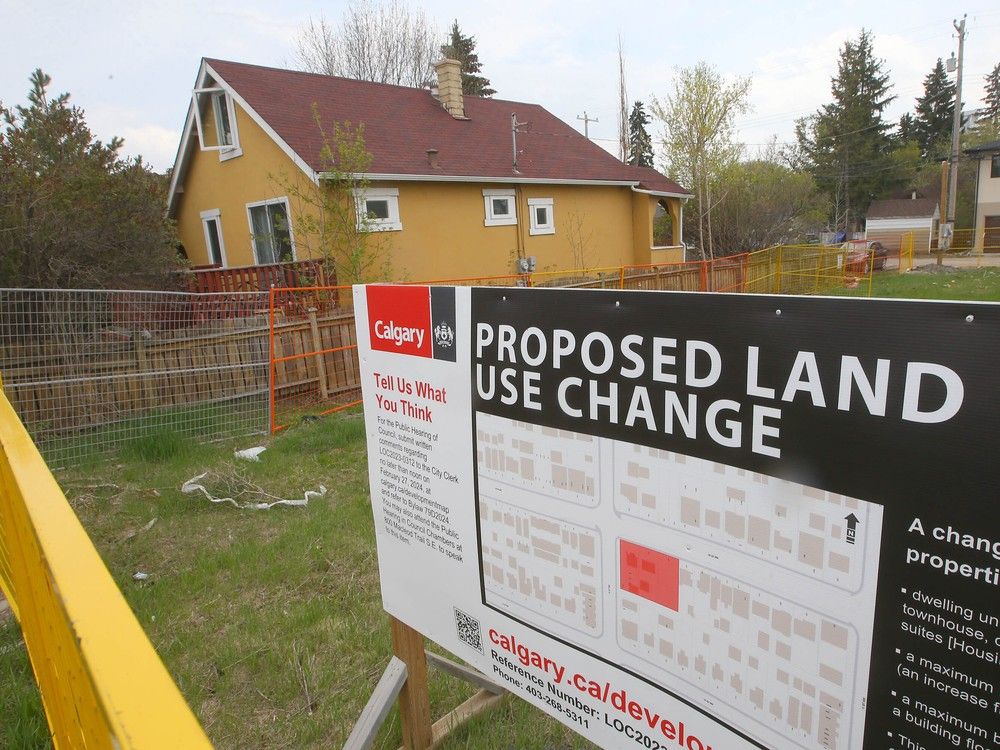
On Dec. 15, Calgary city council will debate a notice of motion to repeal blanket rezoning. In an election in which it was allegedly the defining issue, voter turnout was the lowest in more than a decade. If Calgarians were fired up about rezoning, it wasn’t enough to get them to the ballot box.

Rezoning polled well down the priority list of Calgarians, with an almost 50-50 split between supporters and opponents.
This advertisement has not loaded yet, but your article continues below.

What topped the polls were concerns about lowering taxes and affordability. While the effectiveness of blanket rezoning has been hotly debated, what isn’t up for debate is how Calgary’s former zoning rules drove urban sprawl and pushed up rents and house prices. If Calgarians want lower taxes and affordability, a full rezoning repeal delivers the complete opposite outcome.

Really great points here. Repealers vastly overstate their so-called mandate. Among councillors it's basically 7-7, but a couple of those wins were by pretty slim margins.

Very reasonable proposed solutions. A general scale back to 4 dwellings mid-block is fine. There can still remain the option to apply for land-use amendment if it really makes sense for a location (though that will be less likely to happen, which is also fine).
 
Does anyone know the technicalities of how a councillor could bring a competing/complimentary motion (at this point probably a motion arising I think) for scaling back RC-G? I think as chair the mayor has some ability to manage the order of the agenda and order of voting on motions...I think maybe councillors can bring a motion to pull items or adjust the order of the agenda near the start of the meeting when they vote to adopt the agenda (typically just a formality)?

What we need out of Dec. 15 is for council to direct admin to:
- bring a report on how repealing will work to be debated/voted on in March (this is already in motion)
- bring a report on implications of scaled back RCG to be debated/voted on in March

And then the sensible order would be to vote on scaling back first, and then full repeal. But I worry Jeromy will argue that scaling back is moot if they vote to repeal so that vote should be first (but really he just won't want to put himself and others to repeal from a more reasonable point)

If it's current RCG = 8 plex + no parking restrictions vs. full repeal then we're almost certainly doomed.

If it's RCG = 4 plex + some parking restrictions + etc vs full repeal then there is a chance.


The other technical question I have is if common expert sense prevails and we get the latter, would that preclude this council from bringing a motion to repeal again later in this same term? It just makes way more sense to try a scaled back version for a year or two before throwing the baby out with the bath water, but I think that will fall on deaf ears for at least 6 of the councillors and probably the mayor.
 
Has the city found a new location for the dirt bike track?
They have another season to use it. They will not be breaking ground until early '27 at the earliest. In the article it said they're working constructively with the City on next steps.

As for the bus barn, could mean occupancy by late '28 or early '29 (I don't know how long it takes build a bus barn)? Meaning the land in Victoria Park could be available at some point around 2030. I can't believe we're at the point where I am realistically typing the year 2030 and having it be within a reasonable timeline.
 
Last edited:
(weird that this is such a priority for the councillors in wards 10, 12, 13, and 14). I think this 828 includes plenty of SFHs, but not certain on that.
I bet there's an inverse relationship between infill development and voting for candidates that are oppositional to infill development. For some reason the folks who are least impacted are the most angry.
 
I bet there's an inverse relationship between infill development and voting for candidates that are oppositional to infill development. For some reason the folks who are least impacted are the most angry.
100%. I live in Ward 7 - ground zero for infill- and we elected a progressive, pro infill candidate. So did wards 4, 8 and 9, so arguably the 4 most affected wards elected Councillors who are generally in favor of infill development.
 
100%. I live in Ward 7 - ground zero for infill- and we elected a progressive, pro infill candidate. So did wards 4, 8 and 9, so arguably the 4 most affected wards elected Councillors who are generally in favor of infill development.
That's the part that's so crazy. The folks in the low density suburbs - what I would call the middle ring burbs, are the people so opposed to the density increase, but that's not where it's happening. I'm not sure those neighborhoods from the 60's-90's will ever get any kind of density infills.

IMO, we should continue with density upgrades where we can, but we also need to change the tax system so high density areas aren't paying subsidizing the low density neighborhoods of the 60's-90's era.
 
That's the part that's so crazy. The folks in the low density suburbs - what I would call the middle ring burbs, are the people so opposed to the density increase, but that's not where it's happening. I'm not sure those neighborhoods from the 60's-90's will ever get any kind of density infills.

IMO, we should continue with density upgrades where we can, but we also need to change the tax system so high density areas aren't paying subsidizing the low density neighborhoods of the 60's-90's era.
That's 100% what I would like to see as well. Some sort of mixture of taxes that are based on market value and also based on square footage of property or lot size. Neighborhoods like say Varsity Acres or Bonavista, Dalhousie, Canyon Meadows, etc are the poster children for sprawl, and those are the neighborhoods fighting the hardest against zoning density increases. If they aren't going to see any density increases maybe they can be team players and pay a bit extra in property tax?
The new subdivisions are doing their part, and in many cases are denser than some of the inner city neighborhoods, and of course the inner city neighborhoods are seeing increased density, but those neighborhoods from the 1950's through to the early 2000's aren't. That's where sprawl is at its worst, and those are the neighborhoods that aren't seeing any density increases, and probably won't.
 
The folks in the low density suburbs - what I would call the middle ring burbs, are the people so opposed to the density increase, but that's not where it's happening.
There are definitely pockets here and there of 50s-60s neighbourhoods that would be full of infills and small multifamily if not for community opposition/restrictive covenants. One I can think of is Rutland Park - close to Currie/Garrison Green/MRU/BRT lines, but it's still one house per 50ft lot.

I can also imagine densification near some of the Red Line stations like Canyon Meadows, which is currently a 2 minute walk over a pedestrian bridge from mainly a bunch of 60s bungalows.
 
There are a few areas in neighborhoods from the 50s and 60s, such as Northmount Drive, Centre Street, or Elbow Drive, where I could see some increased density but those neighborhoods are still a challenge compared to ones like Capitol Hill, Renfrew, Hillhurst, Killarney. The neighborhoods that are the biggest challenge are the ones from the 80's and 90's with the cul-de-sacs and no alleyways (Sandstone, Evergreen, Bonavista, Douglasdale, and so on). I mean no developer is ever going to bother doing H-GO in those neighborhoods. They'll always be the city's least efficient neighborhoods from a tax vs cost point of view.
 
Bonavista
Bonvista is neat due to the lake. Former resident here. The community is trying to figure out rules on sub divided properties and access to the lake. Right now if you add a suite the suite doesn’t receive lake access. Subdividing a lot, currently the first couple hundred will receive lake access and then the rest won’t as the lake association founding documents limit the number of lots with lake access and the area with lake access. Since Bonavista Downs ended up without lake access there are ‘extra’ lake accesses available.

It is a fight in the community to figure out how or whether to allocate new access. It might be advantageous to sell new access to fund capital improvements, but that might limit the Homeowners Association access to government grants. Kicking split lots out of the association (or only having 1 of the lots have access) likely would also rule out future grants.

Until that is figured out splitting a lot doesn’t make sense. I suspect the association would vote to raise fees to limit the number of lake users, which would make most lot splitting uneconomic. The lot value without lake access for each resulting lot is just too high relative to alternative neighbourhoods with similar amenities.

Personally I am in favour of a Houston style compromise to try to ‘contain’ NIMBY to neighbourhoods or smaller areas. A petition causes a vote, and if 60% of owners approve, zoning is locked down for 40 years. This in practice is approved in very few areas (10% of neighbourhoods in Houston iirc), as people can directly see their potential economic loss from the locked down zoning.
 
And that's fine. I don't think every neighborhood needs to be split up or density upzoned, and some are better left as is, as that's a choice that some people prefer. That said I think it would be more fair to reward the people living on smaller plots of land, whether inner city or in the new densely built burbs. I guess conversely it could be looked at as penalizing those living in the most lowest density neighborhoods. Either way, I think it needs to be more fair, and have some sort of encouragement for more density.
 

Back
Top