





CplKlinger
Senior Member
I was expecting the banner in Corona, but not an ad on my BBC app lol. It's nice they're getting the word out, hopefully the launch goes well and first-time users want to stick with it.


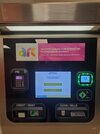
|
|
|
Okay, first major city in Alberta. Plus first regional integration (to the best of my knowledge). Correct me if I'm wrong, but still a great achievement!!Not by a long shot.
Lethbridge, Medicine Hat, Red Deer and Grande Prairie all use tap cards. That left Fort Murray, the Edmonton Region and Calgary region without them.
The regional thing is especially nice since it means smaller municipalities can benefit from having Edmonton's resources when developing it. None of these other card systems have fare vending machines, you can't order their cards online and get them delivered, and one system even has the cards expire every 1-5 years (depending on your fare group) and makes you get a new one from one specific city building. Our website looks pretty good in comparison, and even people in Spruce Grove and Beaumont are getting a really flashy system; if they developed smart fare on their own, it'd likely turn out more similar to the other card systems in AB.Okay, first major city in Alberta. Plus first regional integration (to the best of my knowledge). Correct me if I'm wrong, but still a great achievement!!
Yes, I'm quite sure that the other agencies are using pretty basic commercial off the shelf technology while Edmonton is a lot more custom (Arc Machines I recall were a brand new design that was created from scratch, rather than something Vix already had available).The regional thing is especially nice since it means smaller municipalities can benefit from having Edmonton's resources when developing it. None of these other card systems have fare vending machines, you can't order their cards online and get them delivered, and one system even has the cards expire every 1-5 years (depending on your fare group) and makes you get a new one from one specific city building. Our website looks pretty good in comparison, and even people in Spruce Grove and Beaumont are getting a really flashy system; if they developed smart fare on their own, it'd likely turn out more similar to the other card systems in AB.
If a Downtown to Airport route comes into existence, yes. Online top up, yes.Can we use ARC to and from the airport on the downtown to airport route?
Can I top up the card online?
I hope they sell them at YEG for people visiting.If a Downtown to Airport route comes into existence, yes. Online top up, yes.
They have vending machines there!I hope they sell them at YEG for people visiting.
And you can set it to auto refill when you go below a certain threshold!Online top up, yes.


it's quite cool, I was also able to tap my phone and pay for multiple riders at onceBow Valley also has smart cards, but, more limited like the smaller agencies around Alberta.
ETS has said they are planning on doing credit card tap (which would be the same time as digital wallets) after this rolls out to all users (youth, discounted users, etc), so it sounds like all the physical tech is up to snuff.Anyone have insight on timelines for digital wallets? I only carry 2 cards (ID & credit) on the back of my phone and everything else is phone/watch. It would be super helpful for these to be on phone wallets.
And is credit card/debit tap on the horizon soon? or another 3 years? For tourists/visitors, I think this is key, and is quickly becoming the norm in most global cities

Yes, you can top-up online.Can we use ARC to and from the airport on the downtown to airport route?
Can I top up the card online?
Also, as someone who uses tickets as an occasional transit rider, this doesn't seem to adequately replace them. Then there is the issue of the big penalty if you forget to tap off.Great news. Part of me worries that this will make boarding a lot slower. Flashing a bus pass is way faster than the arc card's tap. They really need to find a way to speed it up.
Comments from the peanut gallery:
What would really fix the latency issues is having a local cache of the user balance/passes database on every bus. Even with a million users, this would just be a few gigabytes and could run on <$100 of hardware.
When you tap your card, your balance would be checked on the local database and the transaction would be logged locally. Then asynchronously, the bus would send the transaction log to the central server for everything to be reconciled (could be every few minutes, even once an hour). The central server would forward incoming transactions to all the other busses (you could even skip this step and just do it at night if you want to save data, worst case scenario is someone's balance dips to -$15 instead of the -$5 cap thats intended.)
Having complete data integrity at all times on all busses really is not important. There's no reason that every tap has to phone home to a central server. So long as eventually everyone is charged for every tap they make, it's not a big deal.
Failing that, there are some simpler improvements (if they haven't been done already)
1) Ensure Arc servers are located in Edmonton
2) Get everything down to a single round trip server request
3) Switching from http to websockets