





|
|
|
You are using an out of date browser. It may not display this or other websites correctly.
You should upgrade or use an alternative browser.
You should upgrade or use an alternative browser.
- Thread starter dt_toronto_geek
- Start date
Hipster Duck
Senior Member
In its soul, Toronto may once have been Gothic, but in its heart, it was Deco
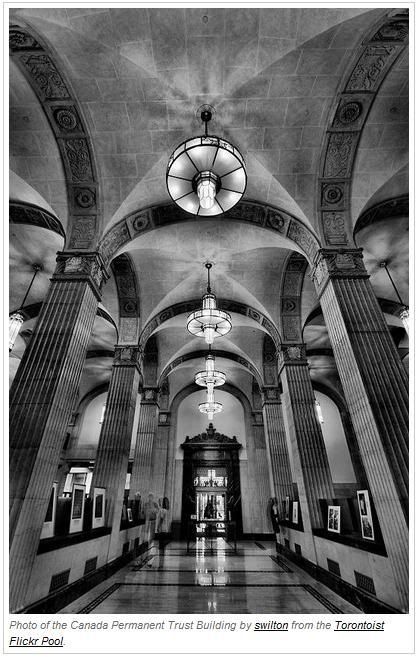
I don't really get this opening line by Hume. If there's any typical North American building style in short supply in this city it's Art Deco. The usual examples: Eaton's College Park, CCN, RC Harris, Canada Permanent, Royal York, etc. may have been built during the decade of Art Deco, but are much more classical in their treatment. Many of them are basically neo-Romanesque or neo-Gothic but with a vaguely Art Deco massing and some occasional odd fixtures (like the stone heads on CCN). Yes, there are some Art Deco warehouses here and there, and a sprinkling of apartment blocks further uptown, but nothing on the scale of the Victorian, Edwardian and Modernist buildings that really characterize the city and very few examples of the style that are as architecturally exuberant as what you would find in even a middling American city in the Midwest.
As for this line:
Indeed, until the arrival of Frank Gehry's Art Gallery of Ontario and Will Alsop's Ontario College of Art and Design, local architecture tended to be dull and predictable. There have been exceptions, but very little in the way of architecture that celebrated itself, the city and the idea of the future.
What the hell?
Last edited:

Archivist
Senior Member
Hipster, I agree with your comments. Art Deco in Toronto was, in general, a really stripped down version with a lot of other influences. Not a style by which the city will ever be known.
And as for his comment about Gehry, well, he comes off sounding like a know-nothing transfixed by the latest thing.
And as for his comment about Gehry, well, he comes off sounding like a know-nothing transfixed by the latest thing.

simply Dan
Active Member
The original Toronto Stock Exchange on Bay St is quite nice - especially the trading floor.
The demolished Odeon Cinema on Carlton is probably Toronto's greatest Deco/Moderne loss.
The demolished Odeon Cinema on Carlton is probably Toronto's greatest Deco/Moderne loss.
DavidJamesTO
Active Member
If you want Art Deco in Canada, you need to go to Hamilton. That city was very kind to the Art Deco style, arguably moreso than the rest of the country.

wyliepoon
Senior Member
^ ... or go to the border cities of Buffalo or Detroit. Buffalo City Hall and the Central Terminal in Buffalo, the Guardian Building and the Fisher Building in Detroit are great landmarks within a relatively short drive from Toronto.
adma
Superstar
Actually, and rather obviously given the cultural connections
http://www.artdecomontreal.com/en/
...which even understates the case; a strong Art Deco/Moderneness informed Montreal's urban vernacular practically to the end of the Duplessis era.
Sleeper "Decovilles" to be considered, from the evidence of ShonTron's past photo threads: N Ontario resource towns like Timmins and Kirkland Lake...
http://www.artdecomontreal.com/en/
...which even understates the case; a strong Art Deco/Moderneness informed Montreal's urban vernacular practically to the end of the Duplessis era.
Sleeper "Decovilles" to be considered, from the evidence of ShonTron's past photo threads: N Ontario resource towns like Timmins and Kirkland Lake...

Urban Shocker
Doyenne
The exuberant nature of the best deco makes that Stern thing on St. Thomas - a mundanely bourgeois retread of the timid version - look all the sadder. The Canada Trust tower at Brookfield Place strikes me as one of the few local attempts at appropriating the essence of that former expressive style and doing something interesting with it.
adma
Superstar
The Canada Trust tower at Brookfield Place strikes me as one of the few local attempts at appropriating the essence of that former expressive style and doing something interesting with it.
Perhaps because, in the end, it's less neo-Deco than neo-Constructivist.
dt_toronto_geek
Superstar
I started my career at the Eglinton Theatre in 1980 as a young teen, my passion for Art Deco began in this once beautiful building
Documenting Toronto's Art Deco Glamour
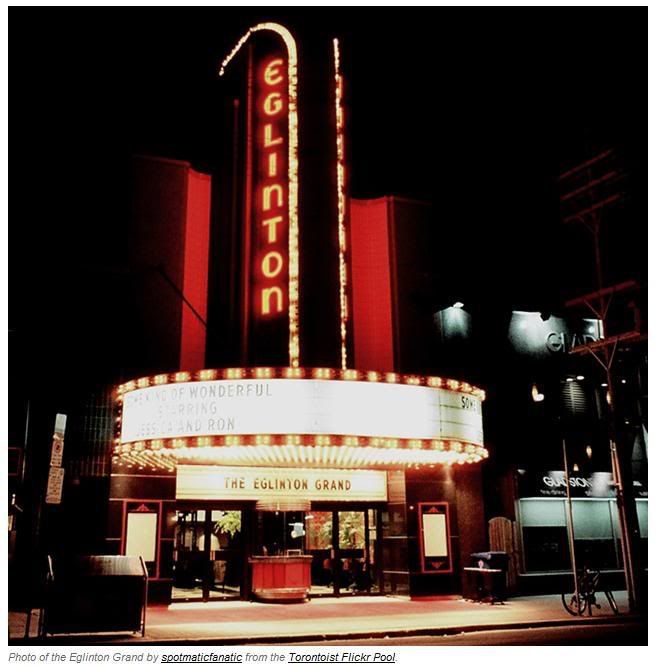
Photo of the Eglinton Grand by spotmaticfanatic from the Torontoist Flickr Pool.
The Eglinton was the grandest of Toronto's Art Deco movie houses. People from all over Toronto flocked to Eglinton near Avenue Road for the grand opening showing of King of Burlesque. Kaplan and Sprachman, the prolific pair who would design over one hundred cinemas in Canada, won the Governor General's architecture award for the building in 1937: although it was asymmetrical, its elegant design and fine interior detailing invested a trip to the movies with an aura of sophistication, its defining feature the colourful, neon-lit marquee that's been a neighbourhood icon for generations.
Over time, some of the Streamlined Moderne decorative treatment of the facade, such as the speed-stripes framing the edges of the building above the marquee, has been replaced with blander ceramic tiles. The building was closed as an operating cinema by Famous Players in 2002, but has since been partially renovated and reopened as the Eglinton Grand. It is but one of the city's vibrant monuments to the Art Deco tradition documented in Tim Morawetz's newly published Art Deco Architecture in Toronto (GLUE INC, 2009).
Some of the best known Art Deco gems have been discussed in passing in the city's seminal architectural histories by Eric Arthur or William Dendy and William Kilbourn, in guidebooks, and on the handful of dedicated Canadian websites.
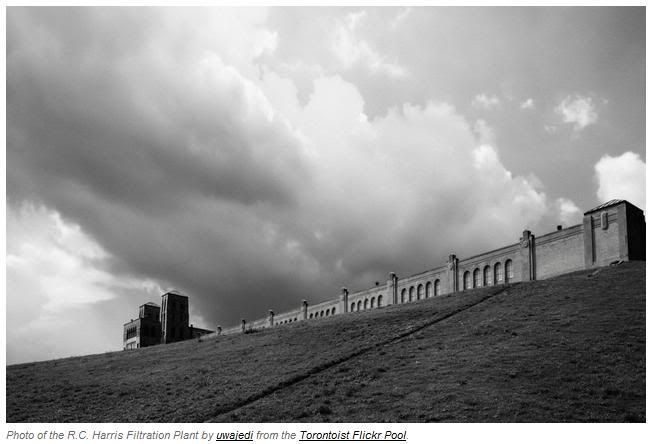
But the impact of the 1920s to 1940s architectural movement on Toronto hasn't had a comprehensive treatment until Morawetz's highly informative volume. Downtown office towers, such as the Concourse Building, the Bank of Nova Scotia at King and Bay, the Victory Building, and the Canada Permanent Trust Building, are probably the city's most visible Art Deco landmarks. Lesser-known apartment buildings dot residential districts. Others, especially industrial buildings, have been radically altered to make way for condos. A number were demolished, or fell into disrepair and disrepute. Art Deco Architecture in Toronto contains entries on all of these and more. Each has a brief write-up, handsomely laid out in 1930s type, to give background information and to point out interesting architectural features that place each structure within the three phases of Art Deco Morawetz describes in his introduction.
The entries are copiously illustrated with contemporary photos and rarely seen archival photos drawn from period trade publications such as the Journal of the Royal Architectural Institute of Canada. These give glimpses inside lobbies and auditoriums in all their original splendour as well as in their present life. Some of the contemporary photos date from the late eighties and nineties—especially if the building has been dramatically altered or demolished since then, as Our Lady of Mercy Hospital was in 2007—showing the book's long gestation period.
Having developed a love for Art Deco as an architecture student at university, Morawetz has spent fifteen years leading bus and walking tours, and has been involved in campaigns to save the Concourse Building, Eglinton Theatre, Maple Leaf Gardens, and Timmins's Daily Press Building. This soft-bound book is a result of Morawetz poring over the files and slide decks he's painstakingly amassed over the years, and the breadth of his research and his passion for the subject shine through.
In an introductory essay, Paul G. Russell places the architectural movement within the historical context of a changing, maturing city—when the late 1920s economic boom manifested itself physically with a surge of skyscraper construction. Art Deco, the design aesthetic then in vogue in Europe, was brought to Toronto when Lady Eaton hired French designers for the family's new flagship store at College and Yonge. It was originally meant to be a grand, stepped-back office tower—Morawetz includes the original rendering in the book—but only the podium was built. Likewise, the Victory Building was to have an additional five floors, and the Star Building was to have a second tower. Given that so many of Toronto's Art Deco buildings had their ambitions similarly thwarted by the great crash, it'd have been a bonus to have more original renderings to offer tantalizing glimpses of the city that might've been. But such historic images can be a nightmare to find (if they exist at all), and they fall beyond the intentions and focus of Morawetz's volume.
Given Toronto's reputation for paving over its past, Art Deco Architecture in Toronto is a heartening reminder that there are a great many Art Deco buildings still standing, scattered throughout the city. Hopefully the book, which is available for purchase in a limited number of independent bookstores and through its website, will help kindle public interest in their continued preservation.
Although each of the buildings in the images above appear in Art Deco Architecture in Toronto, these particular photographs—drawn from the Torontoist Flickr Pool—do not.
Source
Documenting Toronto's Art Deco Glamour
Photo of the Eglinton Grand by spotmaticfanatic from the Torontoist Flickr Pool.
The Eglinton was the grandest of Toronto's Art Deco movie houses. People from all over Toronto flocked to Eglinton near Avenue Road for the grand opening showing of King of Burlesque. Kaplan and Sprachman, the prolific pair who would design over one hundred cinemas in Canada, won the Governor General's architecture award for the building in 1937: although it was asymmetrical, its elegant design and fine interior detailing invested a trip to the movies with an aura of sophistication, its defining feature the colourful, neon-lit marquee that's been a neighbourhood icon for generations.
Over time, some of the Streamlined Moderne decorative treatment of the facade, such as the speed-stripes framing the edges of the building above the marquee, has been replaced with blander ceramic tiles. The building was closed as an operating cinema by Famous Players in 2002, but has since been partially renovated and reopened as the Eglinton Grand. It is but one of the city's vibrant monuments to the Art Deco tradition documented in Tim Morawetz's newly published Art Deco Architecture in Toronto (GLUE INC, 2009).
Some of the best known Art Deco gems have been discussed in passing in the city's seminal architectural histories by Eric Arthur or William Dendy and William Kilbourn, in guidebooks, and on the handful of dedicated Canadian websites.
But the impact of the 1920s to 1940s architectural movement on Toronto hasn't had a comprehensive treatment until Morawetz's highly informative volume. Downtown office towers, such as the Concourse Building, the Bank of Nova Scotia at King and Bay, the Victory Building, and the Canada Permanent Trust Building, are probably the city's most visible Art Deco landmarks. Lesser-known apartment buildings dot residential districts. Others, especially industrial buildings, have been radically altered to make way for condos. A number were demolished, or fell into disrepair and disrepute. Art Deco Architecture in Toronto contains entries on all of these and more. Each has a brief write-up, handsomely laid out in 1930s type, to give background information and to point out interesting architectural features that place each structure within the three phases of Art Deco Morawetz describes in his introduction.
The entries are copiously illustrated with contemporary photos and rarely seen archival photos drawn from period trade publications such as the Journal of the Royal Architectural Institute of Canada. These give glimpses inside lobbies and auditoriums in all their original splendour as well as in their present life. Some of the contemporary photos date from the late eighties and nineties—especially if the building has been dramatically altered or demolished since then, as Our Lady of Mercy Hospital was in 2007—showing the book's long gestation period.
Having developed a love for Art Deco as an architecture student at university, Morawetz has spent fifteen years leading bus and walking tours, and has been involved in campaigns to save the Concourse Building, Eglinton Theatre, Maple Leaf Gardens, and Timmins's Daily Press Building. This soft-bound book is a result of Morawetz poring over the files and slide decks he's painstakingly amassed over the years, and the breadth of his research and his passion for the subject shine through.
In an introductory essay, Paul G. Russell places the architectural movement within the historical context of a changing, maturing city—when the late 1920s economic boom manifested itself physically with a surge of skyscraper construction. Art Deco, the design aesthetic then in vogue in Europe, was brought to Toronto when Lady Eaton hired French designers for the family's new flagship store at College and Yonge. It was originally meant to be a grand, stepped-back office tower—Morawetz includes the original rendering in the book—but only the podium was built. Likewise, the Victory Building was to have an additional five floors, and the Star Building was to have a second tower. Given that so many of Toronto's Art Deco buildings had their ambitions similarly thwarted by the great crash, it'd have been a bonus to have more original renderings to offer tantalizing glimpses of the city that might've been. But such historic images can be a nightmare to find (if they exist at all), and they fall beyond the intentions and focus of Morawetz's volume.
Given Toronto's reputation for paving over its past, Art Deco Architecture in Toronto is a heartening reminder that there are a great many Art Deco buildings still standing, scattered throughout the city. Hopefully the book, which is available for purchase in a limited number of independent bookstores and through its website, will help kindle public interest in their continued preservation.
Although each of the buildings in the images above appear in Art Deco Architecture in Toronto, these particular photographs—drawn from the Torontoist Flickr Pool—do not.
Source