





I gave tons of feedback in the survey, but I like three but with less open space and more re-naturalization. The reduced complexity of the roadways is a big plus in that one, too. One was also good, but had no cycling trails, only footpaths.
|
|
|

Proposal calls for Mill Creek footbridges to be replaced and repaired
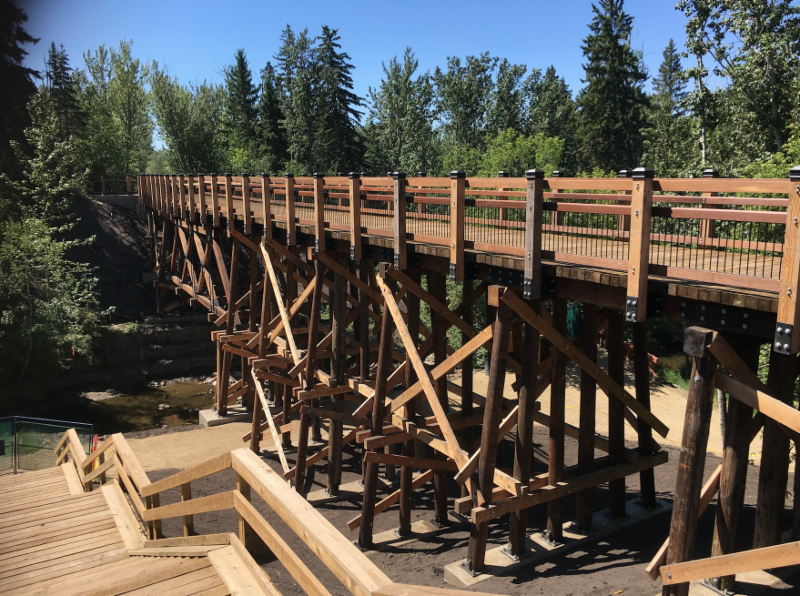
The historical trestle bridges in Mill Creek Ravine might get a facelift.
The bridges, which were used by trains in the 1900s and then converted for pedestrian use in the 1970s, have become weathered over time.
Now city administration is looking for city council approval to go forward with the rehabilitation of the three bridges.
An environmental impact assessment and site location study conducted in the summer of 2016 recommended the three bridges require rehabilitation and two glue-laminated bridges also need replacement.
Naturalizing Mill Creek
City officials have determined it is possible to return Mill Creek to a natural state but at a cost of between $80 million to $130 million.
The creek currently runs into a pipe before it spills over a several-metre drop into the North Saskatchewan River. Letting it run again above ground would re-create rare fish-spawning habitat, plus create a barrier-free series of walking trails in the river valley near the future Muttart LRT station.
But the creek has to cross five to seven roads and other utilities, depending on design, according to a report heading to council’s urban planning committee Wednesday. Construction would also have to deal with contaminated land from the incinerator and brick yard formerly in the area.
Public support for the idea is strong, say city staff. If council supports the idea, they can debate funding $1.8 million to complete the design. Construction could be phased over 30 years because parts of the river valley park system need upgrading. Officials say it’s likely federal and provincial governments would contribute to the project.
Edmonton pushes forward on restoration plans for Mill Creek revival
Making portions of Mill Creek come alive again will cost anywhere from $50-$130 million, but it’s something city planners say residents are keen on fixing.
The estimates were discussed at City Hall Wednesday, and come after planners look to “daylight,” or restore, parts of the popular park space so fish can swim again.
In the 1960s and ‘70s, the city closed up a portion of the creek (from 94 Avenue to the North Saskatchewan River) to make way for a large interchange. To do this, crews built a tunnel to divert water from the creek into the river.
But the interchange, which residents fiercely opposed, was never built, so the city has been stuck with the tunnel ever since.
The city now knows it’s feasible to restore the creek as a fish paradise —they just need the cash to make it happen.
Bridge work to close portion of Mill Creek Ravine in the fall
The trails in Mill Creek Ravine near Ritchie and King Edward Park will close in the fall to facilitate the replacement of five rotting pedestrian bridges.
The $7.5-million project, in the works now for two years, is necessary to ensure the structural integrity of the bridges, which were assessed last year, said Jason Reske, an engineer with the City of Edmonton.
He was meeting with members of the public on Tuesday night during an open house at the King Edward Park Community League, providing updates on the construction schedule.
The closure is expected to last from September through until May, Reske said.
Two of the three trestle bridges on the paved upper trail, which are part of an old railway line, will be refurbished. The other one will be replaced. The two glued laminate bridges on the lower gravel trail will be replaced as well.
"Unfortunately, just due to the topography in the area and the proximity of all the bridges, we've allowed the contractor the ability to close the entire area," Reske said, noting the city is still negotiating with the contractor, who may have some ideas to avoid completely cordoning off the area.
Shanty towns and meatpacking: Dig to reveal Mill Creek ravine's hidden past
A team of researchers is hoping unearthed remnants from a meatpacking plant in Mill Creek ravine will give them a better understanding of what life was like for workers in early 20th-century Edmonton.
Last year, Haeden Stewart, a PhD candidate from the University of Chicago, spent the summer excavating and analyzing artifacts from a shanty town that sprang up at Ross Acreage in the early 1900s to understand what home life was like for the impoverished, working-class families living in about 50 dwellings.
This summer, Stewart’s attention shifted from those early homes of tents and structures, built from salvaged material and leftover industrialized detritus, to a neighbouring area that was the site of Vogel’s meatpacking plant.

MacEwan University anthropology field students Kathryn Bourgeois, Keyna Young, and Jesse Heintz survey and excavate at the site of the former Vogel’s meatpacking plant in Edmonton’s Mill Creek ravine Tuesday July 11, 2017.DAVID BLOOM / POSTMEDIA
By focusing on the collection of bone fragments from the abattoir, as well as bricks, glass and concrete from the old building, Stewart is piecing together what life was like for ravine residents, as well as understanding how industries connected to the creek supported the city’s growth and development.
“We are trying to get a sense of how the whole thing was laid out,” Stewart said Tuesday. “Just by peeling back a few of these layers, we can get a sense of what people were doing and where they were doing it.”
This would be nice but is it worth $80 to $130 million? I'm sure there's a long list of projects that we're not doing because there's no money. Just wondering where citizens would rank this in terms of priority.
It really depends. Can the city line up the same $ value in storm water management projects to deliver in a short time frame? Transit, rec, roads? It really depends. If you have 10 years to spend the money, most likely you'd find some other project. But imagine tomorrow the city was told it had to spend a pot of money within 18 months on new projects which will be finished by 18 months, and will spend almost all of the money on activity in Edmonton/Alberta/Canada; that is new and incremental activity, not changing the source of funding for planned spending.
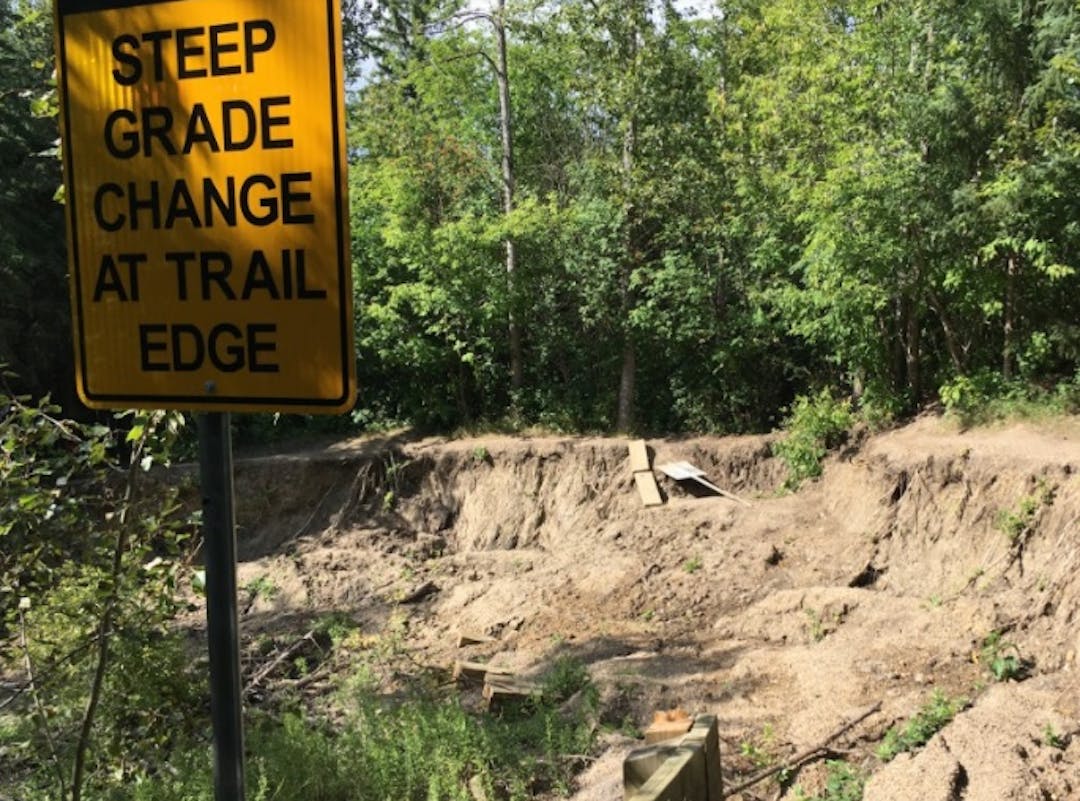
The purpose of this project is to build a trail alignment on the stable ground that connects to the existing trail system. In determining the trail location, the project team has taken into account the environmental impacts, sustainability and user accessibility.
 engaged.edmonton.ca