News   GLOBAL  |  Apr 02, 2020
 10K     0 
News   GLOBAL  |  Apr 01, 2020
 42K     0 
News   GLOBAL  |  Apr 01, 2020
 6.1K     0 

Give “investors” the option of selling to the city at a discount before they face bankruptcy. Fair option for their own “poor choices”, and tell NIMBYs to accept it. They will complain either way.
This may seem like a crazy and insane idea to some but private companies exist that do this (ex: HomeVestors in the U.S.), but usually when a home has years of back-taxes owed or has fallen into serious disrepair. Could be a big social benefit for people to sell with a benefit for social good rather than a private company. But the state getting into the business of buying up homes from people and turning them into public housing would no doubt be deeply contentious. Already people lost their minds over turning a 24 space parking lot into a small shelter for seniors.

Looking at Finland and Denmark is worthy when trying to figure out how to address homelessness, but those cities aren't cheap places to live even if you make good money, so the cost here to create supply by buying existing stock could be a financial burden. I imagine that would get complex if a provider owned just a few units in a bunch of different buildings.

Advocating to models that would emulate what Finland or even Vienna (owns ~440,000 units) does is great imo, but it would take massive amounts of funding and significant changes to all sorts of systems and cultural attitudes of social housing. According to this report, Finland owns 497,000 dwellings of social housing. Contrast that to Toronto Community Housing Corporation, Canada's largest social housing provider and North America's 2nd largest; they own 41,000 "households", home to 97,000 individuals, plus 14,000 additional units through TSHC, providing housing to seniors.
 
  • Like
Reactions: a2z
The phrasing of that question reads rather disingenuously...

...but okay, I'll bite: Likely because for various reasons they (presuming "the State" is the Province here) refuses to do so.
It was a dig at the poster who has said in the past that they are in favour of the State (government, whichever level) owning 'critical' or 'important' things.
 
This may seem like a crazy and insane idea to some but private companies exist that do this (ex: HomeVestors in the U.S.), but usually when a home has years of back-taxes owed or has fallen into serious disrepair. Could be a big social benefit for people to sell with a benefit for social good rather than a private company. But the state getting into the business of buying up homes from people and turning them into public housing would no doubt be deeply contentious. Already people lost their minds over turning a 24 space parking lot into a small shelter for seniors.

Looking at Finland and Denmark is worthy when trying to figure out how to address homelessness, but those cities aren't cheap places to live even if you make good money, so the cost here to create supply by buying existing stock could be a financial burden. I imagine that would get complex if a provider owned just a few units in a bunch of different buildings.

Advocating to models that would emulate what Finland or even Vienna (owns ~440,000 units) does is great imo, but it would take massive amounts of funding and significant changes to all sorts of systems and cultural attitudes of social housing. According to this report, Finland owns 497,000 dwellings of social housing. Contrast that to Toronto Community Housing Corporation, Canada's largest social housing provider and North America's 2nd largest; they own 41,000 "households", home to 97,000 individuals, plus 14,000 additional units through TSHC, providing housing to seniors.
Berlin's (non-binding, but successful) referendum from 2021 to set the conditions for expropriation from large housing corporations seems to have made minimal progress since.

Still no agreement on what terms would dictate compensation - although there was a hearing earlier this week:
  • the State Audit Office concluded compensation based on market value would cost up to 42bn EUR (for ~220,000 apartments)
  • whereas the organizers behind the expropriation initiative are trying to argue that they can expropriate property for 40-60% of market value (by excluding the increase in land prices since 2013), and then finance this through 100-year bonds issued from the anticipated rental income that these units would create (I don't know how they are factoring the cost of maintenance and renovations into this)
  • but in this scenario, a housing corporation could be compensated with less cash than what they currently owe in bank debt (the explicit example mentioned here was "Vonovia's assets, listed on its books at 22 billion euros, are to be compensated with only 7 billion euros; while it has 11 billion euros in bank debt")
And therefore I would have no idea if applied here, how you would calculate the discount to create a "fair" economic outcome for both the city and the seller (+ the bank), especially en masse

On a side note, one of my (previous) local MPs had attempted to remove tax exemptions for REITs but that ended up going nowhere. Looking into the EY commentary in response to this same mention in the Liberals 2021 election platform, their conclusion seems to be that the REITs would simply pass this cost onto the renters (it also notes that REITs are not as relevant in Ontario, whereas 50% of rental apartments in St. John's, >20% in Edmonton, Calgary, Regina, Saskatoon fall into their hands. But perhaps the fact they make up the minority here in this province could create the conditions where they are uncompetitive and have to exit, but that still seems like a tough sell)
 
Last edited:
Not only stupid, but also incompetent and unproductive...
The Paris metropolitan region has a nominal GDP per capita of $77,000 USD now, versus $55,000 USD for the GTHA. How are the stereotypically lazy, 8 week vacation, bureaucratic French doing better than us when we used to make fun of them for having lower salaries and lower per capita GDP? Clearly that stereotype was wrong.

I wonder if it's because we have inadequate transit, inadequate transit plans, and the transit we do get is 3 times the cost for the same length...thereby hamstringing any and all economic growth.

Paris is no stranger to low-skilled immigration and expensive housing. Not to mention the occasional city burning riot. God Toronto is such an unserious city.
We genuinely paid over 3 times the price for an inferior tram, for a smaller city, in a farther suburb, completed 4 years slower, and with one less stop (18). And to top it all off, we are hamstrung by a super expensive 30 year contract that puts maintenance costs at over $20 million a year for 10 km of track. Tell me that's not corruption in the Canadian form.
P.S. don't try to find the PPP per capita figures, it's even more depressing.
 
Last edited:
re: drinking age and other retail politic choices Ford could make:

The US drinking age of 21 is an abject failure - adults under that age don't not drink, they just drink in uncontrolled environments like house parties at much higher rates. Half the reason US frat culture is so strong is because students aren't allowed to go to bars. It leads to higher crime rates, increased use of illicit substances (if alcohol is as illegal as weed, coke, etc. why not use that too?), unsafe alcohol practices (no bartender or bouncer to control those too drunk), etc.

The drinking age should be 18. Yes, alcohol isn't good for you, but making it illegal actually makes it worse.

I agree as well that I'm surprised Ford hasn't taken aim at Municipalities new favourite activity of introducing ridiculously low speed limits. Many US States and provinces have specific criteria that must be met for speed limits - including MTO - Ford could pass legislation requiring municipalities to match their criteria to those of MTO for example, which look at pedestrian volumes, design speed, actual vehicle speeds, and other factors in determining speed limits. Right now municipalities can set whatever they want which leads to ridiculous things like 40 limits on controlled access roadways and 50-60 limits on rural roads. If a municipality wants a deviation from the formula they should need ministerial approval. Ford has hinted at being willing to play with speed limits by increasing 400 series limits to 110.. but has been cautious. I think he can be a lot more aggressive here and win a lot of political brownie points - increasing a lot of rural provincial highways to 90 and setting specific criteria for municipal speed limits included.

Similarly, I'm surprised Ford didn't eliminate front license plates during the whole failed license plate refresh - a common complaint from many people and one which the majority of jurisdictions in Canada don't follow (only Ontario, Manitoba, and BC require front plates).

Ford's government is good at reading the room on retail politics moves like the ones I mentioned above that get him solid political points, but they are useless on the more complex issues. See their work on the housing front - very little progress and what they do try to implement is generally a giant mess (though there is .... slow progress). Same with countless other examples - even on his favourite topic of highways the PCs prioritize attention-grabbing projects like new highway corridors over priortizing funding to expand existing routes which result in substantial improvements for lower overall costs.
 
Last edited:
How many “investment” properties are you holding onto?
Exactly zero. We own our house.

...and that's a problem, why?
I don't have a problem with public ownership of certain sectors that exist solely for the public good; i.e. fire services, public transit, etc. or those industries that simply wouldn't exist given our population or economy; i.e. VIA Rail. In the context of the post to which I was referencing, having the state buy up properties at a discount, so that it can be given or rented to someone else, strikes me as predatory. At least with expropriation, fair market value comes into play.

Canada has owned a railway, an airline and an oil producer. They might have been good ideas at the time, but their time came and went.
 
Canada has owned a railway, an airline and an oil producer. They might have been good ideas at the time, but their time came and went.
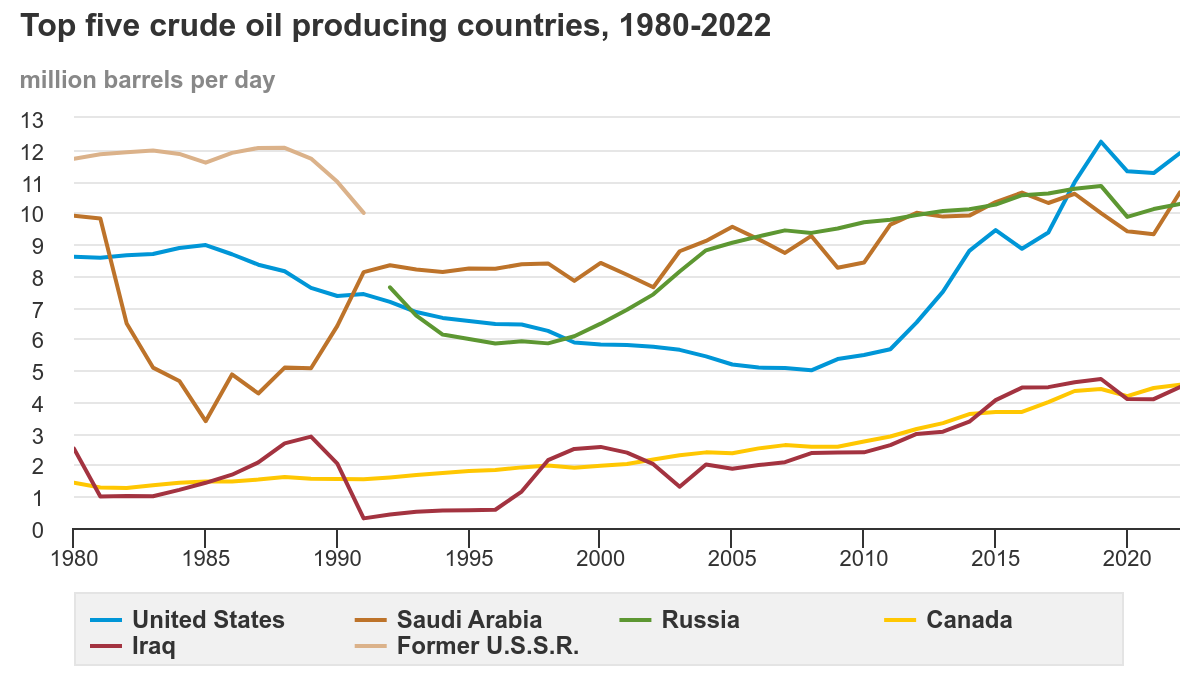
The Canadian government not being able to run a railway competently in an oligopolistic, if not, monopolistic market, the government not wanting to run an oil company in a oligopoly market, doesn't mean that these ideas are hopelessly flawed today or don't make economic sense. State owned enterprise oil companies are some of the largest and most profitable in the world. Saudi Aramco, CNPC, Sinopec, the latter two basically control the entire oil industry from crude to gasoline in China. They consistently rank in the top 5 to 6 companies worldwide for revenue and top 40 in the world for profit, all while producing less oil than Canada. For many economic schools of thought, it is entirely ok, even desirable to have the state control industries that are natural monopolies.

 
  • Like
Reactions: T3G
Canada has owned a railway, an airline and an oil producer. They might have been good ideas at the time, but their time came and went.
Until you rely on a transit service that is kneecapped by a privately owned railway that doesn't care about anything but its own profits, and then you realize that there may be something to that idea after all..
 
Until you rely on a transit service that is kneecapped by a privately owned railway that doesn't care about anything but its own profits, and then you realize that there may be something to that idea after all..
^Almost forgot about this. CP and CN were born out of many railways that were funded or subsidized by the government. Over a century later, we are stuck completely paralyzed while attempting to buy back rights of way and land from a corporatized duopoly that cut maintenance and rail expansion to pad margins and have had their financial position solidified since the meagre 1990s. As reflected in their bountiful market cap growth for a blue chip stock.

GO Expansion is a shell of its former self for many reasons, not least of which is the fact that political conditions 3 decades ago forced the sale of the last publicly owned ROWs.
 
Exactly zero. We own our house.


I don't have a problem with public ownership of certain sectors that exist solely for the public good; i.e. fire services, public transit, etc. or those industries that simply wouldn't exist given our population or economy; i.e. VIA Rail. In the context of the post to which I was referencing, having the state buy up properties at a discount, so that it can be given or rented to someone else, strikes me as predatory. At least with expropriation, fair market value comes into play.
Predatory against who? REITs?

Canada has owned a railway, an airline and an oil producer. They might have been good ideas at the time, but their time came and went.
And what was the long-term benefit to consumers in privatizing those things?

I'll let you in on something; my father was a pilot for AC when they were privatized. Simulator hours got cut (ie; on-going training, ie; safety), routes got cut, prices went up and the market consolidated even further. There has been zero benefit in privatizing Air Canada; especially when there was actually a fair amount of private competition at the time already.
 
Predatory against who? REITs?


And what was the long-term benefit to consumers in privatizing those things?

I'll let you in on something; my father was a pilot for AC when they were privatized. Simulator hours got cut (ie; on-going training, ie; safety), routes got cut, prices went up and the market consolidated even further. There has been zero benefit in privatizing Air Canada; especially when there was actually a fair amount of private competition at the time already.
The whole debate about privatization vs. state-ownership is a bit of a false dichotomy in IMHO. It's not just about who owns the company, it's about how it's run. If SOEs ran around abusing their market position, abusing their customers, illegally competing, and all-around causing social harm, then that would be bad.

If SOEs are managed in a manner where they at least try to compete both within and outside the country, then they can still remain innovative and beneficial to the overall economy. Albeit probably less innovative than a non-state owned company, but I digress.
 
Canada has owned a railway, an airline and an oil producer. They might have been good ideas at the time, but their time came and went.
...that may have came and went if one is thinking on the line of a Thatcher/Randian narrative. But some (if not most) services of infrastructure and public transportation should not be at the whims and mercy of the markets and/or bottom line thinking, IMO. So I have to regretfully and wholly disagree here.
 

Back
Top