News   GLOBAL  |  Apr 02, 2020
 11K     0 
News   GLOBAL  |  Apr 01, 2020
 43K     0 
News   GLOBAL  |  Apr 01, 2020
 6.7K     0 

Whoaccio

Senior Member
Member Bio
Joined
Feb 13, 2008
Messages
1,686
Reaction score
0
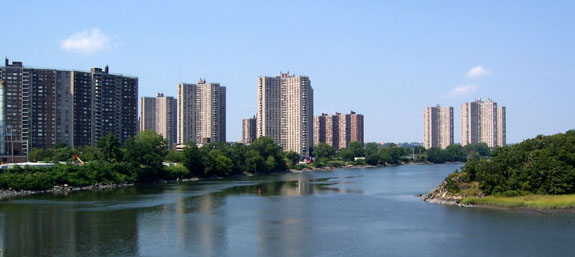
I think it is fair to say that Toronto has by and large stayed as faithful to the Jacobian ideals of urban planning as any major N. American city. As I understand it, an implicit component of this strand of urban planning is a rejection of "master planed" cities and a focus on dynamic and often contrasting form of development, supposedly meant to promote a vibrant urban fabric. For better or worse, development such as St. James town or the clusters near Davisville & High Park have become an example of "what not to do". Typically, you will see no shortage of complaints about Corbusier or Moses decrying things like Cabrini Green or any number of tower-in-the-park cities that poped up across N. America since WW2.

Given the recent backlash against master planned communities, partially in response to the failure of several of post-war experiments, is it fair to say that master planned communities in general are a failed concept? How is it that Paris, master planned by Haussman against the will of local residents, is so loved by urbanists who decry Moses? Hell, many cities that we now view as desirable were born out of the exact same process of mass eviction and grand planning that built Regent Park.

Co-op_City_Hutch_River.jpg


538px-Avenue-italie-panoramique.jpg


Did the Moses style of urban development fail because of the proccess by which it arrived (mass evictions, master planning) as Jane Jacobs would suggest. Or was it just a bad idea to begin with? If it is the later, is there a good reason we shouldn't "master plan" the rest of downtown Toronto, perhaps on a more proven urban model? What if we just designed a likable five storey building and began replacing all those old streetcar suburbs around Toronto?
 
I'm a huge critic of master planning. Many here point out interesting projects from other cities like Amsterdam or Hamburg. These projects I feel, while sometime interesting and exceptional from an architectural standpoint, never seem to function well. What I mean is that they always feel isolated from and inferior to the existing urban fabric of the city they are located in. My theory why this is the case is that the emphasis dictated by designers on behalf of their monolithic clients is always on crafting the physical space, when in reality an urban neighbourhood is as much a layering of overlaping human responsibilities as it is a physical space. So my point is that how and who and under what terms responsibility for space is parcelled out is THE essential characteristic of space, form is secondary. We have gotten to the stage where master planners have come to realize that monolithic design is bad, so design is parcelled out to different developers and different designers. This is better than nothing but it still misses the essential ingredient of overlaping and competing human responsibilities and ownership. The trade-off of course is expediency. In order to develop things fast we allow monopoly and central control to trump competition and individual self-interest. The former is beloved of designers, the latter creates vibrant urban neighbourhoods.
 
Just to be clear, I am totally aware that several modern developments, even when adhering to typical urbanist principles, turn out as absolutely soulless (http://commons.wikimedia.org/wiki/Category:HafenCity?uselang=de). The thing that always confuses me is how were previous master plans so successful? It isnt a coincidence that Amsterdam has a perfectly symmetrical system of canals in the downtown. The 17th century saw urban reclamation on a scale which must have made Regent Park seem trivial. Just replace "Spadina expressway" with a canal and apartment block with four story walk up. Why is that so popular, yet modern developments so bland? Is it just having a "lived in" quality to them?
 
Master Planning

I think you raise an interesting point....

While my answer is mere speculation....

I tend to think the failure of more 'modern' master plans largely revolves around quality, (or lack of); public money (or lack of) and who the projects were designed for (I mean future residents, mainly, but also this could apply to the politicians etc.)

What I mean by all of the above is this:

Paris succeeded because Hessman had Carte Blanche from Napoleon III to build the capital of an empire (or so it was envisioned).

No expense was spared to create Grand Boulevards; there really was no limit monetarily, on material palate or on the imagination.

These boulevards though, were not designed to accomodate public housing, or even rental housing as we think of it today.

It was fully expected that this housing would go the demanding bourgeois and rich. As such it was build not only to suit the ego of its commissioner and architect, it was built for demanding customers.

By comparison, Regent Park was public housing; and St. Jamestown, though well intentioned was always meant for young renters, not demanding doctors and lawyers and gentry!

****

It should also be said that Paris was a product of time and place.

Certain features like cobblestone were used on roads, because that's what everyone who built roads did then (asphalt was a few decades away)

Midrise may well have the choice anyway, but in truth, when Paris was redesigned it was the 1870's and highrise, as we now know it, was not an option.

All of that has to be taken together. As does the tendency now to build disposable architecture. Where as in the 1880's and before many buildings were built with the assumption they would be occupied for centuries; today we tend to think in decades, or less.

Of course, building with the highest caliber of materials and with an expectation that what you do will be there for 400 years is possible, but it would be expensive, and a vast change in the way of thinking for North American developers and planners.

*********

All the above said; I'm hearing some very good things about some of the Master Planning in parts of China. How true they are I don't know, as I haven't traveled there... YET. But if true, it would show again the connection to autocratic authority to demand the best; and the willingness of the Chinese gov't to open the public purse to help finance its new showpieces, both public and private.

*********

Personally I'm not sure I like masterplanning at the building level, designing every building for 10 square blocks or more all at once.

But, I do favour master planning transportation and parks infrastructure, and setting height ranges/guidelines and density targets that fit where that master planning dictates.

Toronto did build University Avenue, we know how to build grand, we just haven't done it for 50 years.
 
I think it is fair to say that Toronto has by and large stayed as faithful to the Jacobian ideals of urban planning as any major N. American city. As I understand it, an implicit component of this strand of urban planning is a rejection of "master planed" cities and a focus on dynamic and often contrasting form of development, supposedly meant to promote a vibrant urban fabric. For better or worse, development such as St. James town or the clusters near Davisville & High Park have become an example of "what not to do". Typically, you will see no shortage of complaints about Corbusier or Moses decrying things like Cabrini Green or any number of tower-in-the-park cities that poped up across N. America since WW2.

Trouble with the "what not to do" theory is that as of late, it's been fraying--first of all, it doesn't explain arrays like Cityplace; and second, it doesn't explain things like this--which, when all is said and done, is more like a creative extension and adaptation of Jane Jacobs urban logic than a rejection thereof...
 
Perhaps the 'tenant's of the 1870s had more respect for the property they were renting/living in. Perhaps landlords were more severe and had rights that they don't today. Perhaps it didn't take 5 months to evict tenants that dind't pay in the 1870s? Perhaps people cleaned up after themselves?
It seems to be all the rage to diss the project and not the people who live in them.
Since St. Jamestown is the current whipping boy, I'll raise you one Crescent Town and one Thorncliffe Park, both projects that I had friends in and hung around in extensively - 25 or so years ago. They were great buildings and planned communities. Not so today. Of that I will agree.
What is Crescent Town's excuse? Direct subway access. Shopping and schools nearby. Fantastic health facilities. I used to party there a lot in the early '80s with other students and they were very nice buildings.
When helping a friend look for a rental apartment in '99, I returned to Crescent Town and viewed several apartments. I was aghast. WTF is going on there? Kids sleeping in the living room in the middle of a school day. Furniture stacked against the walls of apartments. Filth everywhere. Pigeons roosting on balconies. The property manager kept apologising as she showed the apartments and said they were trying to clean the building up and get the 'undesirables out.' I interviewed a cleaner who worked there (without the manager around) and he confirmed they were having a lot of 'problems.' That is not the Crescent Town that I remember.

Yeah, let's conclude it is the architecture that failed, because it is easier to throw public money at new construction and not get to the core of the problems.
 
Crescent Town

An interesting choice. I to grew up in the area; though not in Crescent Town proper I did attend the elementary school for a few years.

I still live nearby. (25 years later)

So I have been witness to what was right/wrong.

First off...

The development, not the people are the principle problem.

And the owner doesn't help.

********

Crescent Town was built between 1965-1970.

As young child in the area in the late 70's I saw it as its 'best'.

It was a community whose parking is all above ground, with the retail/walkways all in the sky.

There were no sidewalks on Crescent Town Road.

Nor the internal private roads at ground level.

The parking areas were always underlit (more so then than now), I recall the stories of assaults and rapes there from when I was a child.

But, it did have nice flowers, a good rec centre and a Dominion.

That, however, isn't much in a community with no outdoor play areas (despite being surrounded by parks, there is no direct access to the adjacent valley or to Dentonia Park.

It also isn't much in a place where the retail always struggled.

And where several of the buildings (as in Thorncliffe and St. Jamestown) were once designated 'adults only'.

(A designation struck down by the courts many decades back)

**********

So what went wrong.....

Beyond the superficial design flaws...

The removal of the Adults only designation precipitated a large increase in children and tenants in general, in excess of what the area school or rec facilities were meant to handle.

The school, which has portables even when I went there as a child, (though only 3); now has has more than 10, and this after a 'permanent' six-room expansion.

All the portables now mean the school I knew, which used to have a baseball diamond, a soccer field, a running path, and a big climber, has lost the first 3 of those to the building, the portables and the new staff parking lot.

It has also left the local childcare centre and rec centre over-taxed without sufficient capacity.

****

After that problem, there is the fact the retail district completely flopped when the two anchor tenants pulled out. Dominion and Scotiabank.

Both of these pulled out for reasons not particular to Crescent Town, they did so when the place was still very middle class.

Rather, the banks went to longer hours and fewer branches, and grocery stores went from 15,000 sq ft (which the Crescent Town Dominion was) to more than 53,000 (the nearby Shoppers World today).

But without these anchors, no one from outside the community shops there anymore, and few from within find cause to either.

Thus, the whole shopping area looks poorer, feels and is emptier, and a key tenant amenity is lost.

Were Crescent Town designed like a 'normal' community, with a public street grid and a large shopping strip, the retail could have adapted over time to fit the contemporary pattern and taste, however, by being poorly designed and existing in part on a bridge over Crescent Town Road, there is no practical, affordable means by which to adapt the retail to a vital form.

The local Rec Centre is another problem, it is not owned by the building, nor is it owned by the City, but by a third party not-for-profit. This arrangement was devised because the then East York did not want to be saddled with operating a Rec Centre; and as a new facility, it would be affordable for an upscale rental community maintain.

However, as the facility has aged, and the economic nature of the community has declined; there are not sufficient funds to maintain the way it was.

There is no City money either, because it is not a City facility.

On top of that, the podium (or walkway) landscaping was designed as a maze, a sort of English Garden theme. This caused crime issues from day one, and subsequently much of the landscape features were removed for safety, and replaced with little or no substitute, or at any rate, one of inferior quality.

Bad planning, bad development.

*******

Further to the problems of this area, it is completely isolated from its surroundings. With no public roads (except one, with nothing on it); and no sidewalks and no library or public rec centre, there is little traffic from outside the area, and therefore no vested interest in improving it.

It was also poorly constructed, and has been the subject of perpetual and expensive maintainence on the exterior where brick was literally set to fall off the buildings after less than 30 years of existence.

The landlord has not been particularly well though of; but rather perceived as quite absentee, and not very interested in maintaining their asset base until quite recently.

A good tenant I knew there, a former work colleague, told me the elevators were always braking, and she had to wait for one (she lived on the 26th floor) for sometimes as often as 10 minutes.

That is not the fault of problem tenants, but rather a problem landlord.

And as all these problems progress, fewer and fewer quality tenants want to move in; and the landlord increasingly is less fussy, as anyone who will pay rent is allowed to move in. This of course exacerbates the situation, and the downward spiral takes hold.

Rents actually get reduced to attract tenants, but then there is less money for maintenance and security and so on.

CRESCENT Town is actually the perfect study of a badly planned development, which also had no ability in its design to whether changing conditions which imposed that much more hardship on the community.

 
vis a vis the ghettofication of the tower block neighborhoods:

The style of development wasn't the only cause, probably not even the main cause of ghettofication. There are a whole host of other factors you could throw in which contributed to the various flops of post war urban planning. That said, there is a strong correlation between the two, if not outright causality. Some of the post war communities turned into ghettos, but it seems that almost all ghettos are post war communities. The St. Lawrence housing projects, despite serving exactly the same purpose as St. James town, has avoided the "ghetto" moniker at least in part because it doesn't look like a ghetto.

As far as architectural quality, nobody seriously thinks that post war housing projects are aesthetically pleasing in the least. Even in wealthy areas, like the Davisville clusters, they lack any significant commercial or cultural presence. Maybe you could justify them in some kind of technocratic-soviet interpretation of "efficient housing units", but I think Canada is rich enough to try to avoid competing with Chernobyl. I don't even think they are much cheaper. They are just ugly.

EDIT: Actually, I think the St. Lawrence neighborhood is a pretty good example of modern master planning. The area probably wouldn't win awards for architectural excellence, but I think an important quality for a decent neighborhood is an ability to blend into the background.
 
As far as architectural quality, nobody seriously thinks that post war housing projects are aesthetically pleasing in the least. Even in wealthy areas, like the Davisville clusters, they lack any significant commercial or cultural presence. Maybe you could justify them in some kind of technocratic-soviet interpretation of "efficient housing units", but I think Canada is rich enough to try to avoid competing with Chernobyl. I don't even think they are much cheaper. They are just ugly.

Nobody? Really? Sure, if you're a hardcore Tom Wolfe/Prince Charles/New Urbanist zealot...

And, note this post. The Swedish new-town comparison re the High Park complex sure sounds a little like architectural phrase, even if the thrust is on urbanism and proximity to nature, etc...
 
I am neither an apologist for master planning nor am I overly critical of it. I think city building should generally follow the Jacobian model of laissez-fairism to knit neighbourhoods together but there should also be a fairly moderate dose of top-down, almost central planning. Almost no vibrant areas in the world were created by master planning, but then again, you can't expect a bunch of neighbourhood merchants to sit down and draft a proper transportation strategy for a city.
 
I think London is a good example of how both can be done. After the 1666 fire, Wren tried to create a master plan for the City, but was shot down by a public that needed to rebuild quickly and a weak King. However, if you look at planned areas like Covent Garden and Grosvenor there are some success stories. Covent Garden has been home to different classes at different times, but the fact its still around and is pretty successful is a testament to its quality.However, just north of the area is the planned area of Seven Dials which for the longest time was considered a slum. I guess every area over hundred of years is bound to have its ups and downs though.
 
For better or worse, development such as St. James town or the clusters near Davisville & High Park have become an example of "what not to do"

I can only speak for the Davisville example, as I live there (albeit in a newish condo that isn't part of the Greenwin complex). It's a vibrant area, safe, clean, full of kids, and in some ways, I think, something of a throwback to what apartment living was like when I grew up in a similar cluster (the apartment buildings spanning Four Winds Drive, north of Finch, west from Keele which is part of a *massive* planned community of apartments and townhouses in that area that was developed in conjunction with York University).

So I don't know if it's the built form, per se, that's the problem. Mind you, the Davisville and High Park examples may be anomolies as they seem to have been placed into established areas, with established streets, transit patterns, and so forth with - in the case of the Davisville buildings at least - three vibrant retail strips close by (Yonge, Mount Pleasant, Bayview). And so because of that, those buildings (at least the Davisville ones) have remained relatively well-maintained and in demand and "fit-in" more closely to the surrounding community. Even the "mall" that served it, the Balliol Mews, had been abandoned for years but is now a very busy Sobey's. So I really don't know whether master-planning is, on its own, responsible for the decline of some of the apartment complexes. The answer is probably much more multi-faceted, and probably has more to do with individual landowners and who they allow to rent out units to, than with the buildings themselves. After all, St. Jamestown *was* a thriving apartment community when first built, so to argue that tower blocks like them are the *cause* of neighbourhood decay just doesn't fly.

Strangely enough, I'm currently reading Caro's biography of Moses, and so far as I can tell (I'm only about 120 pages in), he was a quite sincere advocate of civil service and other reforms in New York during the early part of the last century. I suppose his "Darth Vader moment" was yet to come.
 
I find it interesting that the discussion has turned to a towers in the park discussion. I original meant it to be a broader discussion on Toronto's direction in general. As I see it, a prime example of where master planning would be useful is Queen street. I hate Queen street. I've never seen mediocrity taken as a badge of honor like I have on Queen. The area looks like some kind of bohemian paradise, except all the stores are catered to yuppies. I have a hard time accepting the credibility of Queen's "urban grittiness" when the stores consist of "gastro-bars" and places where beer costs 7$.

I don't have anything against yuppies, but lets call a spade a spade. Queen is pretty much the main commercial street in Toronto. Why not build it to look like a main street? Get rid of those damn 3 story buildings. The street scape should have been designed as a box (buildings as tall as the road is wide) as soon as the area showed signs of gentrification. Start building actual nice buildings (not bloody non-descript brick boxes). I think I heard Queen best summed up by a foreigner: "Wow, this place has all the nice things, but it doesn't bother to look nice!". I can't tell if he was being dismissive or genuinely curious about how our bourgeois walk around in an area that looks vaguely like an inner city ghetto.
 
I find it interesting that the discussion has turned to a towers in the park discussion. I original meant it to be a broader discussion on Toronto's direction in general. As I see it, a prime example of where master planning would be useful is Queen street. I hate Queen street. I've never seen mediocrity taken as a badge of honor like I have on Queen. The area looks like some kind of bohemian paradise, except all the stores are catered to yuppies. I have a hard time accepting the credibility of Queen's "urban grittiness" when the stores consist of "gastro-bars" and places where beer costs 7$.


Okay, Whoaccio, I take you more seriously than 80% of the posters here but every now and then you drop the ball. The last time was when you said that Toronto wasn't a cultural powerhouse, citing the fact that people dress "badly" here. This is another one.

Queen street is 14 km long and it caters to just about any non-immigrant demographic under the sun from comic book nerds to fashionistas. If you are offended by how many "gastro bars" and (I'm guessing) upscale eateries/watering holes there are on this street then I'm warning you not to book a trip to New York, London, Paris or any other city worth its salt.

I don't have anything against yuppies, but lets call a spade a spade. Queen is pretty much the main commercial street in Toronto. Why not build it to look like a main street? Get rid of those damn 3 story buildings.

You know, one day you should walk down this strip from end to end and look up beyond the stores to see the ornate high-Victorian decoration that graces the cornices and moudlings of many of these commercial properties. You will be surprised.

The street scape should have been designed as a box (buildings as tall as the road is wide) as soon as the area showed signs of gentrification.

As in, demolish history to make way for chain stores? A surprising amount of this is actually going on on Queen and that's the offensive part.

Start building actual nice buildings (not bloody non-descript brick boxes). I think I heard Queen best summed up by a foreigner: "Wow, this place has all the nice things, but it doesn't bother to look nice!". I can't tell if he was being dismissive or genuinely curious about how our bourgeois walk around in an area that looks vaguely like an inner city ghetto.

I don't know which inner city ghettos you've walked around, but the ones I've been to: Detroit, Camden, North Philly, parts of eastern Buffalo, Newark, East New York, Roxbury, east Cleveland, etc. had one thing in common: they were eerily abandoned and desolate wastelands where nobody walked. Queen is many things, but it's not desolate.
 
Grr... wasn't very clear. I like Queen. I think it wasn't planned very well though. I'm talking purely from an aesthetic point of view. The shops, the people and the atmosphere (that undefinable feel of an area) are all great. Super. I have no problem with it.

I believe Northern Dancer pointed out that Paris' grand avenues might have had a better track record than, say, Regent Park because they were designed for an upmarket, bourgeois crowd. Queen St. is our bourgeois avenue. I have nothing against that, but I don't like pretending that it is a gritty area for Bohemians (especially in the stretch between Spadina-Uni).

I would rather not big box stores lead the charge on this (although I found the Best Buy & Bay n Dundas surprisingly pleasant, all things considered). I don't think the area needs to be bulldozed either. But there should be a guiding master plan for the area to guide development as it happens (and it will happen) along lines which promote a more modern street scape.

For instance, if Queen is 70 feet wide, we should set a designated height for all construction to be at that specific height. Preserve the Victorian buildings that actually deserve preservation, but the 2-3 story post-war brown brick blocks and certainly any single story building should be redeveloped in due course. Personally, I'm in favor of scrapping on street parking and extending the sidewalk out by that distance.

RegentStreet20040807_CopyrightKaihsuTai.jpg

Village3286.JPG

amsterdam_001.jpg


Everything is so symmetrical! And it isn't a coincidence. All of these were purposefully developed in this way. Queen could and should receive a similar master planning to ensure a similiar level of architectural homogeneity. (so could Yonge in between College & Queen, that is another thread...).

p.s. As for the "torontonians dress bad". 1.)We do. 2.)Most world cultural centers have a cadre of international designers to their credit, we don't. 3.) My point was that Toronto is a global city because of other things (education & finance).
 

Back
Top