


News   GLOBAL  |  Apr 02, 2020
 10K     0 
News   GLOBAL  |  Apr 01, 2020
 42K     0 
News   GLOBAL  |  Apr 01, 2020
 6.1K     0 

It's essentially the new design language being pushed by Metrolinx for Eglinton, Finch, and Hurontario. The boring white and black finishes, the font, the symbols, the diagrams and bilinguality. Personally, it's nice and minimalist, albeit a bit boring.


This should be the actual rapid transit map. Emphasis on rapid, because you know...
View attachment 244303

I think the map should still show the full Crosstown, but show it differently for the above ground portions.

Like change it to an outlined line to indicate its different, and remove the station stops but show it still continuing to Kennedy.

I mean the map shows a bus to the airport FFS.
 
I think the map should still show the full Crosstown, but show it differently for the above ground portions.

Like change it to an outlined line to indicate its different, and remove the station stops but show it still continuing to Kennedy.

I mean the map shows a bus to the airport FFS.
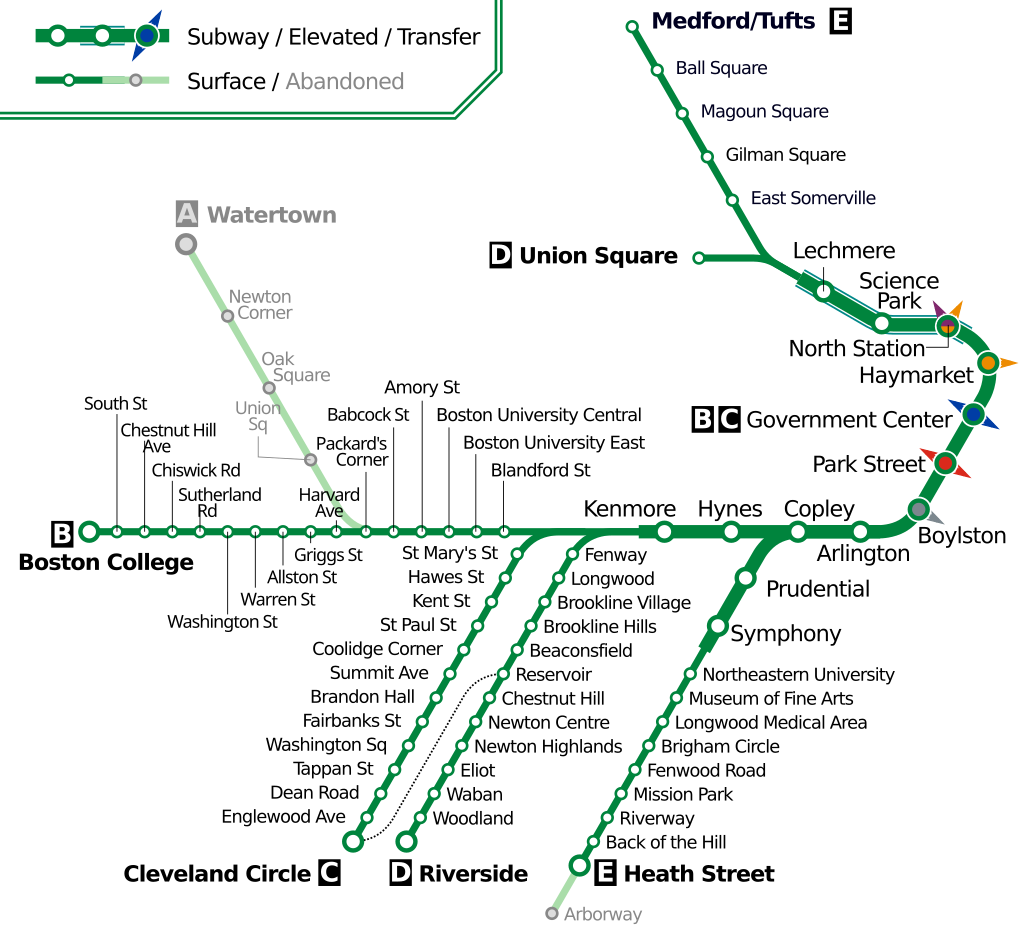
Boston's Green Line shows different thicknesses for surface or subway, but is still classified as "rapid transit".

1024px-MBTA_Green_Line.svg.png

From link.
 
Boston's Green Line shows different thicknesses for surface or subway, but is still classified as "rapid transit".

1024px-MBTA_Green_Line.svg.png

From link.
This would just add unnecessary confusion to the public. The system map is designed for navigability not technical correctness. Although the LRT lines would be slower, they are designed to integrate with Subway/RT system with underground connections at Kennedy (Line 5) and Finch West station (Line 6). They are designed to move more riders than the local streetcar/bus with more frequent services.

In terms of speed, the downtown U is probably comparable to the surface LRT sections during rush hour because of all the additional dwelling time and 500m stations apart. Should a map be designed to indicate slower subway?
 
Unless the media picks this up and starts calling this an expensive white elephant project, I doubt city hall would ever take this seriously.
The media might do that after it opens. A similar line opened in Minneapolis a decade or so ago and there were complaints and media stories about the red lights and general slowness. That being said, Minneapolis has another line that has proper full priority like Edmonton so they actually know what proper LRT can be.

I think the map should still show the full Crosstown, but show it differently for the above ground portions.

Like change it to an outlined line to indicate its different, and remove the station stops but show it still continuing to Kennedy.

I mean the map shows a bus to the airport FFS.
And the actual train that goes directly to the airport is nowhere to be found.
 
I think the map should still show the full Crosstown, but show it differently for the above ground portions.

Like change it to an outlined line to indicate its different, and remove the station stops but show it still continuing to Kennedy.

I mean the map shows a bus to the airport FFS.
You mean like this?
Subway Map with Surface Alignment.png
 
Instead of spending $5.5 billion on the Eglinton Crosstown, we could have spent $55 million on a BRT in Scarborough if we weren't gonna bother with signal priority.
 
Instead of spending $5.5 billion on the Eglinton Crosstown, we could have spent $55 million on a BRT in Scarborough if we weren't gonna bother with signal priority.
Till we find out a BRT would cost over $1 billion. Through it is disappointing, there is hope one day the city will prioritize transit while the LRT brings in more development on the Eglinton than a BRT would.
 
Till we find out a BRT would cost over $1 billion. Through it is disappointing, there is hope one day the city will prioritize transit while the LRT brings in more development on the Eglinton than a BRT would.
^ Though it's worth mentioning that studies have found that BRT has induced as much development along corridors as LRT have.

I think a lot of recent posts are intentionally petulant, clearly it is a good thing that the surface section is connected with the underground section of the Crosstown. It is just that implementation is proving to be exceptionally disappointing especially given the errors are so obvious and preventable. The Crosstown is supposed to be the example of LRT done right.
 
This would just add unnecessary confusion to the public. The system map is designed for navigability not technical correctness. Although the LRT lines would be slower, they are designed to integrate with Subway/RT system with underground connections at Kennedy (Line 5) and Finch West station (Line 6). They are designed to move more riders than the local streetcar/bus with more frequent services.
Most buses integrate with the subway, so that point is redundant. Most underground LRT stations apparently won't even have faregates, so bus integration won't likely occur at Caledonia, Keelesdale, and Science Centre.
 
Because it's not owned by the TTC it's owned by Metrolinx.
It maybe own by Metrolinx, but the City Transportation calls the shots for traffic signals. Until City Transportation changes its thinking, transit will remain 3rd class to them.

Then try riding ION system and look at the mess traffic gates kills the speed of the system.

The Green Line of Minneapolis runs very faster and a lot better than a TTC streetcar line ROW.
 

Back
Top