





micheal_can
Senior Member
Could this be why it is being built with Standard Gauge? Then the Mississauga LRTs can use it too? I am almost impressed with this forward thinking.
|
|
|

This is built with Standard Gauge so that GO Trains can use it.Could this be why it is being built with Standard Gauge? Then the Mississauga LRTs can use it too? I am almost impressed with this forward thinking.

Heavy rail trains on light rail tracks?This is built with Standard Gauge so that GO Trains can use it.
Could this be why it is being built with Standard Gauge? Then the Mississauga LRTs can use it too? I am almost impressed with this forward thinking.

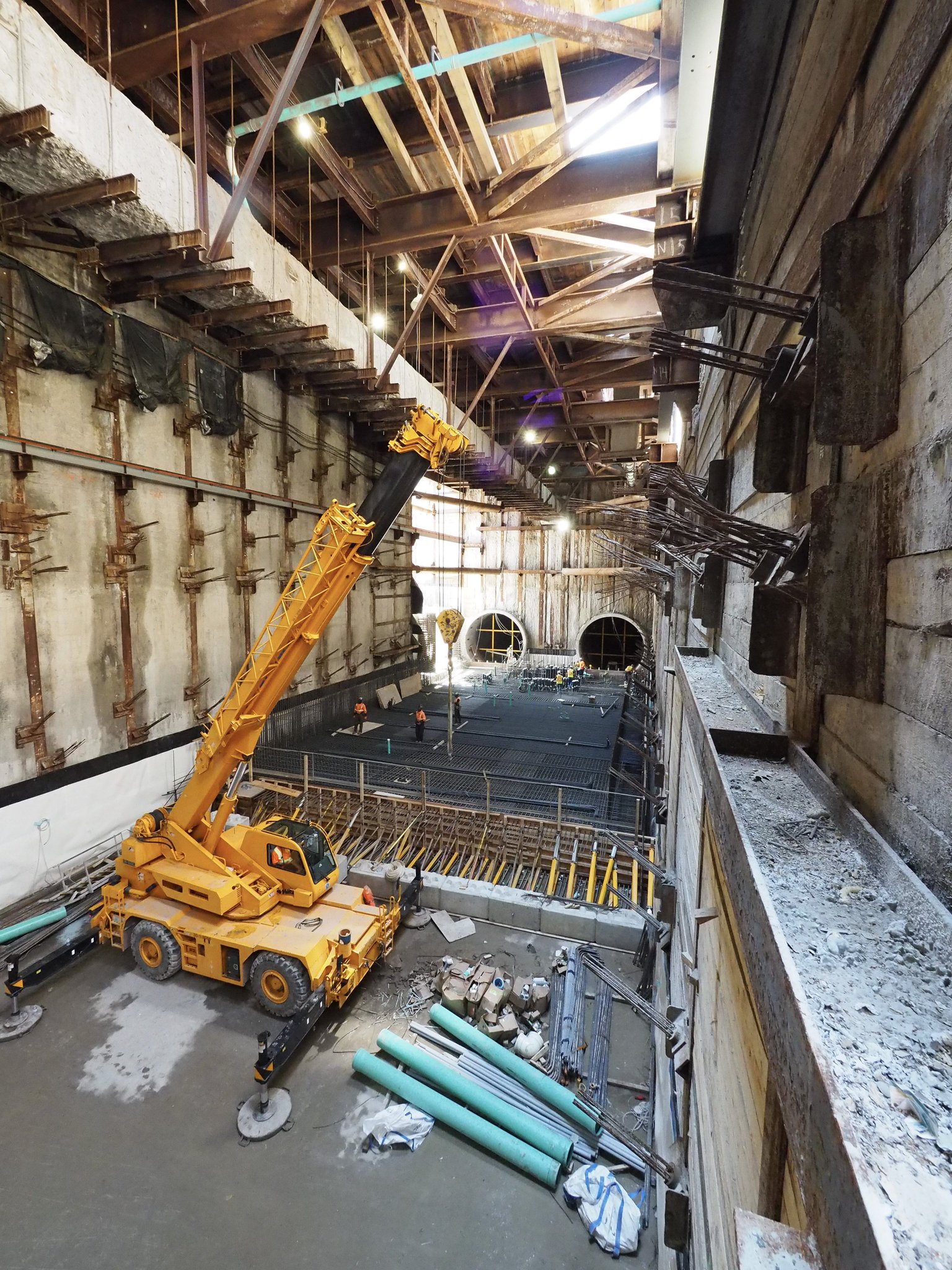
https://www.theglobeandmail.com/can...stown-transit-line-go-to-court-for-more-time/Builders of Toronto’s Crosstown transit line go to court for more time and money
OLIVER MOORE
PUBLISHED 9 MINUTES AGOUPDATED JULY 11, 2018
The companies building the $5.3-billion Eglinton Crosstown in Toronto, Canada’s biggest transit project, have gone to court seeking more time and money to finish the already delayed light rail line.
The construction consortium doing the project has filed a notice of motion alleging that actions by Metrolinx, the regional transit agency, and others are responsible for delaying their work. Metrolinx has not responded in court to the claims and said in a statement that it remains “committed” to the project opening by its current target date, in the fall of 2021.
A spokeswoman for Crosslinx Transit Solutions, a partnership of infrastructure giants including Aecon, Ellis Don and SNC-Lavalin that is building the project, would not elaborate on the legal filing.
“What I’ll confirm with you is we’ve filed a notice of action against Metrolinx for a breach of contract,” said Kristene Jenkins. “But beyond that we’re not going to get into the details. The process is underway.”
She would not clarify how much additional money or time is being sought by Crosslinx, nor whether the request to extend to timeline is an insurance measure or an acknowledgement the consortium cannot meet the 2021 deadline.
[...]
^This is where P3 loses its allure.
This is where it comes down to the actual contract, not whether it's P3, DBFOM, or SOOL. Ontario is going to be caught in the middle of a massive attempt to hoodwink the public on this, and Doug Ford is the worst one to be Premier when the needed discussion happens. Mulroney would be the person of the present regime.Suppose the builders are short on cash!
http://www.centreforcities.org/read...el-transport-investment-management-uk-cities/TfL is a model for transport investment and management in other UK cities
The governance model under which TfL operates and the powers that it holds enable it to have much greater control over London’s transport system compared to other UK cities. These features represent some of the main reasons behind the capital’s efficient and high quality transport system, characterised by a higher usage of public transport and lower carbon emissions compared to other areas. For example:
Convenient, user-friendly Oyster cards. London benefits from an integrated ticketing system whereby a single card can be used on all transport services across London. This system also allows the generation of commuting data used to model the impact of delays on congestion and commuting patterns and better inform investment decisions.66
- High Rate of public transport usage. 44 per cent of people in London commute to work by public transport compared to only 16 per cent in England and Wales.64
- Bucking the trend with buses. Since 2000, the number bus journeys increased by 60 percent compared to a decrease in cities up and down the country.65
The TfL model is characterised by five main features which address many of the challenges that hinder transport policy in other parts of the UK.
These features, although imperfect, provide the framework for devolving powers and funding to Greater Manchester and the newly formed combined authorities. Offering them the long-term certainty and flexibility to strategically invest in their transport systems will help them increase the take up of public transport, cut carbon emissions and promote economic development in the city region.
- Control over the provision of bus services
- The ability to negotiate for long-term funding settlements
- Ability to raise local funds
- A governance structure characterised by the single management of most public transport
- A transport strategy that is integrated with other policy areas
[...]
Or to flip this over: Why in the world would anyone, given the choice, *and funding!* build something to the TTC gauge, which no-one else in the world uses save for some other city somewhere I can't even remember! You build to a world standard given a choice, unless you're terrified of the tracks being used by invading armies using standard gauge trains...The decision for standard gauge on the "Transit City" LRTS (im calling them this ancient name because this is when the decision was made) to use standard gauge was because it is cheaper, and they saw no reason to incorperate Transit City into the TTC streetcar or subway system.
You can buy off the shelf LRTs if you use standard gauge.
The interoperability with Hurontario LRTs is simply a beneificial side effect, and their use of standard gauge is both because why wouldn't you, and because Transit City was taken over by the Ontario government, which then started to create their own LRT plans like Ottawa, Missisauga, Hamilton and KWC.


I wonder if Ford can use this to negotiate a fully grade separated Eglinton line.Interesting timing.
AoD