


News   GLOBAL  |  Apr 02, 2020
 11K     0 
News   GLOBAL  |  Apr 01, 2020
 43K     0 
News   GLOBAL  |  Apr 01, 2020
 6.7K     0 
Yay, I once again hit the 10,000 character limit (the forum software seems to include code in the character count, which works against me when I create tables with links to the respective source of all data included in it), so here we continue:

One could equally say VIA (and Exo) is guilty of the same thing with Dorval station being the station for Montréal–Trudeau International Airport. How would a tourist be expected to know that it was previously called Montréal–Dorval International Airport because it is located in the suburb of Dorval?

First of all, the opening of a rail station in Dorval predates the opening of Montreal-Trudeau Airport, just like the opening of the rail station in Malton predates that of Toronto-Pearson Airport, and neither was ever intended to be an Airport connector.
Second, you may want to take a closer look at VIA's timetables...
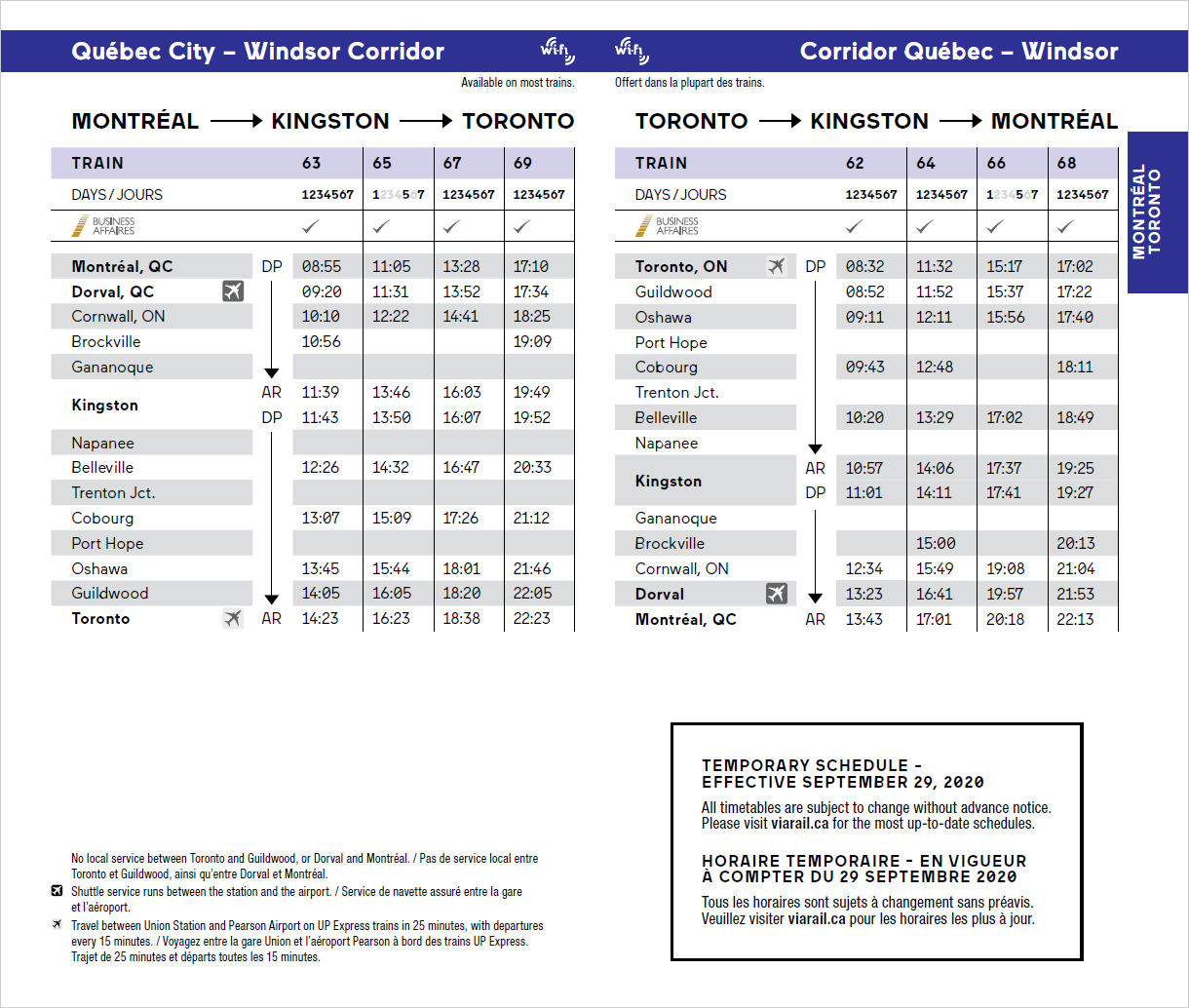
1602816010400.png


... or see what happens when you try to book a rail ticket from Toronto to Montreal Trudeau Airport:
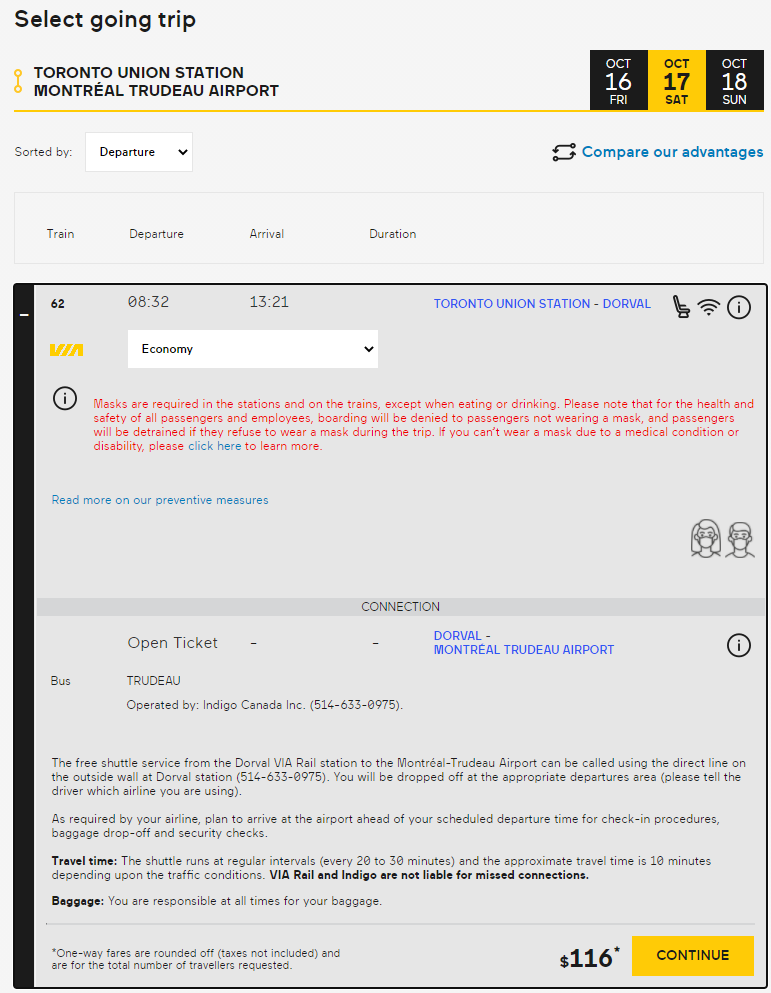
1602816016180.png


I would say the situation in Ottawa is better it is in Brussels. There, none of the international trains go to Brussels Central Station, but instead go to Bruxelles-Midi. To get downtown, you need to transfer to one of the local trains (and your ticket to/from Midi will cover your fare to/from Central station). However, figuring out which train you need to transfer to and which platform it departs from (it constantly changes) is not easy to figure out as a tourist (we ended up having to ask someone).
As someone who has studied three years in the UK (University of Leeds) and took only once (!) a plane to travel between the UK and back home in Germany and despite being an enthusiastic supporter of the European Union, I have spent enough time in Brussels (and Bruxelles-Midi/Brussel-Zuid station in particular) to say that anything is better than Brussels. Nevertheless, as long as you don’t board an ICE, Thalys or Eurostar, every single train departing in eastwards direction stops at Bruxelles-Centrale/Brussel-Centraal) and that fact is well indicated on all information screens and indicators in the concourse and on the platform itself...
 
Last edited:
Without going digging for specific contracts, those all sound like businesses that have ongoing work with VIA.

It is possible, though I am not sure how that relates to those companies using 200 Tremblay Road (the address of the Ottawa Station) as the address of their Ottawa location in the past (today they all use different addresses in Ottawa).
 
I'm not sure why you point this out, but the name of transit stations usually reflects what they are built next to rather than who owns the land they are built on...
Dome-G.W.C.C.-Philips Arena-CNN Center Transit Station
100 Centennial Olympic Park Dr NW, Atlanta, GA 30303, United States
 
Technically speaking, the LRT and via are using it, so, it could be labeled a "union" station. Maybe it should be called "Ottawa Union Station" on all services that go to it.
No. The O-Train uses a different station in a separate building adjacent to the Ottawa Station. The land the O-Train is using is mostly owned by the NCC (though they are using a corner of VIA Rail's land) and the land Ottawa station is on is owned by VIA Rail.
I'm not sure why you point this out, but the name of transit stations usually reflects what they are built next to rather than who owns the land they are built on...

I was replying to micheal_can's suggestion that it is still a union station since "the LRT and via are using it" (they aren't). My post had nothing to do with the naming of the O-Train station, but the usage of the VIA Rail station (it is no longer a union station).

...and following some debate which our little dispute has sparked on groups.io, I have to concede that even though "Union Station" seems to have been the intended name for the new rail station built on Tremblay Road, the name was changed to "Ottawa Station" before it was opened. The full debate can be accessed directly on groups.io, but I'm just quoting the two older posts with which Tom Box introduced the debate:

View attachment 276959

Very interesting! So as you can see, there is no way OC Transpo could have called the station "Union" or "Union Station" as you suggested. The name "Train" for a train station is as strange as naming a bus depot "Bus" or an airport "Airplane." The name "Ottawa Station - Gare d'Ottawa" is rather long and cumbersome and OC Transpo was trying to avoid double, translated names as people would abbreviate it to their language, which would cause confusion for a transit system. The name "VIA" "VIA Rail" could have worked, but it relies on VIA Rail being the name of the only user of the station.

Furthermore, Tom Box points out that this change in name seems to have been causing confusion from the day of opening and I'm kind of reluctant to hold the editors of the "European Rail Timetable" to higher standards than "The Globe and Mail":

https://groups.io/g/Canadian-Passenger-Rail/message/90359

I don't see how a Toronto based newspaper getting the wrong name 2 days prior to the station opening is analogous the editors of the "European Rail Timetable" using the wrong name 50 years after the station opened. Besides, newspapers tend to be more concerned about meeting publication deadlines than getting fine details accurate, so I would hold editor of a timetable to a higher standard than the editor of a newspaper. If I had to guess (and it is just a guess) by the wording of the article, it was the Editor changing the case in the author's article from "The capital's new union station" to "The capital's new Union Station." There is no doubt that it was a union station and without the title caps, the article would have been perfectly accurate.

I'm almost certain that @roger1818 is correct and that the passenger tunnel connects to that building. However, opening that tunnel as a pedestrian thoroughfare would cause severe crowding and crowd control issues and could consequently be highly problematic...

I am not sure about crowding, but it is certainly a controlled access area since the platforms are narrow so they want to wait until the train arrives before allowing passengers on them. It looks like part of the elevated platform design is to widen the platforms, thus making it possible for people to wait on the platforms.

Yes, that's much more trickier than I thought, now that we know that "Union" doesn't work in French...

Yup. I challenge you to find a better station name than "Tremblay" for the "O-Train" station that is bilingual without having to repeat yourself. I have never said "Tremblay" was a good name. I have just said that the proposed alternates don't work. They could have called it "Gare d'Ottawa Station" (following a common practice of merging French and English names), but it is still kind of messy.

Visitors don't necessarily leave a city the same way they arrived in it: during my first two visits to Canada, I landed at Ottawa Airport and I started my first ever trip with VIA Rail at Ottawa Station (note the correct use of name! ;)).

While possible, I feel is unusual. Ottawa doesn't have nearly as many international flights as either Montreal or Toronto, so the odds of someone choosing to fly into Ottawa as part of a tour of Canada is not common. It would certainly be more convenient to fly into Montreal and out of Toronto (or vice versa) and stop in Ottawa along the way since it is between the two.

Also tourists are quite likely to just jump into the first taxi they see after arriving in a new city (thus paying little attention to where the terminal of their arrival is located), leaving the task of figuring out the city's transit network for after they've checked in at their hotel and stored their luggage.

I would expect the type of tourist to take a taxi from the station would likely take it back to the station. If they are going to use transit, they will likely do it both ways. Even if they did this, as you said, they have time to figure out the transit system.
 
The name issue is minor. If you're in London, UK, do the names of Victoria or Paddington stations or Penn Station in New York, stop you from using a intercity train services at those stations?

Having the OC Transpo LRT station named Tremblay isn't the issue. How it's marked on maps and the wayfinding is the real problem.

Forget renaming the LRT station. I would much rather see the VIA Rail stations named "Ottawa Tremblay" and "Ottawa Fallowfield".
 
The name issue is minor. If you're in London, UK, do the names of Victoria or Paddington stations or Penn Station in New York, stop you from using a intercity train services at those stations?

Having the OC Transpo LRT station named Tremblay isn't the issue. How it's marked on maps and the wayfinding is the real problem.

Forget renaming the LRT station. I would much rather see the VIA Rail stations named "Ottawa Tremblay" and "Ottawa Fallowfield".

Thank kinda makes sense. However, you don't see that in Toronto.
 
The name issue is minor. If you're in London, UK, do the names of Victoria or Paddington stations or Penn Station in New York, stop you from using a intercity train services at those stations?

Having the OC Transpo LRT station named Tremblay isn't the issue. How it's marked on maps and the wayfinding is the real problem.

Forget renaming the LRT station. I would much rather see the VIA Rail stations named "Ottawa Tremblay" and "Ottawa Fallowfield".

Can you find the VIA Rail station on this map? I guess they could add a train icon at Tremblay like they have at Bayview to make it a bit easier.

Confederation Line Map.png
 
The name issue is minor. If you're in London, UK, do the names of Victoria or Paddington stations or Penn Station in New York, stop you from using a intercity train services at those stations?

Having the OC Transpo LRT station named Tremblay isn't the issue. How it's marked on maps and the wayfinding is the real problem.

Forget renaming the LRT station. I would much rather see the VIA Rail stations named "Ottawa Tremblay" and "Ottawa Fallowfield".
I feel like this works because Paddington is Paddington and Penn Station is Penn Station. There's a lot more "brand recognition" than for Tremblay. However, overall I would agree. For an intercity operator, the logical naming convention would be "[Metro location]" followed by the locality or other unique station name. You see this even with "Toronto Union Station" - are there even any union stations left other than Toronto and Winnipeg? I think it also gives you an idea of what to expect. The first time I went through the Via station years ago, I hadn't really planned out where I was going to go, and was a bit disappointed it wasn't in a more downtown location, and it was pretty much necessary to first take a transit trip to use any amenities like a restaurant. In comparison, the Greyhound station is (or I guess was) at least in a relatively built up area, albeit a residential one.
 
How come no one raises Montreal as an example? I don't recall there ever being any indication on the Metro map in the trains, on which station you get out of for VIA. I'm not even sure you'd get everyone to 100% agree on which is the best station to get out at (probably depends what station you entered the Metro at).
 
How come no one raises Montreal as an example? I don't recall there ever being any indication on the Metro map in the trains, on which station you get out of for VIA. I'm not even sure you'd get everyone to 100% agree on which is the best station to get out at (probably depends what station you entered the Metro at).
I first stepped foot into Montreal only on January 1, 2011 (as part of my first-ever VIA trip - from Ottawa via Montreal to Quebec City), but all Metro Maps I recall indicated the Commuter Rail network quite prominently. Having checked the STM website, it seems like they now finally also refer to the intercity rail services available at Gare Centrale, though of course unilingually in French:
1602911162309.png

As you can see in the map, Bonaventure is the station closest to Gare Centrale. Nevertheless, if you are already on the green line and don’t travel with much luggage, McGill might be a better choice (both metro stations are connected with Gare Centrale and each other as part of Montreal’s Underground City):

1602911739098.png

 
Last edited:
[...] it seems like they now finally also refer to the intercity rail services available at Gare Centrale, though of course unilingually in French:

Well to be fair, I think even the most unilingual of English speakers could guess that "Gare Centrale - trains interurbains" means "Gare Centrale - interurban trains".

I don't think station names necessarily need to be translated, in fact doing so can sometimes cause confusion like in the aforementioned fiasco in "Brussel Zuid / Bruxelles Midi". With German main stations, I think the name "Hauptbahnhof" is quite universally known, even if in practice English-speaking people may say "central station" because it's easier for them to pronounce.
 
Last edited:
Which, however, is a clumsy way to refer to intercity trains:


True but in any case the intent is clear to the average traveller. I think only us raifans are familiar with the term "interurban" in the context of long-distance streetcars.
 

Back
Top