





bearcat
Active Member
I have not been following this thread closely, but does anyone have any idea how much adding "shunt enhancers" will cost per consist, and whether that would definitively resolve the issue with CN?
|
|
|

American figures: The FRA’s Consolidated Rail Infrastructure and Safety Improvements (CRISI) granted $58.8 million to Amtrak to install Onboard Shunt Enhancement devices on 443 locomotives and 192 cab cars to prevent trains from losing shunt, which can cause problems with signal and crossing-gate activation, part of a $2.4B announcement. By my math, $93,000 US per installation.I have not been following this thread closely, but does anyone have any idea how much adding "shunt enhancers" will cost per consist, and whether that would definitively resolve the issue with CN?

it seems that grant may have fallen victim (at least a delay) thanks to the change in administration (see last post from May)American figures: The FRA’s Consolidated Rail Infrastructure and Safety Improvements (CRISI) granted $58.8 million to Amtrak to install Onboard Shunt Enhancement devices on 443 locomotives and 192 cab cars to prevent trains from losing shunt, which can cause problems with signal and crossing-gate activation, part of a $2.4B announcement. By my math, $93,000 US per installation.

 www.amtraktrains.com
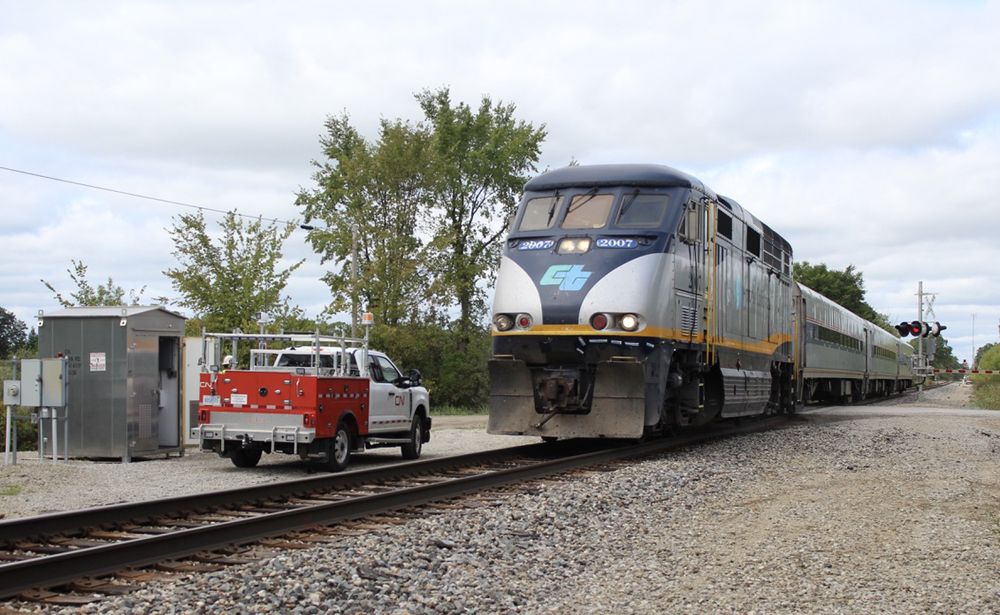
 www.trains.com
So $93,000 per venture set? Multiplied by 32 and converted to CAD that's about $4 millions. That seems like a small amount of money in the grand scheme of things. I wish the federal government just gave this to VIA.American figures: The FRA’s Consolidated Rail Infrastructure and Safety Improvements (CRISI) granted $58.8 million to Amtrak to install Onboard Shunt Enhancement devices on 443 locomotives and 192 cab cars to prevent trains from losing shunt, which can cause problems with signal and crossing-gate activation, part of a $2.4B announcement. By my math, $93,000 US per installation.
So $93,000 per venture set? Multiplied by 32 and converted to CAD that's about $4 millions. That seems like a small amount of money in the grand scheme of things. I wish the federal government just gave this to VIA.

Considering the contract for the trains back in 2018 was a $1B, it would prob be a few million each.How much would adding more train cars to the Ventures cost in comparison? Anyone know a ballpark figure? One comes with the advantage of more seating and the other does not.
Dividing the total price tag of $989 million by 32 trainsets and then 7 units (assuming that a locomotive is twice as expensive as a car) suggests $4.5 million a car, so maybe a ballpark figure of $5 million is plausible?How much would adding more train cars to the Ventures cost in comparison? Anyone know a ballpark figure? One comes with the advantage of more seating and the other does not.
So one car would cost more than adding shunt enhancers to all the Venture sets by my calculation.Dividing the total price tag of $989 million by 32 trainsets and then 7 units (assuming that a locomotive is twice as expensive as a car) suggests $4.5 million a car, so maybe a ballpark figure of $5 million is plausible?
Yea a tiny sensor will for sure be cheaper than the whole carSo one car would cost more than adding shunt enhancers to all the Venture sets by my calculation.
So one car would cost more than adding shunt enhancers to all the Venture sets by my calculation.
No - $93k USD x2 per set. One each on the cab car and loco.So $93,000 per venture set? Multiplied by 32 and converted to CAD that's about $4 millions. That seems like a small amount of money in the grand scheme of things. I wish the federal government just gave this to VIA.
And it's not like Siemens is sitting on their hands just waiting on another order. They are plenty busy as it is.Totally untested technology in Canada and US railway unions are actually against the exemption allowing for the shunt-enhancers? This is not off the shelf technology in either country, and with possible similar union opposition (?) and government red tape (as in the current Ministerial Order) here in Canada, it would be a horserace to see whether more Venture cars could be ordered, built and paid for, or whether shunt-enhancers could be designed, tested and implemented. Perhaps more like a tortoise race now that I think of it!

The actual way this should have been resolved is in the negotiations of the contract, talking to CN to ensure it can run on their tracks as is. Now we are looking for a solution that we should not have created. There are days I will argue against everything the fright carriers do. And then there are times like this where it is not whether they are right or wrong, but whether they should have also signed off on this BEFORE anything was built. If CN did sign off on the shorter trains, and now they are going back on their word, then it is on them to do the upgrading, not Via.And it's not like Siemens is sitting on their hands just waiting on another order. They are plenty busy as it is.
No, the actual way to get this resolved is to get Transport Canada involved. And that means getting the minister to kick their ass into gear.
Dan
this was a complete blindside by CN. Via has run shorter LRC trains before and the ventures were tested with no issues long before the directive was given. this is purely bad faith bullying by CN.The actual way this should have been resolved is in the negotiations of the contract, talking to CN to ensure it can run on their tracks as is. Now we are looking for a solution that we should not have created. There are days I will argue against everything the fright carriers do. And then there are times like this where it is not whether they are right or wrong, but whether they should have also signed off on this BEFORE anything was built. If CN did sign off on the shorter trains, and now they are going back on their word, then it is on them to do the upgrading, not Via.