News   GLOBAL  |  Apr 02, 2020
 10K     0 
News   GLOBAL  |  Apr 01, 2020
 42K     0 
News   GLOBAL  |  Apr 01, 2020
 6.1K     0 

I feel like people are misunderstanding the tickets vs cards hahaha.

Why would you want a reloadable paper ticket to keep for months???

Why would you want a one time use ticket to be plastic??

This is common practice everywhere and very logical haha. Shouldn’t be a discussion.
 
So back to my main concern - is the Arc ticket the same price as existing paper tickets? Does anyone know?
 
So back to my main concern - is the Arc ticket the same price as existing paper tickets? Does anyone know?
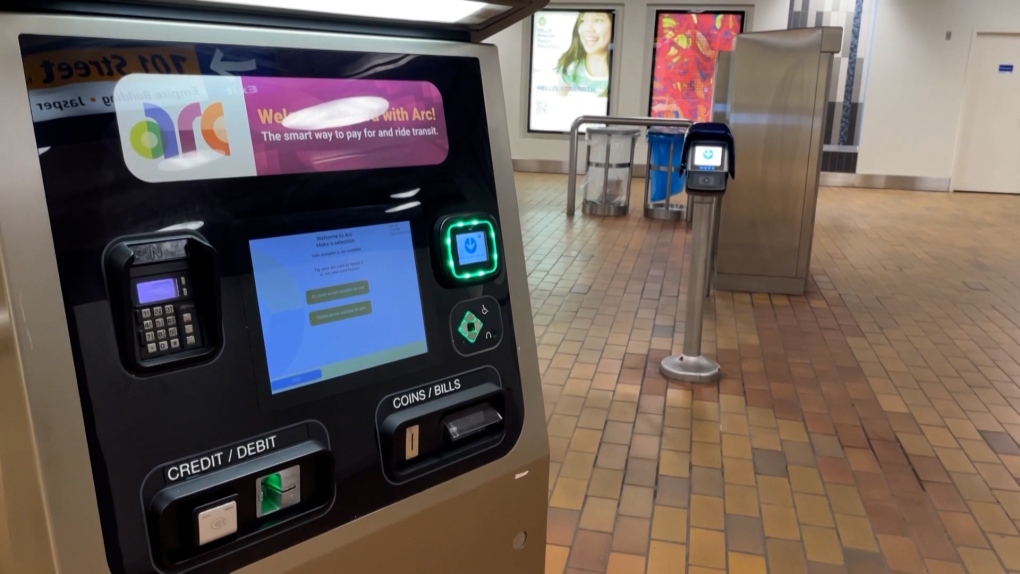
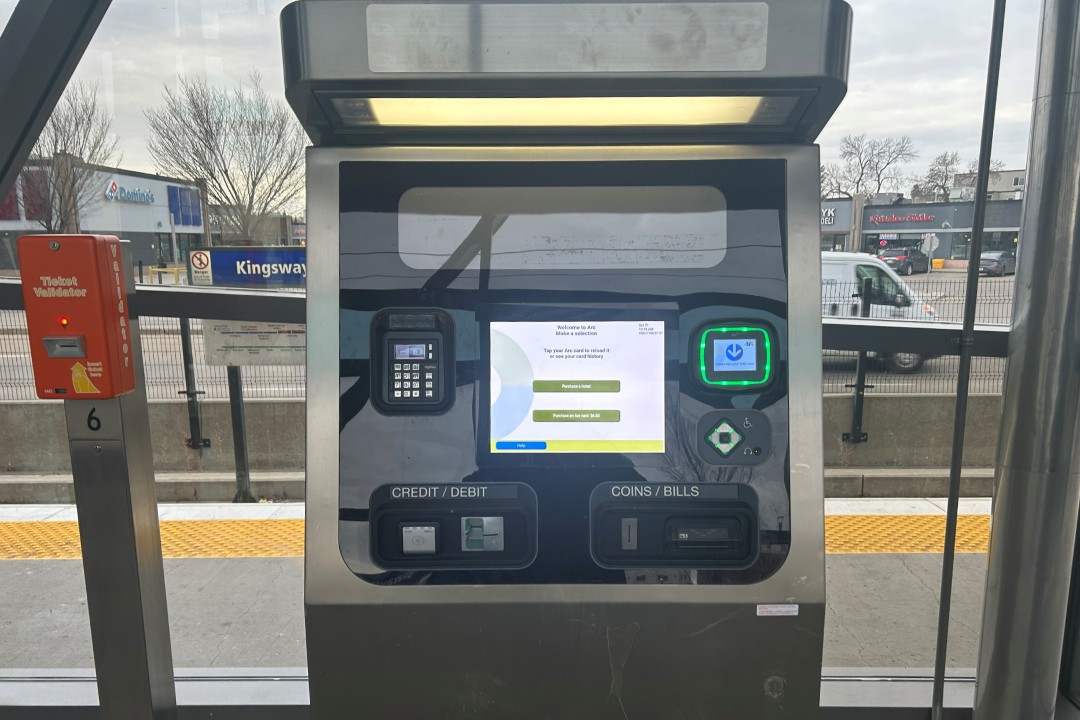
The Arc ticket is more expensive. It is $3.50 like a cash fare. And this is important. The Arc ticket is only intended to be sold as a single unit to a walk up customer buying a single fare. You pay the same for an Arc ticket that you would walking up to an old TVM with $3.50 cash.

The comparable for the paper tickets is the Arc card, which allows a fare of $2.75 vs $2.775 for a paper ticket from a 10 pack, with the added advantage you don't need to pay $27.75 with the card in one shot to get the lower price of the 10 pack vs. a cash fare.
 
Yes, I see the 3.50 and that makes sense. I don't see anything for 27.50 or 27.75. I suppose you can choose the amount to put on the Arc card, but then you also have to pay the initial fee for the card.

I am thinking if you use it a lot, you will eventually get close to 2.75 factoring in the card fee, but if not the paper tickets would still be a better deal.
 
Yes, I see the 3.50 and that makes sense. I don't see anything for 27.50 or 27.75. I suppose you can choose the amount to put on the Arc card, but then you also have to pay the initial fee for the card.

I am thinking if you use it a lot, you will eventually get close to 2.75 factoring in the card fee, but if not the paper tickets would still be a better deal.
You recoup the $6 cost of the card after 8 trips where you tap on/off, as that would add $0.50 to the $2.75/trip cost for a total of $3.50 - same as a paper ticket. Trips after the first 8 would then be cheaper than paper tickets, forever (unless you lose the card and have to buy a new one, that is).
 
There is no $6 fee to buy the 10 paper tickets, this is what I am comparing it to.
$3.50 x 10 = $35
$2.75 x 10 = $27.50 + $6 = $33.50

The breakeven where the arc card is cheaper than paper tickets is fast.
 
$3.50 x 10 = $35
$2.75 x 10 = $27.50 + $6 = $33.50

The breakeven where the arc card is cheaper than paper tickets is fast.
I gather if you buy them individually it is 3.50, but you don't pay $3.50/ea. for the 10 tickets, which perhaps confusingly are also paper.
 
I gather if you buy them individually it is 3.50, but you don't pay $3.50/ea. for the 10 tickets, which perhaps confusingly are also paper.
I'm guessing they will be phasing out the old tickets eventually. Has anyone been able to confirm? They still sell them on the ETS online store. The ARC FAQs aren't super helpful in that regard. Are you implying that 10 Arc Tickets will also be $27.75? Doesn't say anything on the website on the ticket page.
 
Thought I’d go and get my first ever arc card at one of the new stations which are now all open…..but NYET!!
0F04942E-388D-45FD-96A6-91CA5A7ECC4F.jpeg
42A72DE6-D8AB-4803-B800-1C87C433DBC9.jpeg
 

Arc will eventually phase out the plastic cards, which cost $6, for a more convenient payment method. Hotton-MacDonald said part of the reason for the card fee is to discourage users from throwing them away and thereby generating waste.

“Once all of the user groups have transitioned, we’ll be looking at how we consider using the open-payment method, which is really exciting,” she said. “That would be using credit or debit cards, potentially, or smartphones, depending on the design.”

Calgary Transit debuted its smartphone-payment system in June 2020, partly as a way to reduce physical contact in response to the COVID-19 pandemic. Hotton-MacDonald said ETS’s system was in development before the pandemic began and is complicated by the need to ensure its compatibility with regional operators.

“It was always intended to be a regional solution … Having that regional fare capping — we’re the first in Canada to offer it — is a really key feature of regional Arc implementation,” she said. “One of the positive aspects of making sure we’re giving everybody the time to adjust and adapt to the change is that we’re preparing them properly and providing the amount of support they need to change their behaviours.”

Looking further ahead, Hotton-MacDonald said ETS will explore whether new kinds of fares are needed.

“We’re also considering whether there are other offerings related to Arc that people are looking for, in terms of the types of fare media and how people are travelling,” she said. “Do we need a multi-day Arc pass, as an example?”

 

Back
Top