News   GLOBAL  |  Apr 02, 2020
 10K     0 
News   GLOBAL  |  Apr 01, 2020
 42K     0 
News   GLOBAL  |  Apr 01, 2020
 6.1K     0 

Tap off doesn’t matter within the city for fares.

Although if you’re a fan of the city making data informed decisions, you might see tapping off as a helpful way to provide data on trip starts/ends.

Nonetheless, it’s confusing how they’ve communicated (in guessing maybe because they don’t want to say you have to tap off, but they also don’t want you not to haha)
 
They will encourage us to tap off to be in that habit and I do tap off whenever possible although if the validator is broken I don't fret, but you absolutely don't need to tap off unless it'll save you money, ie. you're on a commuter bus but don't cross municipal borders.
 
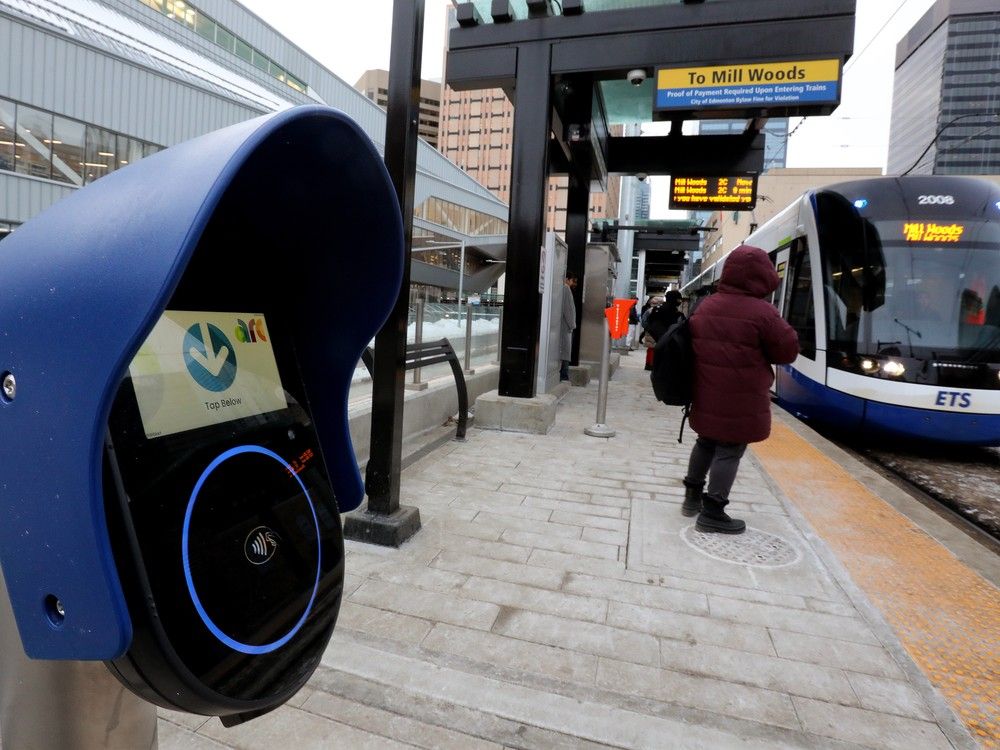
Used the new validators today, such an improvement.

However, the validators at Stadium Station are STILL only in the middle of the platform. So if you are running to catch a train you either run to the middle of the platform and hope it doesn't leave or get on the train without paying. What idiot decided on that placement?!
 
Used the new validators today, such an improvement.

However, the validators at Stadium Station are STILL only in the middle of the platform. So if you are running to catch a train you either run to the middle of the platform and hope it doesn't leave or get on the train without paying. What idiot decided on that placement?!
North end of that station?
The south end where bus connections are made, there is certainly a validator right near the ramp onto the platform as can be seen here: https://www.google.ca/maps/@53.5593...try=ttu&g_ep=EgoyMDI0MTExOS4yIKXMDSoASAFQAw==
 
Vancouver also took 3 years. Toronto took 16 years, just like Eglinton-Crosstown LRT.
 
I have lived in several big cities in Asia and Europe and had the good fortune to experience effective, clean, safe, affordable mass transit (although Paris and London were hit and miss). I can't figure out why implementing a simple and effective payment system is such a monumental task for ETS. However, I notice other technology aspects of daily life that are lagging in Edmonton. For example, in Kuala Lumpur Malaysia (a city with a gdp per capita of 28 000 USD - compared to about 45 000 USD gdp per capita for Edmonton) the technology used for parking, consumer purchases, tolls, public transit etc seems much better, more efficient and much more integrated into daily life. And this is Malaysia - a UMIC developing country. When I visit Japan, Hong Kong, Singapore or South Korea it make the discrepancy even more apparent.
 
Could it be that places like Kuala Lumpur became industrialized more recently, so they never did things the "old way" and thus started right out of the gate with more modern payment systems and whatnot? Cities like Edmonton had to transition away from coin-operated parking meters, both in terms of physical infrastructure and societal norms.
 
Well overall I think we are too used to some things and it's hard for most to transition to something that should be much better.
 

Back
Top