I love the way these small stories remind us of how the past continues to dwell amongst us. The fact that we can still walk by this very bank today, and know that it is the exact same building and place where this unfortunate fellow took his life 94 years ago, is strangely haunting. There is no plaque, there's no memorial, and there’s not a person alive who knew him –but he lived and died in this very place.
Its a small, tragic but ultimately insignificant story, buried deep in the paper on a day when the news was all about the sinking of the Britannic (the sister ship of the RMS Titanic) by the Hun, and the death of John Boyd. And yet stories like this (they don’t have to be tragic) are much more likely to remind us of ourselves—because they remind us that behind the city we pass through and inhabit daily in 2010, is the memory of another city--with another set of people living in it who are very much like us—and it’s the same place.
I’ve always liked the word palimpsest as a way of describing the way buildings are inscribed by history. It was a common practice, particularly in medieval ecclesiastical circles, to rub out an earlier piece of writing by means of washing or scraping the manuscript, in order to prepare it for a new text. A palimpsest is that manuscript on which an earlier text has been scrapped off, and the vellum or parchment used again and again. In time the same piece of parchment or vellum starts to show its age, and the residue of all the earlier texts starts to show through. I sometimes think cities are like that.
Beautifully put, deepend. Toronto, being such a young city has so few examples of palimpsest, unlike Rome where one can see the remains of Roman temples embedded into the side walls of Renaissance churches. Best example I can think of is the St. Lawrence Market.
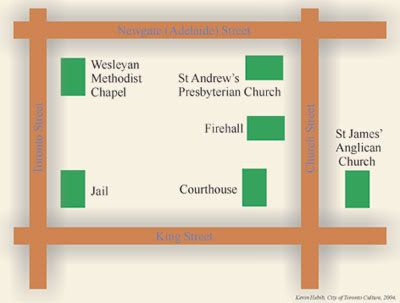
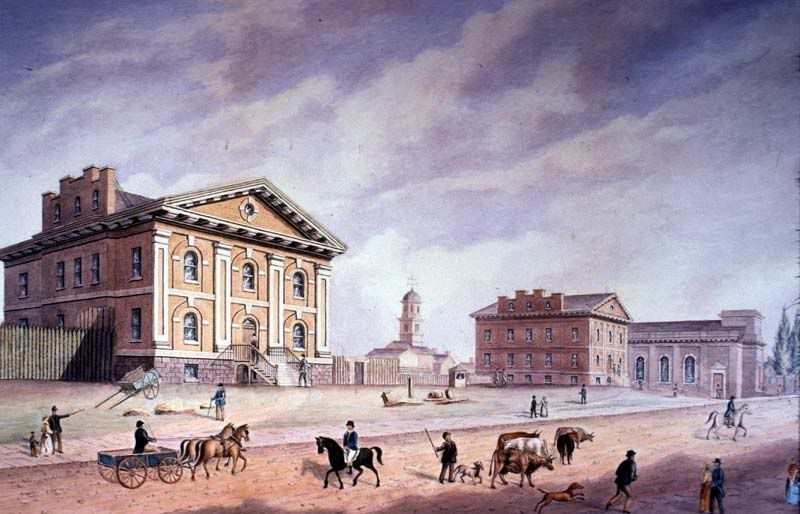
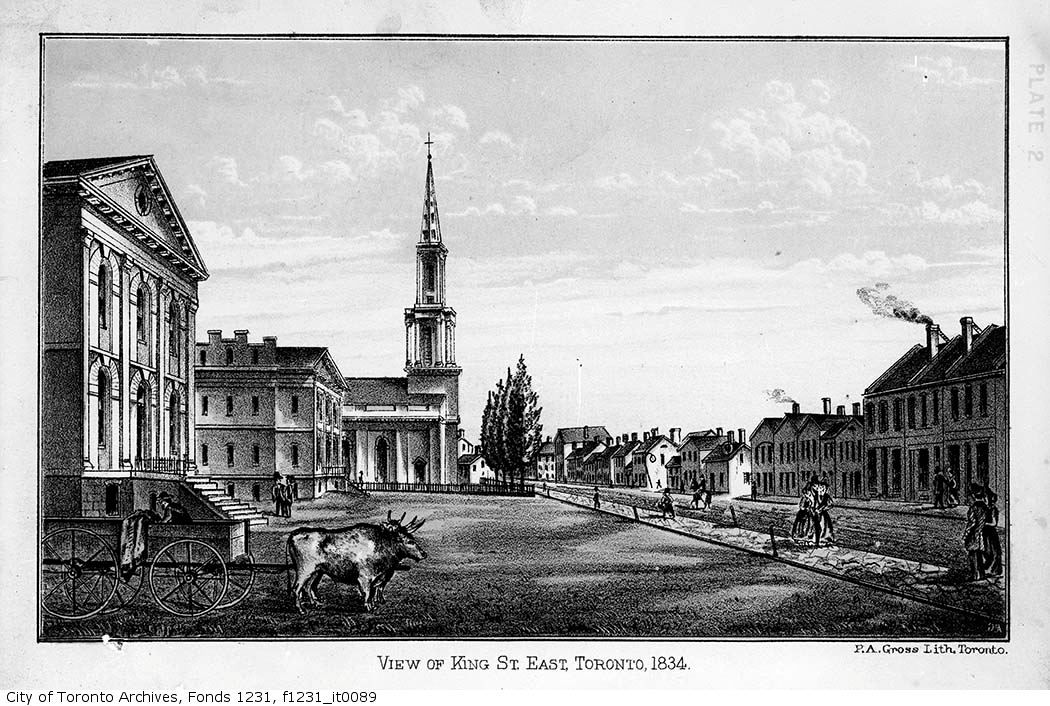
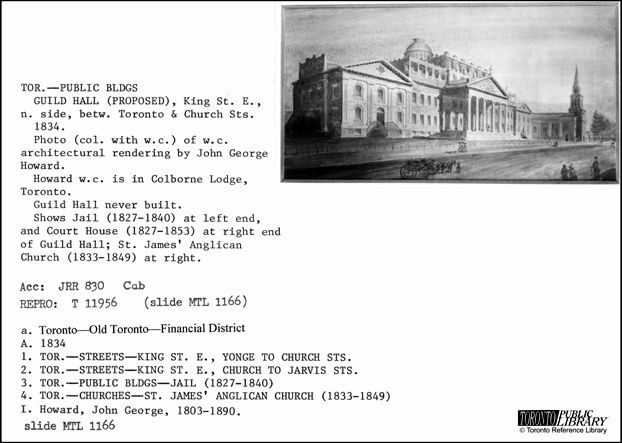
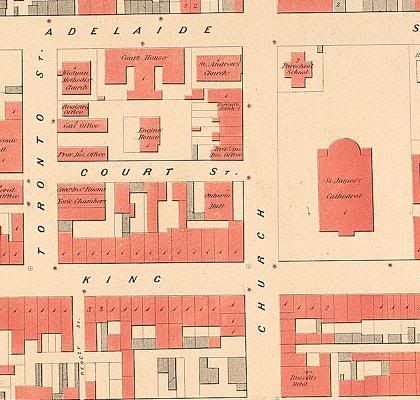
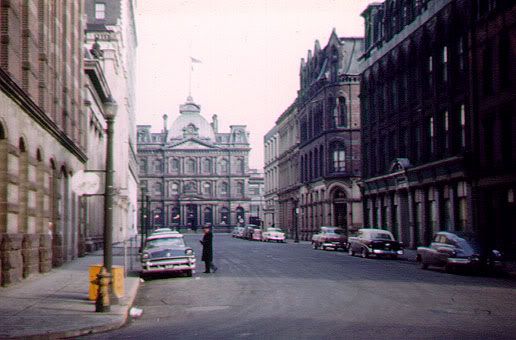
There was however a better example that is now gone for good and goes back to the beginning of the City's history, namely the original jail and courthouse that once stood at the north side of King between Toronto and Church Streets. They appear in some of the earliest renderings of the city and then vanish. They weren't immediately demolished though; they remained and became part of existing buildings that only revealed themselves in some later photographs during subsequent construction. York Chambers, which enveloped the old Jail on the corner of Toronto and King Streets, stood until the
blitzkeig of the 1950's.
How mysterious, how evocative of the past is the idea of "hidden" buildings, of living day-to-day with remnants from different eras, almost the reverse of "facadism" in that almost no one knows what's beneath the surface....
Here's a little photo essay of some images I've assembled from the archives, the TPL website and from Eric Arthur's
No Mean City:
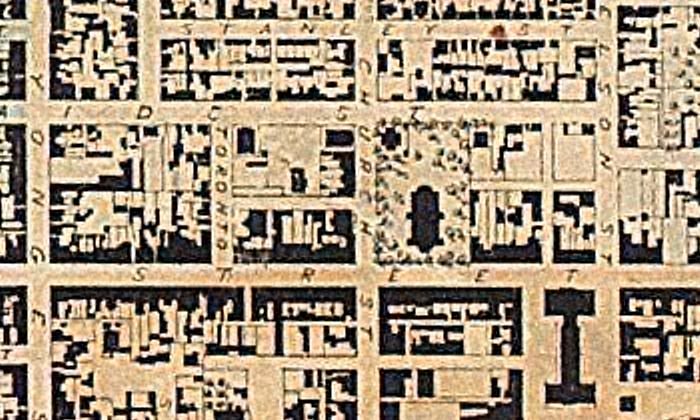
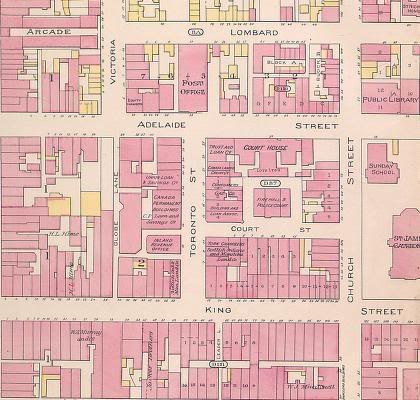
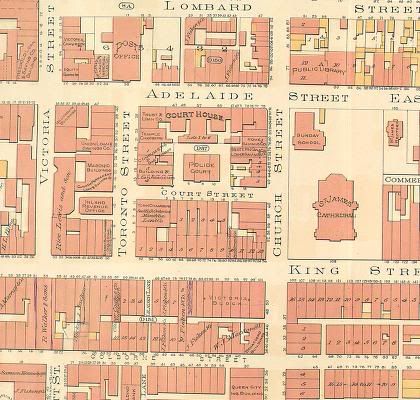
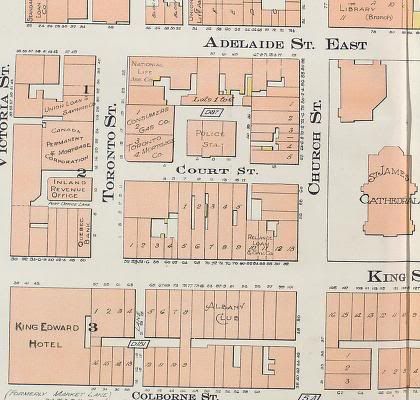
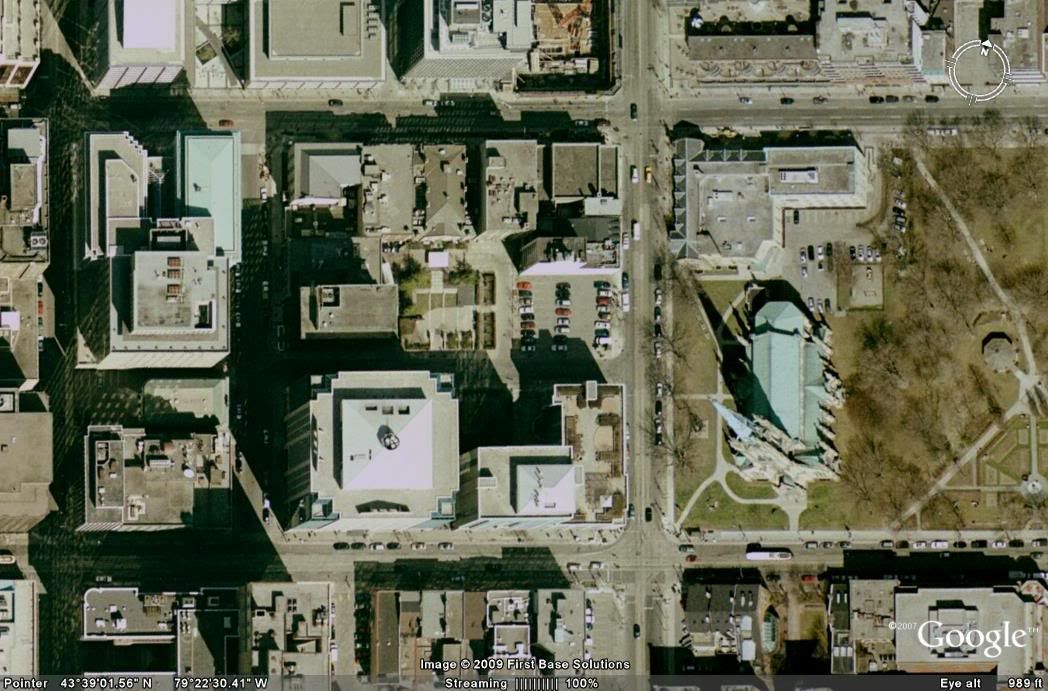
The location:
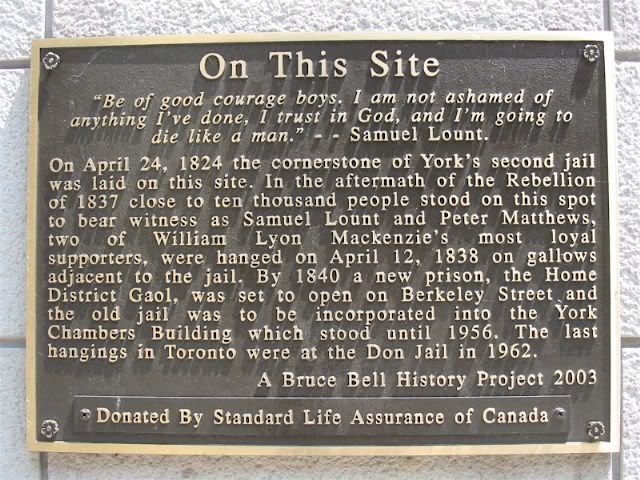
Plaque on Toronto Street at Court:
John Howard's proposal to integrate the two buildings into a new Guildhall complex:
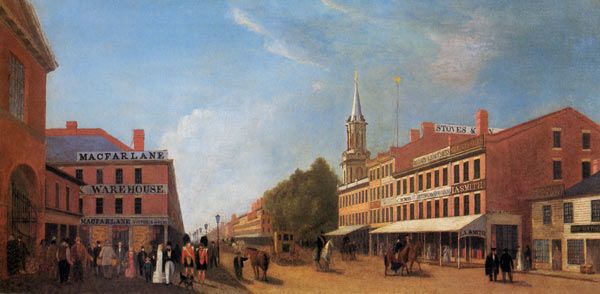
1845 (the King frontage gets filled in); view west from Jarvis:
1851:
1858:
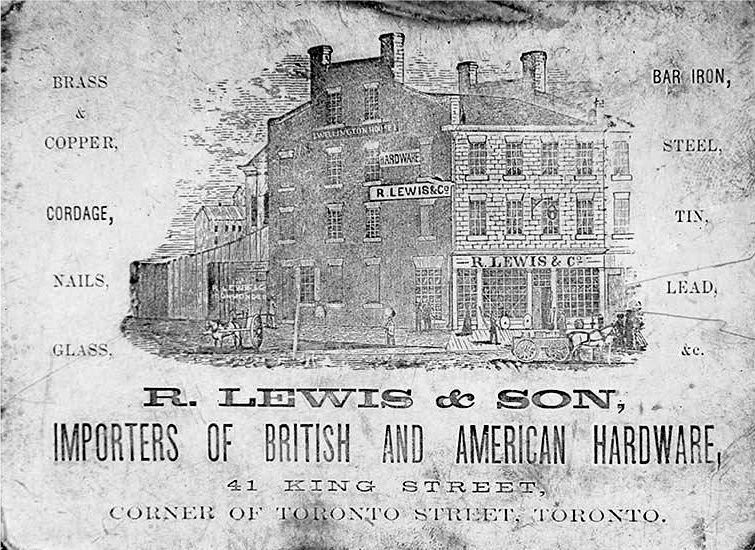
Original building on the King/Toronto corner:
1884:
1890:
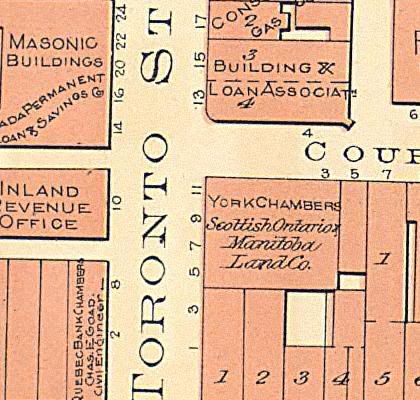
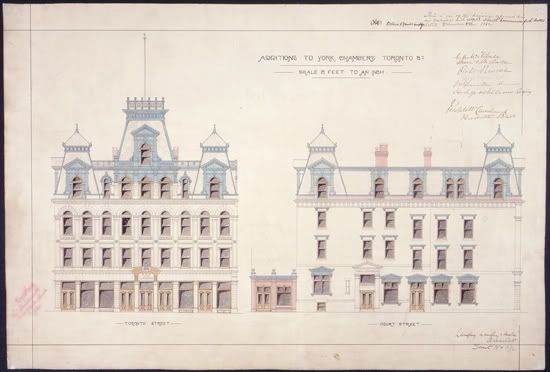
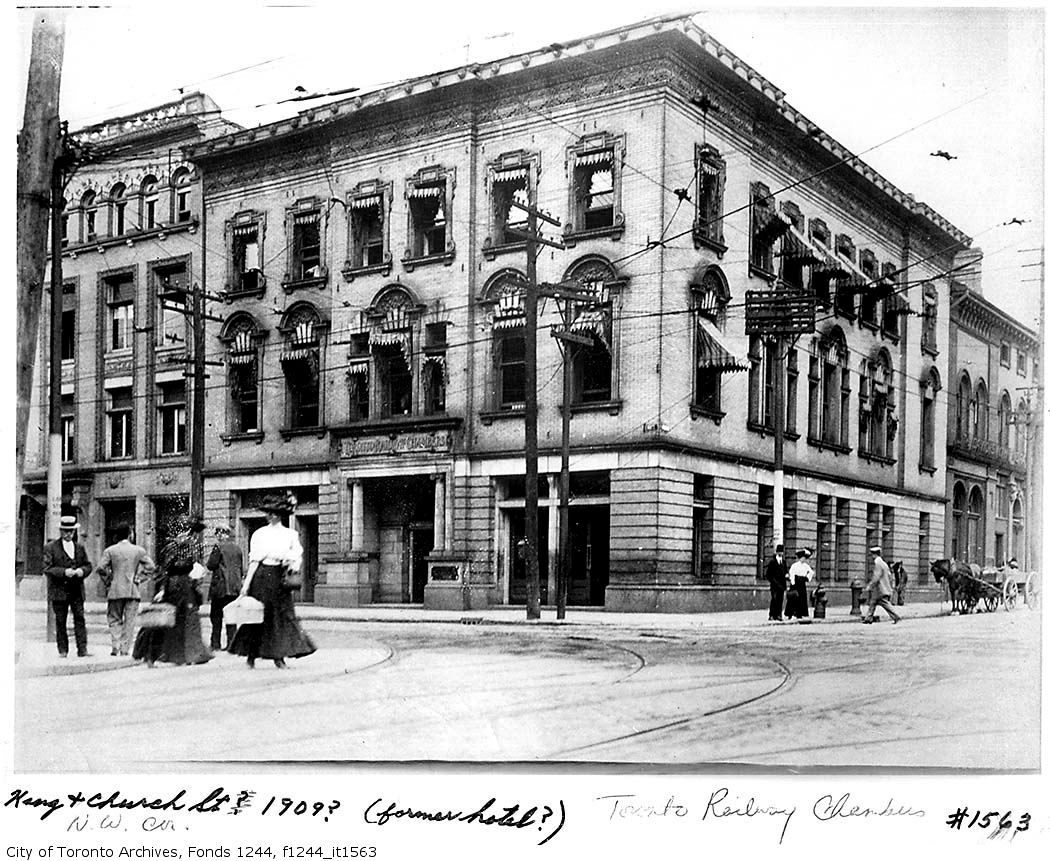
York Chambers:
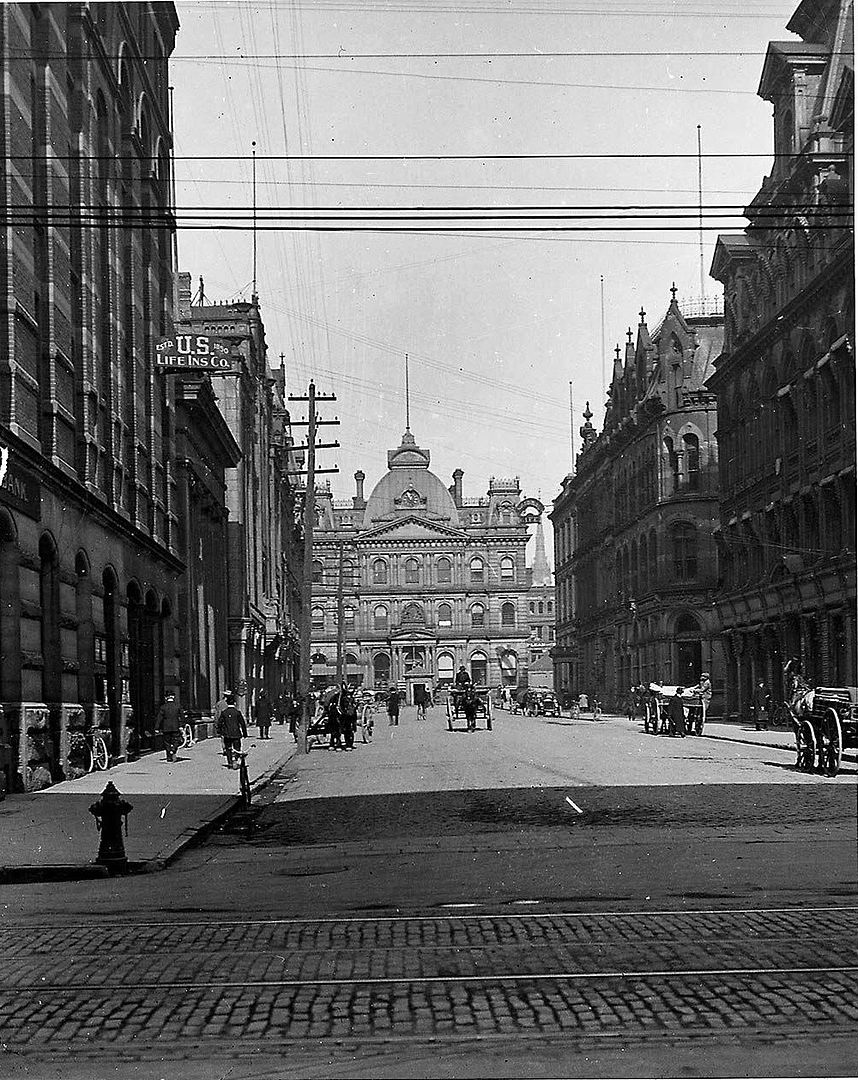
1910:
On the right:
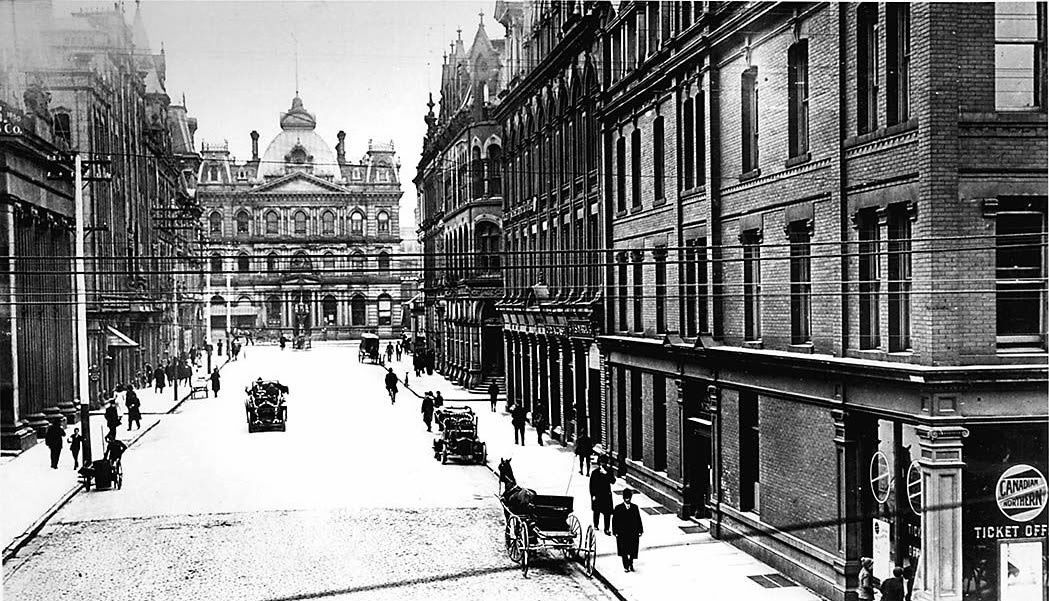
View on Court Street:
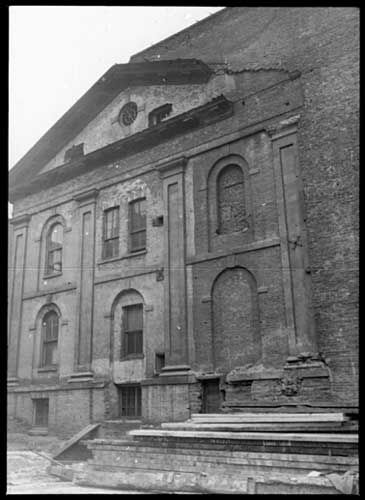
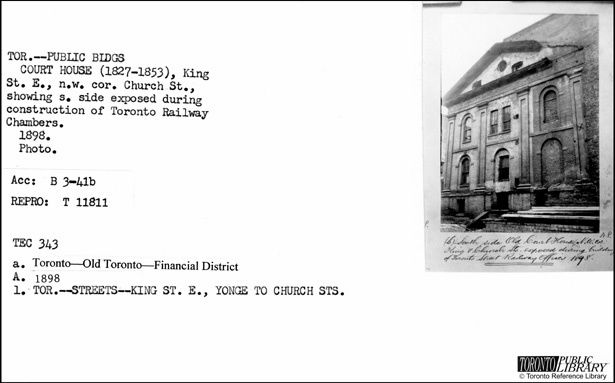
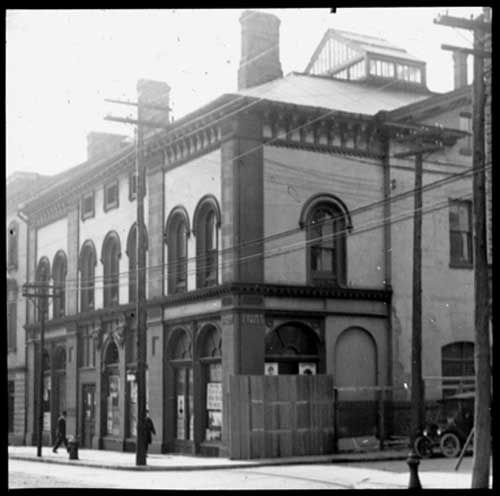
Views of the old Courthouse revealed....:
....when the corner Georgian building was demolished to build this.....:
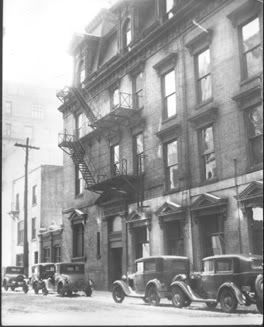
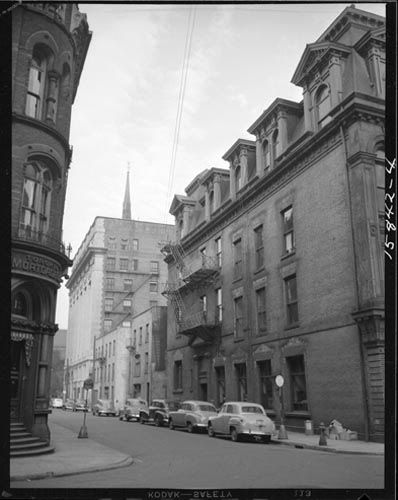
......which along with this building on the SW corner of Church & Court (which had enveloped the Courthouse).....
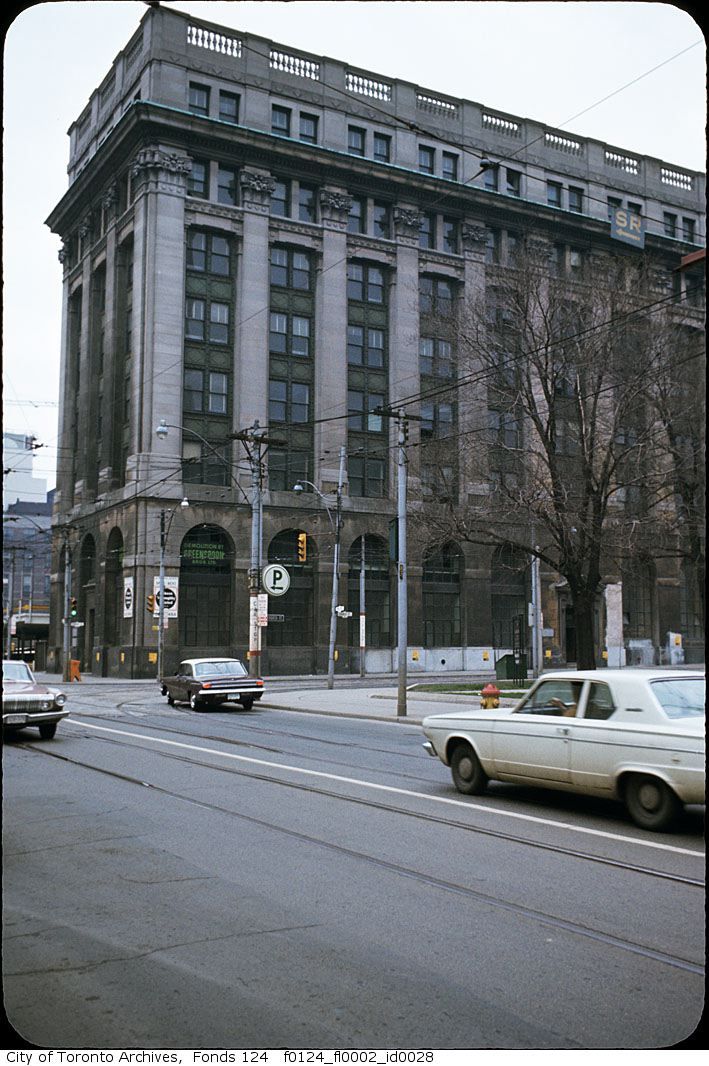
.....was eventually demolished to build this.....
....which was eventually demolished for a two storey parking garage.
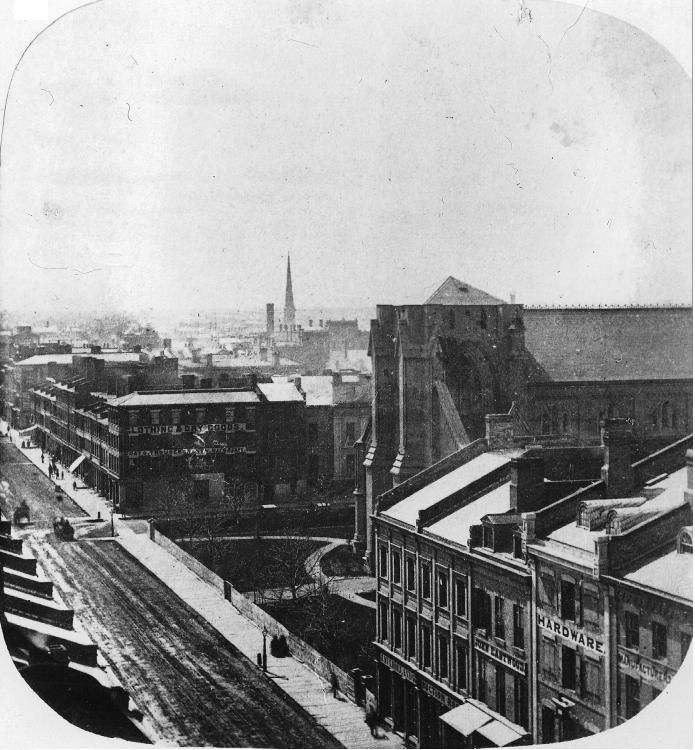
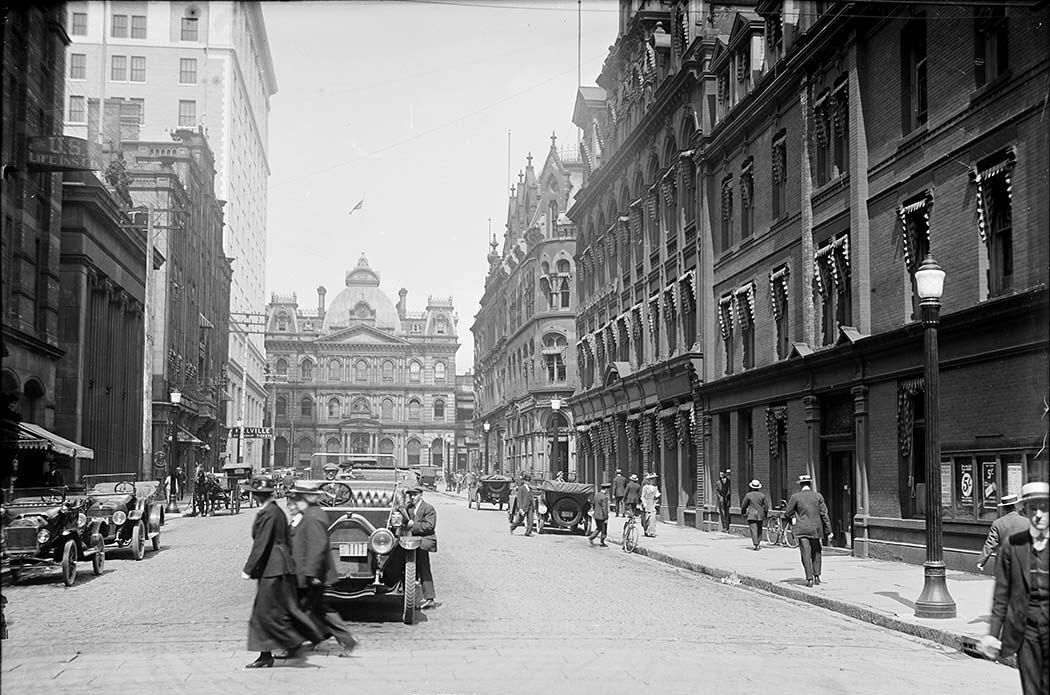
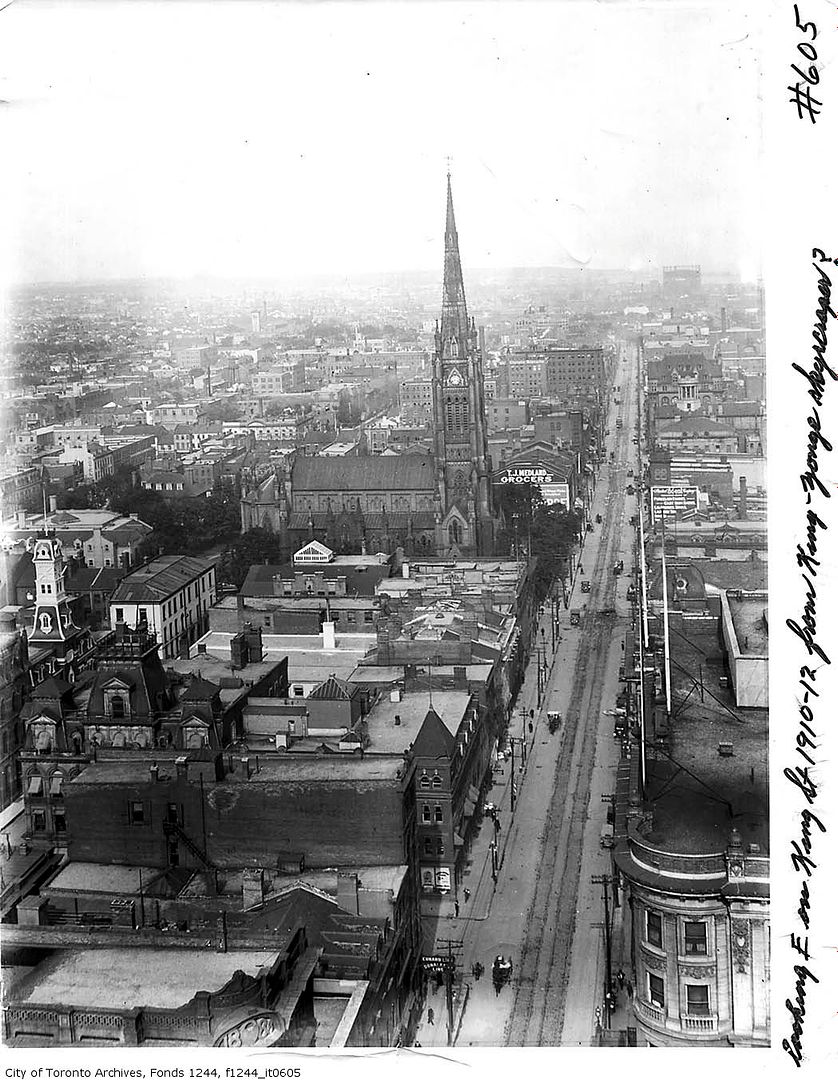
But for a few decades, it was one of the most complex blocks in Toronto, containing superb buildings (both seen and unseen) from every era, almost European in its secrets (note the side brick gable from the hidden Courthouse, just below the skylight of the building at Church & Court):
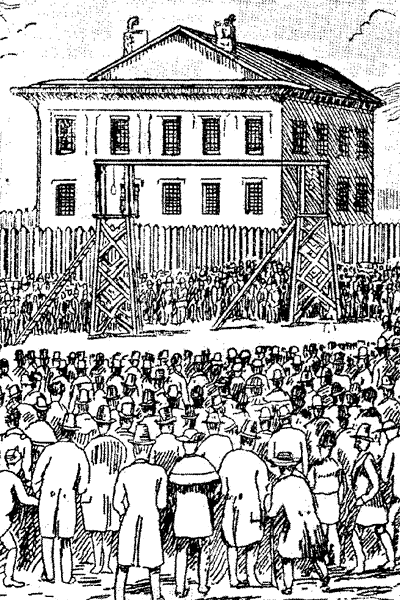
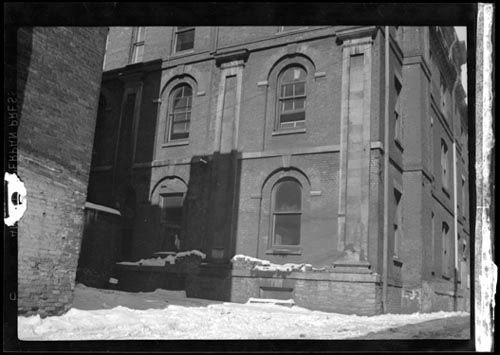
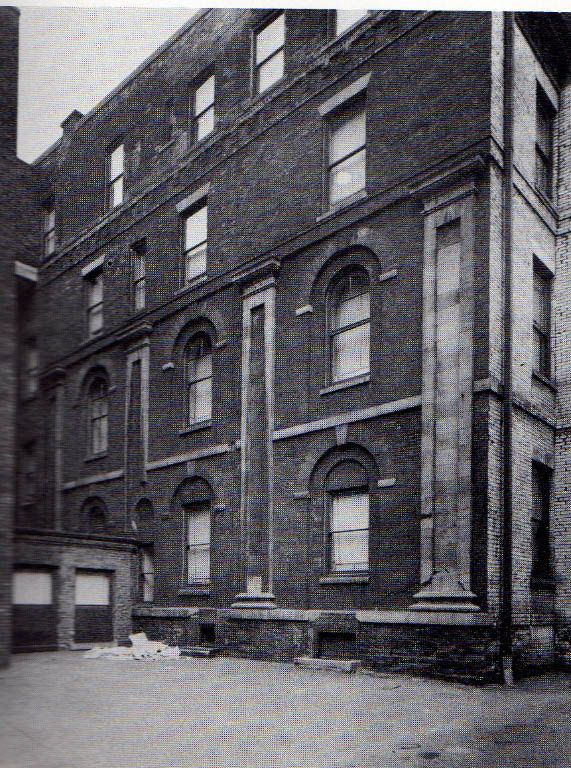
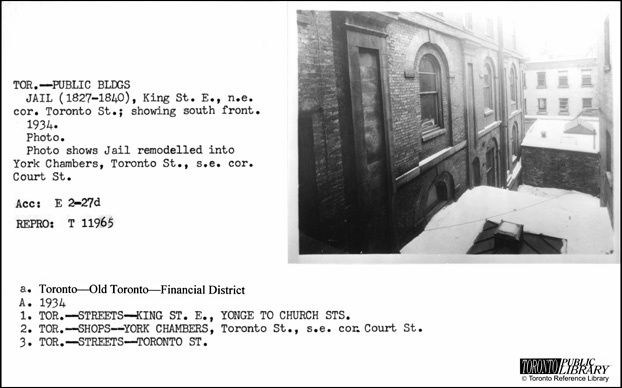
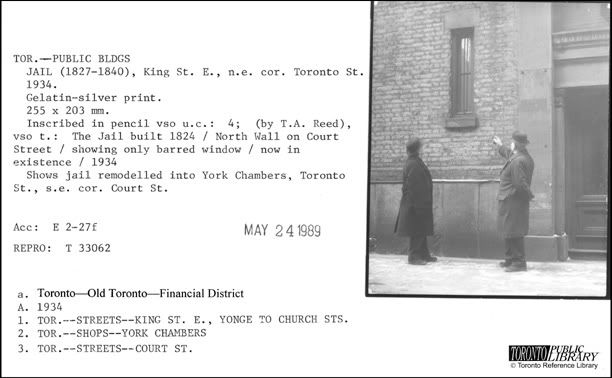
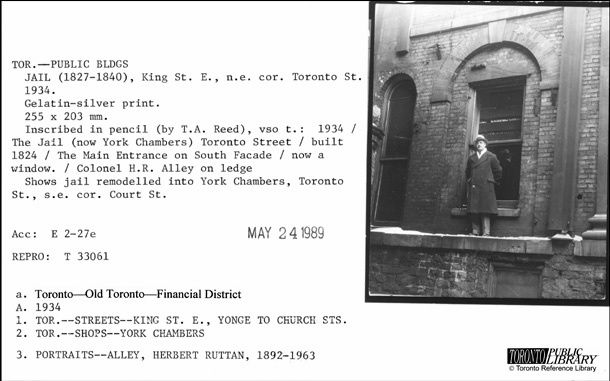
The Jail:
One of the last views
devant le deluge:
Today. all memory and traces gone of jails, courthouses and almost 200 years of history (except for the plaque by Bruce Bell; kudos to him):